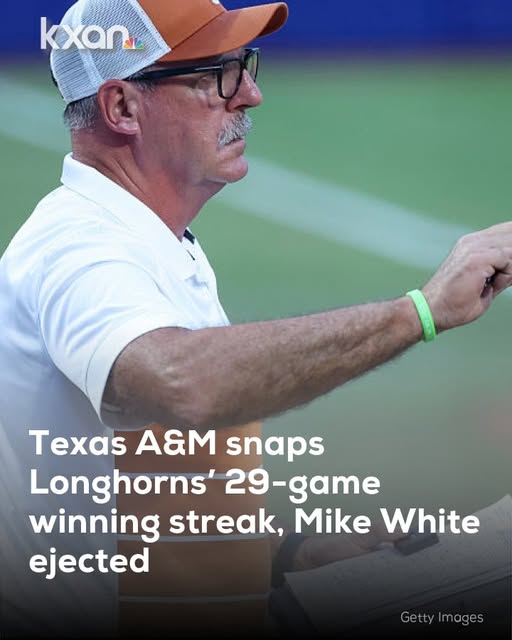
In the world of college softball, rivalries, intense moments, and emotional confrontations are not uncommon. They often reflect the passion that players, coaches, and fans have for their teams, and they can sometimes define pivotal moments in a season. One such instance unfolded recently during a high-stakes game between the Texas Longhorns and Texas A&M Aggies, two storied programs with a fierce rivalry that dates back decades. This particular game was notable not only for its outcome but also for the charged atmosphere that led to a heated exchange between the Longhorns’ head coach, Mike White, and the home plate umpire.
Setting the Stage: The Significance of the Game
The Texas Longhorns, one of the most prominent programs in college softball, entered this game riding a historic winning streak. This streak, which had extended for an unprecedented length, was a testament to the team’s dominance, resilience, and skill throughout the season. Maintaining a winning streak of such magnitude not only boosts team morale but also cements a team’s reputation as a powerhouse in college softball. It draws attention from national rankings, media coverage, and fans across the country.
However, the game against Texas A&M was more than just another contest; it was a critical matchup that could potentially end the Longhorns’ historic run. Texas A&M, a team with a proud softball tradition of its own, was determined to break the streak and prove their resilience. The game was set in College Station, Texas, at the Aggies’ home field, adding an extra layer of pressure and atmosphere. The crowd was lively, vocal, and passionate, fueling the intensity on the field.
The Action on the Field: The Game Unfolds
From the outset, the game was fiercely competitive. Both teams displayed exceptional skill, strategic plays, and determination. The game was close, with momentum swinging back and forth. Texas A&M’s hitters found gaps and executed well-timed hits, accumulating a total of 13 hits on the day — a significant number that contributed directly to their offensive success. Their ability to capitalize on opportunities put the Longhorns’ defense under constant pressure.
Meanwhile, the Longhorns fought valiantly, but the Aggies’ offensive burst proved to be the decisive factor in the game. The Aggies’ pitching staff managed to contain the Longhorns’ batters at critical moments, and their timely hitting ultimately led to a victory that snapped Texas’s long-standing winning streak.
The Turning Point and the Umpire’s Call
As the game reached its critical moments, tension mounted. In high-stakes games, calls by umpires can sometimes be the focal point of controversy, especially when the stakes are high and emotions run deep. During a crucial inning, a close play at home plate or a disputed pitch triggered a reaction from Longhorns’ head coach Mike White.
White, known for his fiery passion and dedication to his team, expressed his disagreement with the umpire’s decision. Whether it was a disputed out call, a ball called for a strike, or a close play at the plate, White’s reaction was immediate and vocal. He let the umpire know his displeasure, perhaps raising his voice or gesturing emphatically. Such reactions are common in sports, especially when coaches feel that a call has significantly impacted the game’s outcome.
However, in this instance, the umpire responded firmly. Recognizing the coach’s dissent, the umpire issued a warning or, more definitively, told White to leave the field. The phrase “he could leave” indicates that the umpire issued an ejection or instructed White to exit the dugout or field area. This exchange underscored the emotional intensity of the moment and highlighted the importance of maintaining composure in high-pressure situations.
The Impact of the Incident
White’s ejection was a notable event, not just because of the immediate reaction but also because of what it symbolized within the context of the game. Coaches are often seen as the emotional leaders of their teams, and their reactions can influence team morale and focus. An ejection might serve as a rallying point for the opposing team or as a moment of reflection for the coach and players.
For Texas, this moment marked the end of their quest to extend their winning streak. As the game concluded with Texas A&M’s victory, it became clear that the Aggies had achieved a significant milestone: ending the Longhorns’ historic run. The victory was celebrated by the Aggies and their fans, who saw it as a testament to their resilience and ability to overcome a dominant team.
The Broader Significance: Rivalry, Resilience, and Sportsmanship
This game, and the controversy surrounding it, reflect broader themes within college sports. Rivalries like Texas vs. Texas A&M are rooted in history, tradition, and regional pride. They often produce memorable moments—both positive and contentious—that are remembered by fans and analysts for years.
The incident also highlights the importance of sportsmanship and emotional control. Coaches and players are under immense pressure to perform, and their reactions can sometimes escalate tensions. While passionate reactions are understandable, maintaining professionalism is crucial to uphold the integrity of the game and set a positive example for players and fans alike.
From a sportsmanship perspective, the umpire’s decision to tell White to leave underscores the importance of respecting officials and their authority on the field. While disagreements are part of sports, they must be expressed within the bounds of respect and decorum.
The Aftermath: Reflection and Reactions
In the aftermath of the game, reactions poured in from various quarters. Texas A&M players celebrated their hard-fought victory, emphasizing their focus and determination. The media highlighted the end of the Longhorns’ streak, framing it as a significant upset and a pivotal moment in the season.
Coach White’s reaction and subsequent ejection drew attention as well. Some praised his passion and dedication, while others emphasized the importance of maintaining composure under pressure. White’s leadership style and his approach to handling such situations became topics of discussion among analysts and fans.
For the Longhorns, the loss was a setback, but it also served as a learning experience. The team would likely analyze their performance, identify areas for improvement, and prepare for upcoming games. The streak may have ended, but their quest for excellence continued.
Conclusion: A Memorable Chapter in College Softball History
This game between Texas and Texas A&M will be remembered not only for the result but also for the dramatic moments that unfolded. The confrontation between Coach Mike White and the umpire epitomized the passion and intensity that make college softball compelling. It underscored the high stakes, emotional investment, and fierce rivalries that define the sport.
While Texas A&M’s victory ended the Longhorns’ historic winning streak, it also reinforced the unpredictability and excitement inherent in sports. Moments like these remind fans and players alike of the importance of professionalism, resilience, and respect on the field. As the season progresses, both programs will look to build on this chapter, striving for excellence and memorable moments in the future.
In the end, sports are about more than just wins and losses—they are about the stories, passions, and human moments that make the game truly special. The confrontation, the celebration, and the heartbreak all contribute to the enduring legacy of college softball and the rivalries that fuel its spirit
Longhorns coach Mike White argued with the home plate umpire, who told him to leave, as Texas A&M ended the Longhorns’ historic winning streak.