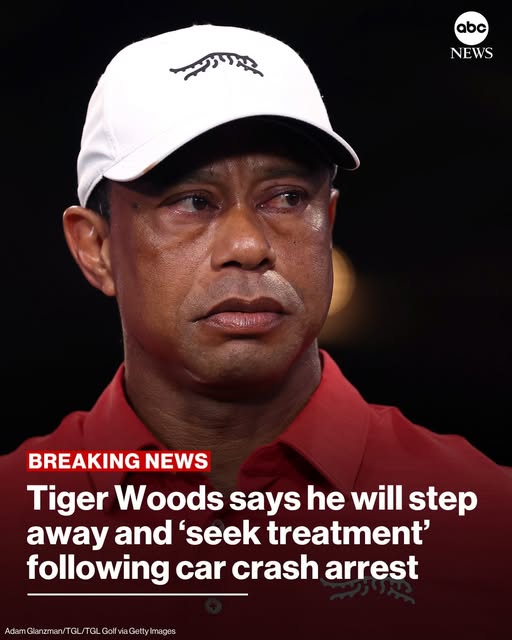
Breaking: Tiger Woods has stated that he will “seek treatment” just days after being accused of driving while intoxicated following a car accident in Florida. The announcement marks a significant and serious moment in the life of one of golf’s most recognizable figures, as he publicly acknowledges the need to address his health and personal situation in the aftermath of the incident.
Woods’ statement comes at a time when scrutiny around the situation is intense, with fans, media, and the broader sports world closely following developments. By choosing to seek treatment, Woods is signaling a willingness to take responsibility and prioritize his well-being. For an athlete whose career has been defined by discipline, focus, and resilience, this decision reflects a recognition that challenges off the course require the same level of commitment and seriousness as those faced in competition.
The incident in Florida has understandably raised concerns, not only because of the legal implications but also because of the broader conversation it sparks about health, accountability, and decision-making. Driving under the influence is a serious issue with potentially devastating consequences, and Woods’ situation underscores how even the most accomplished individuals are not immune to making mistakes. His response—publicly stating that he will seek treatment—can be viewed as an effort to address the situation constructively and prevent future issues.
Throughout his career, Woods has faced numerous challenges, both physical and personal. From injuries that required multiple surgeries to periods of intense public scrutiny, he has repeatedly had to navigate adversity in the spotlight. Each time, his response has shaped not only his career trajectory but also public perception. In this instance, seeking treatment represents a proactive step, one that shifts the focus from the incident itself to the process of recovery and improvement.
Treatment, in this context, can involve a range of approaches, including medical evaluation, rehabilitation programs, counseling, and lifestyle adjustments. For someone in Woods’ position, it also likely includes support from professionals, family, and advisors who can help guide the process. The goal is not only to address any immediate issues but also to establish a foundation for long-term stability and well-being. This kind of commitment requires honesty, discipline, and a willingness to confront difficult realities—qualities that Woods has demonstrated in other areas of his life and career.
The decision to seek treatment also has implications for Woods’ professional future. While golf is a sport that allows for longevity compared to many others, it still demands a high level of physical and mental precision. Any disruption—whether from injury, personal challenges, or legal matters—can impact performance and preparation. By prioritizing his health now, Woods may be positioning himself for a more stable and sustainable return to the sport, should he choose to continue competing. It reflects an understanding that long-term success depends on addressing underlying issues rather than simply moving past them.
Public reaction to Woods’ announcement has been mixed but largely focused on the seriousness of the situation. Many fans and observers have expressed support for his decision to seek help, recognizing that acknowledging the need for treatment is a crucial first step. Others have emphasized the importance of accountability, noting that actions have consequences and that addressing those consequences is essential. This range of responses highlights the complexity of the situation and the broader societal attitudes toward issues like impaired driving and personal responsibility.
Woods’ influence extends far beyond the golf course, and his actions often carry broader significance. As a global sports figure, his decisions can shape conversations about health, behavior, and accountability. By openly stating his intention to seek treatment, he contributes to a narrative that emphasizes the importance of addressing problems directly rather than ignoring them. This can have a ripple effect, encouraging others who may be facing similar challenges to consider seeking help themselves.
It is also worth noting that moments like this can serve as turning points. In the careers of many athletes, periods of difficulty have led to reflection, growth, and, in some cases, renewed focus and success. While the current situation is undoubtedly serious, it also presents an opportunity for Woods to reassess priorities, strengthen support systems, and make changes that could positively impact both his personal life and professional career. The path forward will depend on the choices he makes and the consistency with which he follows through on his commitment to treatment.
From a broader perspective, this situation underscores the pressures that come with fame and high-level competition. Athletes at Woods’ level often operate under intense scrutiny, with every action subject to public attention. Managing that pressure requires not only physical skill but also emotional resilience and a strong support network. When challenges arise, as they inevitably do, the response becomes a defining aspect of an individual’s legacy. Woods’ decision to seek treatment is one such response, and it will likely play a role in shaping how this chapter of his life is remembered.
In the coming weeks and months, attention will likely shift toward the specifics of Woods’ treatment and recovery process, though much of that will remain private. What is clear, however, is that this decision represents a step toward addressing the situation in a meaningful way. It reflects an understanding that recovery is not instantaneous but rather a process that requires time, effort, and commitment. For Woods, as for anyone facing similar challenges, the journey toward improvement begins with acknowledging the need for change and taking concrete steps to achieve it.
Ultimately, Tiger Woods’ announcement that he will seek treatment following the DUI accusation and car accident in Florida is a significant development. It highlights the seriousness of the situation while also pointing toward a path forward centered on accountability and recovery. As one of the most prominent figures in sports, his actions will continue to be closely watched, but the focus now shifts to how he navigates this period and what it means for his future. Whether on the golf course or off it, the emphasis on health, responsibility, and personal growth will define the next chapter of his story.