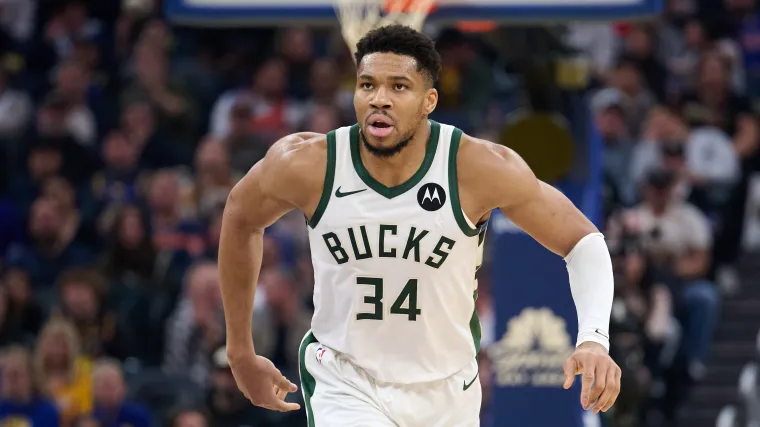
The New York Knicks face a monumental challenge in acquiring Giannis Antetokounmpo from the Milwaukee Bucks before the February 5, 2026, NBA trade deadline. With the Knicks’ limited draft capital (much depleted from prior deals like the Mikal Bridges acquisition) and Milwaukee demanding a massive haul—premier young talent plus multiple high-value first-round picks—a direct or simple swap is nearly impossible. Enter a jaw-dropping hypothetical five-team trade proposal from CBS Sports analyst Sam Quinn, outlined in recent mock trades. This complex, multi-layered deal is positioned as potentially the only realistic path for New York to land the two-time MVP and 2021 champion midseason, given their asset constraints.
This proposal, highlighted across outlets like Yahoo Sports, Sporting News, and Heavy Sports, requires the Knicks to leverage their star incumbents (particularly OG Anunoby and Mikal Bridges) to generate draft picks and prospects from other teams, which are then funneled to Milwaukee. The sheer scale—five teams, numerous players, and a mountain of future assets—underscores why insiders like ESPN’s Brian Windhorst have downplayed aggressive Knicks pursuit right now, citing their belief in the current core (31-18 record, six-game winning streak as of early February).
The Proposed Five-Team Trade Breakdown
Per Quinn’s framework (adapted from CBS Sports mocks and variants discussed in February 2026 reporting):
- New York Knicks receive: Giannis Antetokounmpo (from Bucks), Kelly Olynyk (salary filler from Spurs or similar).
- Milwaukee Bucks receive: A blockbuster package of draft capital and players, including Jerami Grant (from a third team), Harrison Barnes (from another), Guerschon Yabusele (prospect filler), Tyler Kolek (Knicks young guard), plus seven first-round picks (e.g., 2026 more favorable of Hawks/Spurs, 2026 via Wizards top-8 protected, 2027 via Knicks, 2028 via Magic, 2028 more favorable of Celtics/Spurs, 2030 more favorable of Bucks/Blazers, 2031 more favorable of Spurs/Kings) and a 2032 first-round swap rights via Knicks.
- San Antonio Spurs receive: OG Anunoby (elite 3-and-D wing from Knicks, fitting their youth/development timeline).
- Portland Trail Blazers receive: Mikal Bridges (versatile scorer/defender from Knicks, addressing their wing needs post-rebuild).
- Brooklyn Nets receive: 2030 first-round swap rights (via Knicks, a minor sweetener for cap/salary matching or future flexibility).
This creates a chain reaction: The Knicks shop their high-value wings (Anunoby and Bridges) to teams willing to pay premium draft ammunition, which is rerouted to satisfy Milwaukee’s rebuild/retool demands. The Bucks regain control of some picks from past trades (e.g., Lillard-era obligations via Portland) while adding young pieces and future assets. Other teams gain immediate upgrades without gutting their cores.
Salary matching is intricate—Giannis’ ~$54M cap hit requires outgoing salaries from multiple Knicks players (e.g., Bridges ~$23M, Anunoby ~$20M, plus fillers)—but the five-team structure allows rerouting and fillers like Olynyk to balance books under NBA rules.
Why This Might Be the Only Way
The Knicks’ predicament is clear from recent reporting:
- They lack unprotected firsts or blue-chip youth Milwaukee craves (per The Athletic’s James L. Edwards III).
- To compete with suitors like the Warriors (young talent + picks), Heat (culture/flexibility), or Timberwolves (pairing with Edwards), New York must “create” picks by flipping incumbents.
- A simpler 3-team deal (e.g., ESPN concepts with Karl-Anthony Towns to Portland, Bridges rerouted, picks back to Bucks) falls short of Milwaukee’s ask without additional teams providing draft compensation.
- Quinn notes this five-team setup addresses the gap: Knicks sacrifice wing depth but retain Towns for inside-out spacing, Jalen Brunson for elite orchestration, and defensive pieces like Josh Hart, Mitchell Robinson (if healthy), and Deuce McBride.
The result? A tantalizing Knicks big three: Brunson (clutch scoring/playmaking), Towns (versatile big), Giannis (unmatched athleticism, rim attacks, defense). Offense would explode with pick-and-roll gravity, transition dominance, and spacing. Defense remains elite via Giannis’ rim protection and Hart/McBride energy. This could vault New York past Eastern rivals (Boston, Cleveland) as title favorites, ending a 50+ year championship drought.
Realism Check and Downsides
While electrifying, hurdles abound:
- Knicks’ Reluctance — Windhorst emphasized New York’s confidence in their streak and core; they’re not “showing aggression” for a midseason upheaval.
- Bucks’ Leverage — Milwaukee may hold out for summer (Giannis under contract through 2027-28) or a better offer. No “Godfather” bid exists yet (per ESPN).
- Wing Hole — Losing Anunoby and Bridges thins perimeter defense and shooting—critical in playoffs. Depth (Hart, McBride, prospects) must step up.
- Apron Constraints — New York’s second-apron status complicates multi-team machinations; hard caps limit flexibility.
- Injury/Timing — Giannis’ recent calf issue (out 4-6 weeks) adds risk; deadline pressure (Feb. 5) favors simpler deals.
Variants exist (e.g., Heavy Sports ideas keeping Towns while adding Giannis + Jrue Holiday reunion, or ESPN 3-teamers with Portland rerouting picks), but the five-team version maximizes draft haul to Bucks, making it the “only way” if Milwaukee demands everything.
Broader Context in Deadline Chaos
This proposal fits a wild 2026 deadline: Giannis open to a move (preferring Knicks per summer reports), Bucks listening (counteroffers made), and contenders scrambling amid injuries (e.g., AD, Ja). If no deal by Thursday, offseason talks intensify—Giannis could force via preference or extension leverage.
For Knicks fans, it’s a high-stakes gamble: Sacrifice present balance for generational talent? The five-team idea proves it’s theoretically possible, but execution requires perfect alignment. As deadline nears, this jaw-dropping concept fuels the hype—whether it happens could define New York’s trajectory for years.