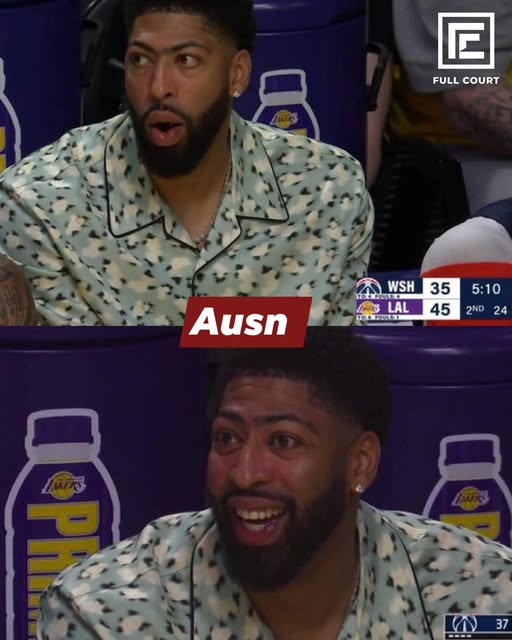
Anthony Davis being spotted on the Wizards bench, unable to play against his former team, the Los Angeles Lakers, adds another layer of narrative to an already emotionally charged matchup. AD’s presence—or rather, his absence from the court—serves as a reminder of the intertwined history between player and franchise. For the Lakers, Davis was a transformative figure, one of the cornerstones alongside LeBron James, helping them secure a championship and consistently contend at the highest level. His departure to Washington leaves both the Lakers and their fans grappling with a mix of nostalgia, longing, and the reality of change in the NBA. Seeing him in a Wizards uniform yet sidelined by injury or protocol highlights that tension: he’s no longer actively shaping the Lakers’ success, yet his presence still evokes memories, comparisons, and speculation about what might have been.
For Lakers supporters, Anthony Davis represents more than just a player; he symbolizes a period of championship contention, a partnership with LeBron James that elevated the team’s competitive ceiling, and the hope that was tied to his talent and health. Even as he sits across from them in a different jersey, fans can’t help but reflect on his influence—both in games where he dominated and in seasons disrupted by injuries or inconsistency. AD’s skill set, versatility, and defensive prowess made him a pivotal figure for Los Angeles, and his absence on the court during this game against the Wizards underscores just how much of an impact he had and continues to have in the collective imagination of Lakers Nation.
From Anthony Davis’ perspective, watching his old team play while being unable to participate must be an emotional balancing act. On one hand, there’s pride in having contributed to the Lakers’ legacy and experiencing the highs of championship runs; on the other, there may be a sense of detachment or frustration at being sidelined, unable to directly compete against a team that shaped a significant part of his career. Bench appearances like this can be both bittersweet and instructive—they allow a player to observe, study, and reflect while also reminding him of the intensity and stakes associated with the franchise he helped build.
For the Wizards, having Anthony Davis present but not playing adds both inspiration and curiosity to the locker room dynamic. Teammates can observe a superstar up close, even if he’s not on the floor, and perhaps draw lessons from his experience, work ethic, and approach to the game. Yet, there’s also a reminder that their roster is still evolving, and the Wizards’ competitive identity is separate from the legacy that AD helped shape in Los Angeles. It creates a unique juxtaposition: a veteran talent sitting on the bench, observing his former team, while his current team navigates its own challenges and ambitions.
For the broader NBA audience, moments like this emphasize the narratives that make the league so compelling. Player movement, rivalries, injuries, and emotional subplots all intersect in a single game, creating layers of intrigue beyond the box score. Anthony Davis on the bench versus the Lakers is a snapshot of transition and continuity: it’s a visual representation of how careers evolve, how fans attach to players, and how franchises carry forward in the aftermath of pivotal departures. The imagery resonates because it’s not just about basketball—it’s about identity, legacy, and the emotional resonance of sports in the lives of fans and players alike.
Finally, for Lakers supporters still longing for AD, seeing him in a Wizards uniform—healthy or otherwise—is a complex emotional experience. It combines admiration for his talent, gratitude for past achievements, and perhaps a lingering wish that circumstances had been different. Fans recall his clutch performances, defensive dominance, and the championship success he helped secure, all while recognizing that the NBA is a league defined by movement, change, and opportunity. This moment serves as a reminder of the ever-evolving nature of sports, where relationships, allegiances, and fortunes shift, yet memories and legacies remain indelible.
In summary, Anthony Davis being on the Wizards bench against the Lakers captures the emotional and narrative depth of professional basketball. It highlights nostalgia, longing, and reflection for fans, underscores AD’s impact on Los Angeles, and situates him at a crossroads between past achievements and present circumstances. Even while sidelined, his presence tells a story—of loyalty, change, competition, and the enduring bond between a player and the franchise that helped define a chapter of his career. The game is not just about points or statistics; it’s about memory, legacy, and the magnetic pull of a superstar whose influence continues to echo long after leaving the court for a new chapter.