The 2025-26 Kentucky basketball season proved to be a tumultuous journey filled with unpredictable swings, moments of brilliance, and setbacks that tested the resilience and patience of players, coaches, and fans alike. It was a season that felt like riding a roller coaster—full of exhilarating highs and daunting lows. For those who wanted to relive or better understand this turbulent campaign, the CBS documentary titled Kentucky Basketball Confidential served as a comprehensive reflection, offering viewers a chance to experience the emotional roller coaster firsthand. Through behind-the-scenes footage and candid interviews, the documentary aimed to capture the essence of Kentucky’s season—the moments of joy, frustration, hope, and despair. However, if fans or analysts were hoping to find a clear-cut explanation or a revealing moment that shed light on why the team fell short of expectations, they would have been disappointed. The documentary, instead, presented a nuanced and honest picture—one that suggested perhaps there was no single smoking gun, no dramatic controversy, or scandal that derailed the season. Instead, it pointed to more subtle, complex factors that contributed to Kentucky’s inconsistent performance.
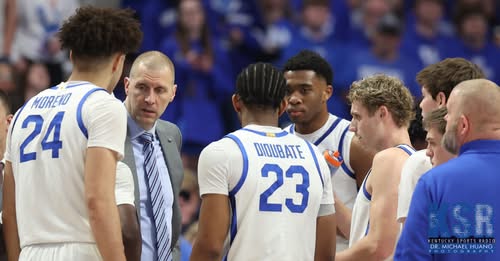
Throughout the season, CBS cameras were embedded with the Kentucky basketball program, capturing every moment from the locker rooms to practices, travel, and personal interactions. This level of access provided viewers with an intimate look into the inner workings of the team, offering insights that are rarely seen by the public. One such moment took place in Louisville, during a pregame warm-up, where Kentucky’s head coach Mark Pope made some candid remarks that raised eyebrows among fans and analysts. Pope acknowledged that during the game’s preparation, he learned a vital lesson about the importance of choosing his words carefully because of how much attention they attract. His comment—”The only thing that happened pregame of that Louisville game is I learned I have to be more careful with the words I say, the words people pay so much attention to”—served as a subtle reminder that even in moments that seem mundane or routine, there is an awareness of the heightened scrutiny from fans, media, and the broader basketball community.
Pope’s reflection underscored a broader theme that ran through much of the documentary: despite the intense focus on Kentucky basketball, the team’s internal dynamics and interactions often appeared surprisingly normal or uneventful. There was no massive controversy, no fiery altercations, and no scandalous revelations. Instead, what the cameras captured was a team that was navigating the challenges of a demanding season with a mix of professionalism, camaraderie, and moments of vulnerability. The notion that “nothing happened”—no fights, no major disagreements, no scandals—was, in itself, a revealing insight. It suggested that perhaps the struggles Kentucky faced weren’t the result of internal discord or chaos but stemmed from more subtle issues—such as injuries, inconsistent play, or the inability to capitalize on opportunities.
Indeed, if the documentary hinted at a “smoking gun”—a definitive explanation for Kentucky’s underwhelming season—it was the injury bug that plagued the team. Throughout the footage, viewers could see the impact of injuries on the roster and team chemistry, most notably the rehab process of Jayden Quaintance. His injury and subsequent recovery became a focal point, symbolizing the unpredictability and fragility of the team’s hopes. The documentary depicted the excitement surrounding Quaintance’s return to the court, especially after the team’s victory over St. John’s, which was one of the season’s highlights. The joy and relief in the locker room following that win captured the emotional high point of Kentucky’s year—a moment of triumph amidst adversity.
In the postgame interviews and candid conversations, Pope delivered a simple yet profound message: “Welcome to who you are.” He acknowledged that the team had experienced something unique in those 17 minutes of gameplay—an idealized version of the roster they envisioned. For that brief period, everything seemed to come together perfectly. The team played with cohesion, energy, and promise. Yet, that moment was fleeting. Pope candidly admitted that such a roster, with all its potential, had never been sustained beyond that brief window. It was a poignant reminder of how fleeting success can be in college basketball, especially when injuries, inconsistencies, and external pressures intervene.
The documentary also provided viewers with an intimate glimpse into the personal lives of the players, humanizing them beyond their on-court performances. Otega Oweh was shown watching his brother play in an NFL game, accompanied by his dog—a touching scene that highlighted familial bonds and personal passions outside the basketball court. Similarly, Denzel Aberdeen was seen relaxing with his dog, offering fans a more relatable and human perspective of the athlete. One of the most heartwarming stories was that of Collin Chandler and his wife, who had known each other since second grade. Their love story was depicted with warmth and authenticity, reminding viewers that these young athletes have rich personal lives and stories that extend far beyond their roles as basketball players. These moments of vulnerability and authenticity resonated with fans, helping to paint a fuller picture of the players’ lives and struggles.
Throughout the season, Kentucky fans found joy in certain memorable victories that showcased their team’s potential. Wins over Tennessee and Arkansas stood out as some of the season’s brightest moments—testaments to what Kentucky could achieve when playing at its best. These victories, celebrated by Big Blue Nation, offered fleeting glimpses of hope and promise. Additionally, the documentary captured the euphoric atmosphere surrounding the NCAA Tournament, which Tom Leach aptly described as a “perfect encapsulation of the season.” The tournament’s highlight was Kentucky’s victory over Santa Clara, a game that represented the high hopes and potential that the team carried into the postseason. However, the contrast was stark when compared to the subsequent loss against Iowa State, in which Kentucky committed 20 turnovers and struggled to maintain composure. This game symbolized the season’s volatility—a team capable of brilliance on one day and disarray on the next.
Reflecting on the season’s overall arc, Mark Pope offered his perspective during the documentary’s closing moments. He acknowledged that Kentucky did not meet all their goals and aspirations, and their journey was marked by unmet expectations. Yet, in his view, the season was also a “beautiful season of growth.” He emphasized that growth in sports—much like in life—is often painful, messy, and filled with setbacks. The failures and struggles were, in his words, “the building blocks of greatness.” Pope explained that failure is an integral part of the process, necessary for eventual success. The season, with all its hardships, was a learning experience—a crucible that would forge stronger, more resilient teams in the future.
In essence, Kentucky Basketball Confidential did not offer a sensationalized exposé or a dramatic revelation about what went wrong. Instead, it presented an honest, layered portrayal of a team navigating the complexities of a challenging season. The documentary suggested that the reasons for Kentucky’s shortcomings were multifaceted—injuries, inconsistent performance, mental and physical fatigue, and perhaps a bit of bad luck. It also highlighted the importance of perseverance, resilience, and the willingness to grow through adversity. Fans were left with a sense that greatness is often built in the messy, unpredictable moments—those that test character and forge identity.
Ultimately, the season was a reflection of the unpredictable nature of college basketball. It was a reminder that even the most storied programs like Kentucky face setbacks and challenges. The emotional journey, captured vividly in the documentary, served as a testament to the resilience of the players and coaching staff. It reinforced the idea that growth and success are rarely linear and that every season—regardless of its outcome—contributes to a larger narrative of perseverance, hope, and the relentless pursuit of excellence.
A recap of key insights and highlights overlooked or underemphasized in the lukewarm coverage of “Kentucky Basketball Confidential.”