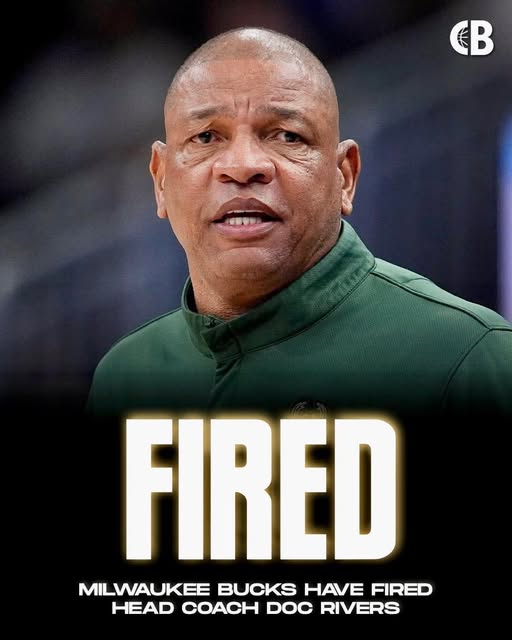
The Milwaukee Bucks have made a stunning and somewhat sobering decision following a disappointing 2025–26 campaign, parting ways with head coach Doc Rivers after the team limped to a 32–50 finish that fell far short of expectations. The move brings an abrupt end to a tenure that began with optimism but ultimately unraveled under the weight of inconsistency, injuries, and growing pressure within a fiercely competitive Eastern Conference. For a franchise that entered the season with championship aspirations, the outcome represents not just a failed year but a broader moment of reflection about direction, identity, and accountability.
When Rivers was first brought in, the decision was framed as a stabilizing one. A veteran presence with a championship pedigree—highlighted by his 2008 title with the Boston Celtics—he was seen as someone who could maximize a roster built around superstar talent and guide the Bucks through the high-stakes environment of title contention. His reputation as a players’ coach, combined with decades of experience, suggested he could manage egos, navigate adversity, and make the tactical adjustments necessary for postseason success. Instead, what unfolded was a season marked by uneven performances, defensive lapses, and an inability to sustain momentum.
The 32–50 record itself tells part of the story, but the deeper frustration lies in how the team arrived there. There were stretches where the Bucks looked capable of competing with top-tier opponents, flashes that reminded observers why expectations were so high in the first place. Yet those moments were consistently offset by prolonged slumps, puzzling rotations, and a defense that never fully found its footing. For a team that once prided itself on its physicality and cohesion, the regression was stark. The Bucks often appeared disjointed, lacking the clarity and consistency that define elite teams.
Much of the scrutiny naturally fell on Rivers. Fair or not, head coaches are often the most visible targets when a season goes off track, and in this case, the criticism intensified as losses mounted. Questions arose about his system, his in-game adjustments, and his ability to connect with a roster that seemed to drift at times. While Rivers has long been respected for his leadership and communication, the modern NBA demands constant tactical evolution, and critics argued that he struggled to keep pace in a league increasingly driven by versatility, spacing, and rapid strategic shifts.
At the same time, it would be overly simplistic to place the entirety of the blame on Rivers alone. The Bucks’ roster faced its share of challenges, from injuries to key players to inconsistencies in performance from supporting pieces. The grind of an 82-game season often exposes weaknesses that are not immediately apparent, and Milwaukee’s depth was tested in ways that ultimately revealed structural issues. Still, in professional sports, results are the ultimate currency, and a sub-.500 finish for a team with championship ambitions is rarely survivable for a head coach.
The decision to move on from Rivers also carries a certain symbolic weight. As a soon-to-be Hall of Famer, his legacy in the game is already secure, built on years of success and a reputation as one of the league’s most respected figures. His dismissal does not erase those accomplishments, but it does underscore the unforgiving nature of the NBA, where past achievements offer little protection against present-day struggles. The league is constantly evolving, and even the most accomplished coaches must continually adapt or risk being left behind.
For the Bucks organization, the firing signals a willingness to make difficult decisions in pursuit of a return to contention. It reflects an understanding that the current trajectory is untenable and that change, however uncomfortable, is necessary. The front office now faces the challenge of identifying a successor who can not only address the team’s immediate shortcomings but also provide a long-term vision that aligns with the franchise’s goals. That process will involve careful evaluation, as the next hire could shape the team’s direction for years to come.
There is also the question of how this move impacts the players. Coaching changes often create a ripple effect within the locker room, altering dynamics and introducing uncertainty. Some players may welcome a fresh voice and a new system, while others may feel the disruption more acutely. The ability of the roster to adapt will be critical, particularly if the Bucks hope to quickly rebound from this disappointing season. Leadership from within—both from established stars and emerging contributors—will play a key role in navigating this transition.
Looking ahead, the Bucks must confront a series of pivotal decisions. Beyond hiring a new coach, there are broader considerations about roster construction, playing style, and organizational philosophy. The modern NBA rewards teams that are both adaptable and cohesive, capable of adjusting to different opponents while maintaining a clear identity. For Milwaukee, rediscovering that balance will be essential. The lessons of this past season, while painful, could ultimately serve as a catalyst for meaningful change if they are properly understood and addressed.
As for Rivers, his future remains an open question, though it is difficult to imagine that this chapter will define his career. Coaches of his stature often find new opportunities, whether on the sidelines, in front offices, or in media roles where their insights and experience are highly valued. His body of work speaks for itself, and while this stint with the Bucks did not yield the desired results, it represents just one part of a long and accomplished journey in the sport.
The broader NBA landscape will undoubtedly take note of this development. Coaching changes, particularly those involving high-profile figures, often trigger a chain reaction of speculation and movement. Teams in need of leadership may view Rivers as a potential option, while others may use the Bucks’ situation as a case study in the risks and challenges of chasing immediate success. The league’s competitive balance ensures that no team can remain static for long, and Milwaukee’s decision is a reminder of how quickly circumstances can shift.
In the end, the firing of Doc Rivers by the Milwaukee Bucks is a story about expectations, accountability, and the relentless pursuit of excellence that defines professional basketball. It is a reminder that success in the NBA is never guaranteed, regardless of pedigree or past achievements. For the Bucks, it marks the beginning of a new chapter, one that will require introspection, resilience, and a clear vision for the future. For Rivers, it is another turn in a career that has seen both triumph and adversity, a testament to the unpredictable and often unforgiving nature of the game.
As the dust settles, the focus will inevitably turn to what comes next. Who will take the helm in Milwaukee, and how will they reshape the team’s identity? Can the Bucks recapture the form that once made them a dominant force, or will this season prove to be the start of a longer period of transition? These questions linger, adding a sense of intrigue to the offseason and setting the stage for what promises to be a consequential period in the franchise’s history.