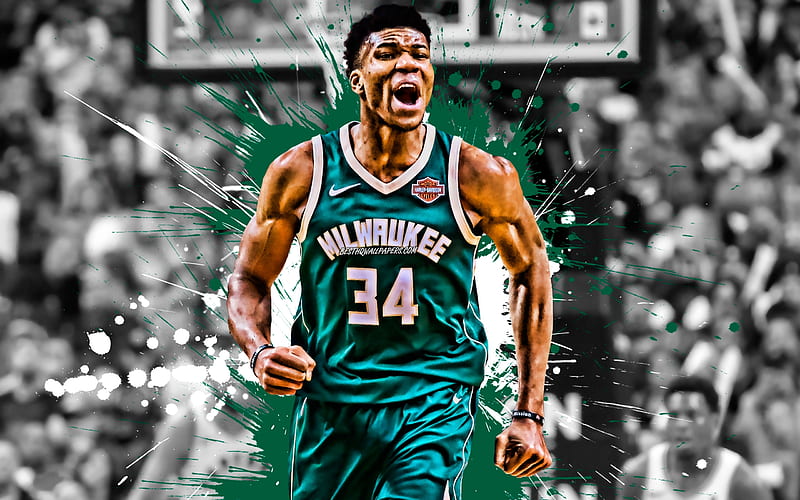
The Milwaukee Bucks made the defining decision of the 2026 NBA trade deadline on February 5 by electing not to trade Giannis Antetokounmpo, their two-time MVP and franchise cornerstone, despite weeks of intense speculation and reported interest from multiple contenders. Instead, the team focused on modest roster adjustments, most notably acquiring center Nick Richards from the Phoenix Suns in a salary-matching deal that initially sent guards Cole Anthony and Amir Coffey to Phoenix—though the transaction quickly evolved into a three-team framework rerouting Richards to the Chicago Bulls while bringing young forward Ousmane Dieng to Milwaukee.
This outcome, confirmed by league insiders like ESPN’s Shams Charania, caps a dramatic buildup where the Bucks fielded offers but set an “astronomically high” bar—demanding at least five first-round picks or equivalent blockbuster value—for any Giannis deal. With no suitor meeting that threshold and Giannis refraining from a formal trade demand, Milwaukee held firm, preserving their superstar through the season’s end while tinkering around the edges to address immediate needs like frontcourt depth and cap flexibility.
The Giannis Decision: Loyalty, Leverage, and Long-Term Strategy
Giannis Antetokounmpo, now in his 13th season with the Bucks, has been the epicenter of NBA discourse since midseason. At 31, he’s still performing at an elite level—averaging around 29-30 points, double-digit rebounds, and dominant two-way impact when healthy—despite a recent right calf strain sidelining him since late January. The Bucks, sitting at a disappointing 20-29 record and outside the Eastern Conference play-in picture, faced mounting pressure to either blow it up or retool aggressively.
Reports indicated the Bucks were “more open than ever” to moving Giannis, with preferred destinations like the Miami Heat (for culture and contention fit), Golden State Warriors (playstyle synergy), Minnesota Timberwolves (youth and assets), and others circling. Yet, as the 3 p.m. ET deadline approached, Charania reported the Bucks informed teams they were keeping Giannis. He reinforced the stance with social media posts, including a Wolf of Wall Street meme captioned “I’m not f—ing leaving,” signaling relief and resolve.
The decision stems from multiple factors:
- No Godfather offer — Milwaukee’s asking price (five first-round picks, young stars, and protections) deterred bidders. Recent trades, like Jaren Jackson Jr. for three firsts, raised the market but didn’t align for Giannis’ value.
- Giannis’ loyalty — He never forced his way out, publicly affirming his desire to retire in Milwaukee, tied to family milestones (children born there), his father’s burial, and the 2021 championship legacy.
- Strategic timing — Midseason deals often undervalue sellers. Holding Giannis preserves leverage for summer 2026, when his supermax extension eligibility (potentially four years, $275 million) begins October 1, and a wider buyer pool emerges with refreshed assets.
Analysts like Nick Wright critiqued it as prolonging a “dysfunctional marriage,” but the Bucks viewed it as pragmatic: avoid a fire sale, buy time for retooling, and position for lottery luck or summer moves.
The Trade Details: From Richards to Dieng
While Giannis stayed, the Bucks executed their primary deadline move with Phoenix, initially acquiring Nick Richards (6’11” center, expiring ~$5 million contract) and Nigel Hayes-Davis (31-year-old forward, minimum deal) for Cole Anthony and Amir Coffey (both expiring contracts with minimal impact in Milwaukee).
Anthony, acquired midseason, struggled with fit—poor shooting, turnovers, and an ejection—while Coffey offered limited 3-and-D upside in a crowded rotation. Both were salary dumps providing no future value.
Richards, a former Charlotte starter with athletic rim protection (career ~6.9 PPG, 5.6 RPG, .631 FG%), had faded in Phoenix (3.2 PPG, 2 RPG in limited 2025-26 minutes) but offered rebounding and size behind Brook Lopez. Hayes-Davis, a former Wisconsin Badger returning to the NBA after overseas stints, was a placeholder.
The deal expanded into a three-team transaction:
- Bucks receive: Ousmane Dieng (from Bulls) and Hayes-Davis (from Suns); waived Hayes-Davis shortly after.
- Suns receive: Anthony and Coffey (guard depth for injuries to Devin Booker/Jalen Green equivalents).
- Bulls receive: Richards (cheap frontcourt depth on expiring deal).
Dieng, the 22-year-old former 11th overall pick (2022, OKC), brings the real upside: 6’9″ with a 7’1″ wingspan, ~35% career 3-point shooting in samples, and defensive versatility. His development stalled across OKC and recent stops, but on a rookie-scale deal (through 2026/27 with options), he’s a low-risk, high-reward addition—potential spacing for Giannis or future trade bait.
The Suns achieved their goal: shedding Richards/Hayes-Davis to duck under the luxury tax apron, saving millions in penalties and creating a ~$5 million trade exception. The Bulls added inexpensive size.
Implications for the Bucks’ Season and Beyond
At sub-.500, Milwaukee isn’t contending deeply. This non-Giannis move and minor acquisition align with a “tanking-lite” approach:
- Short-term: Dieng provides youth and depth; load management for Giannis (calf recovery) and veterans preserves health.
- Development focus: Increased minutes for prospects like Dieng, AJ Green, or others to evaluate assets.
- Lottery positioning: Better draft odds in a strong 2026 class for a high pick to pair with Giannis or rebuild.
Critics argue the Bucks missed extracting a second-rounder or more in the salary dump, grading the trade a C for Milwaukee—incremental but uninspiring. Yet it signals housekeeping: dump vets, grab upside, maintain flexibility.
Summer 2026 looms large. Giannis’ extension decision could recommit him (with additions via cap space, exceptions, or lottery pick) or force a trade before 2027 free agency. The Eastern Conference remains stacked (Boston, Cleveland, Philadelphia), but avoiding a rushed Giannis deal preserves dignity and value.
For fans, this deadline offers reassurance: the Bucks didn’t sell low on their icon. Giannis’ loyalty endures, but the clock ticks on contention. The Richards-to-Dieng pivot adds intrigue to a roster in flux—small step, big questions ahead. Whether it leads to revival, extension, or eventual separation defines Milwaukee’s future.