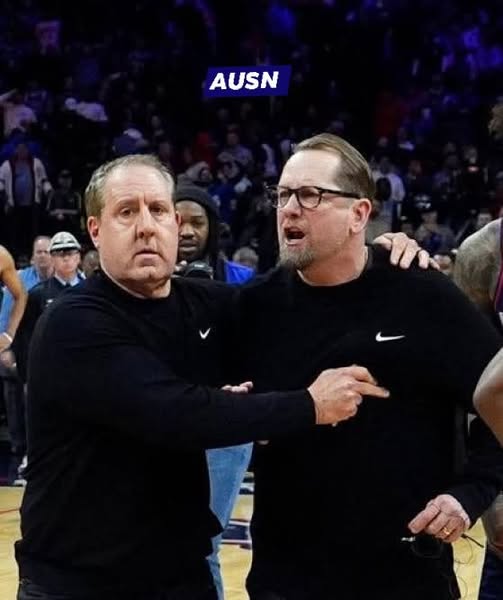
That kind of loss doesn’t just hurt in the moment—it lingers. For the Philadelphia 76ers, having a 107–103 lead with just over three minutes left felt like the hard part was already done. You’ve battled for nearly 45 minutes, executed well enough to be in front late, and all that’s left is closing the door. But instead of finishing, everything unraveled in a matter of possessions, and the Miami Heat took full advantage, ripping off a 14–0 run that flipped the entire game on its head. It’s the kind of collapse that doesn’t just show up in the standings—it sticks in the minds of players, coaches, and fans long after the final buzzer.
Late-game situations in the NBA are as much mental as they are physical. The Sixers didn’t suddenly forget how to play basketball in those final minutes, but something shifted. The rhythm they had built throughout the game disappeared. Offensively, possessions became tighter, more hesitant. Instead of flowing into sets, moving the ball, and trusting what had worked earlier, there’s often a tendency in these moments to isolate, to rely on individual creation rather than team execution. That’s where things can start to break down. A missed shot here, a forced attempt there, and suddenly the pressure builds.
At the same time, Miami thrives in exactly that kind of environment. The Heat have built a reputation on discipline, toughness, and the ability to stay composed when games get chaotic. Down four with just over three minutes left, they didn’t rush. They didn’t panic. They leaned into their identity, tightened up defensively, and trusted that if they kept getting stops, the offense would follow. And once that first bucket or two drops, belief grows quickly. Momentum in basketball is real, and few teams know how to harness it like Miami.
The 14–0 run itself tells the story. It wasn’t just a couple of lucky shots—it was sustained control on both ends of the floor. For the Sixers, every empty possession added to the tension. Every miss made the next shot feel more important, more pressured. That’s how leads disappear. Not all at once, but piece by piece, until suddenly the scoreboard tells a completely different story. Defensively, the inability to get even one stop during that stretch is what really stands out. In clutch moments, even if your offense stalls, one or two defensive stands can reset everything. The Sixers couldn’t find that stop, and Miami kept pushing.
There’s also a psychological weight to blowing a lead like that. When you’re ahead late, the mindset shifts slightly. Instead of playing freely, teams can start playing not to lose. It’s subtle, but it shows up in shot selection, in hesitation, in decision-making. Meanwhile, the trailing team has nothing to lose. They can play aggressively, take chances, and attack without fear. That contrast often defines how these final minutes play out, and in this case, Miami embraced the moment while Philadelphia tightened up.
Execution in the final minutes is what separates good teams from great ones. It’s about knowing where your shots are coming from, trusting your spacing, and making quick, confident decisions. It’s also about communication on defense—switching properly, contesting without fouling, and securing rebounds to finish possessions. The Sixers, for whatever reason, couldn’t bring those elements together when it mattered most. And against a team like Miami, that margin for error disappears completely.
This loss also raises questions about leadership and composure. In moments like these, teams look to their leaders to steady things, to organize the offense, to demand stops defensively. Whether it’s a veteran presence or a star player, someone has to take control of the situation and bring clarity when things start to slip. It’s not always about scoring—it’s about calming the group, making sure everyone is on the same page, and stopping the bleeding before it becomes a full collapse. That didn’t happen in time for Philadelphia, and by the time they tried to regain control, the game was already gone.
From Miami’s perspective, this was a perfect example of resilience and execution under pressure. They didn’t just capitalize on Philadelphia’s mistakes—they forced them. Their defense ramped up, turning every possession into a challenge. Passing lanes were tighter, shots were more contested, and the Sixers were pushed further and further out of their comfort zone. Offensively, Miami found just enough rhythm to keep the run going, taking advantage of mismatches, pushing in transition when opportunities arose, and staying aggressive without becoming reckless.
For the Sixers, the frustration comes from knowing how close they were. This wasn’t a game where they were outmatched or outplayed from start to finish. They had control. They put themselves in a position to win. That’s what makes the loss so difficult to process. It’s not about what they couldn’t do—it’s about what they didn’t do in those final minutes. Closing games is a skill, and like any skill, it requires consistency, focus, and trust in the system.
Losses like this can go one of two ways for a team. They can linger, affecting confidence and creating doubt in late-game situations moving forward. Or they can serve as a lesson, a moment that forces a team to look inward, identify what went wrong, and make the necessary adjustments. The key is how the Sixers respond. Do they tighten up in the next close game, remembering this collapse? Or do they learn from it, execute better, and prove that they can finish?
The schedule doesn’t stop, and in the NBA, there’s always another game, another opportunity. But the memory of a 14–0 run to close out a game you were leading is hard to shake. It becomes a reference point, something that gets brought up in film sessions, in practices, in conversations about focus and execution. Coaches will emphasize the importance of each possession, especially late. Players will be reminded of how quickly things can change if you lose concentration for even a moment.
At the same time, it’s important to recognize that these moments are part of the growth process. Even strong teams experience collapses. Even experienced players have games where things slip away. What defines a team is not whether it avoids these moments entirely, but how it responds afterward. The Sixers have the talent, the structure, and the experience to bounce back. But they’ll need to address the details—late-game offense, defensive communication, and mental composure—if they want to avoid repeating this kind of loss.
For Miami, this game reinforces their identity. They’re a team that doesn’t quit, that thrives in adversity, and that believes it can win no matter the situation. A 14–0 run to close a game is not easy, especially on the road or against a quality opponent. It requires discipline, confidence, and execution. It’s the kind of win that can build momentum, strengthen belief, and remind the entire league that they’re never out of a game.
In the end, this game will be remembered differently by each side. For the Heat, it’s a comeback fueled by resilience and clutch performance. For the Sixers, it’s a missed opportunity, a game that slipped away when it should have been secured. The scoreboard will show the final result, but the story behind it—the momentum swings, the mental battles, the execution in the final minutes—is what truly defines what happened.
And that’s the harsh reality of basketball at this level. Games aren’t won after 45 minutes. They’re won after 48. No matter how well you play for most of the night, if you can’t close, it can all disappear in a matter of moments. The Sixers learned that the hard way, watching a four-point lead turn into a loss without scoring a single point in the final stretch. It’s a reminder that every possession matters, especially when the game is on the line, and that in the NBA, no lead is ever truly safe until the clock hits zero.