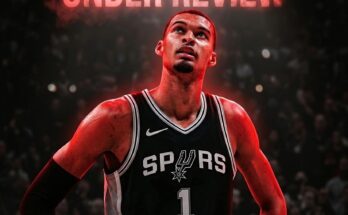
The situation surrounding Jaden Ivey and the Chicago Bulls is a stark reminder of how tightly professional sports intersect with social issues, public statements, and organizational expectations. According to reports, Ivey was waived for what the team labeled “detrimental conduct,” following his public criticism of the NBA’s support of Pride Month. This development is being viewed by many as a cautionary tale about the modern athlete’s platform, the responsibilities it entails, and the consequences of speaking out on socially sensitive topics.
Ivey, as a young guard entering the league, quickly became a player to watch due to his athleticism, skill set, and potential. However, the NBA operates not just as a sports league but also as a highly visible cultural institution. Its teams and executives often align with broader social initiatives, and Pride Month has become one of those annual causes widely recognized and promoted league-wide. By publicly opposing that support, Ivey inserted himself into a conversation that is both politically and socially charged, drawing scrutiny from multiple directions.
The Bulls’ response—waiving a player for detrimental conduct—is significant because it emphasizes the importance teams place on alignment with organizational values. Professional sports organizations increasingly expect players to represent the franchise in ways consistent with its public image. This isn’t limited to on-court performance; it extends to personal conduct, social media activity, and public statements that may reflect on the team. In Ivey’s case, the team evidently viewed his comments as crossing a line, warranting immediate disciplinary action.
From a cultural perspective, this situation raises questions about freedom of expression versus professional responsibility. On one hand, Ivey has the right to his beliefs and opinions; on the other, as a member of a high-profile team and league, those opinions carry weight and potential consequences. The balance between personal expression and the expectations placed upon athletes in highly public roles has become increasingly complex in the modern era. Social media amplifies every statement, making the impact immediate and far-reaching.
There is also the personal dimension for Ivey. Being waived is a significant career setback, particularly for a young player still developing his identity and reputation in the league. Beyond the financial and professional ramifications, there is the emotional toll of navigating public backlash, organizational action, and the uncertainty of future opportunities. For many athletes, moments like these can serve as turning points, shaping both personal and professional trajectories.
For the Bulls, the decision reflects a commitment to protecting their organizational identity and aligning with league initiatives. Teams must weigh talent against culture fit, and in a situation like this, the calculus can be difficult. While Ivey’s on-court abilities may have been valuable, the potential disruption to team culture, public perception, and stakeholder relationships likely influenced the decision to part ways.
The broader NBA community is also affected. Other players, fans, and stakeholders are observing how the league and its teams handle dissent or disagreement on social issues. This incident may influence how future players approach public commentary on culturally sensitive topics, highlighting the tension between personal beliefs and professional consequences. Teams may also reinforce policies around conduct, messaging, and engagement with social causes to prevent similar situations.
Critically, the story underscores how sports are no longer isolated from broader societal conversations. Athletes are influential voices in culture, and their statements often extend far beyond the court. This amplifies both the opportunity to lead and the risk of repercussions when their views clash with organizational priorities or social expectations. In Ivey’s case, the decision to waive him sends a message about the boundaries the Bulls—and by extension, other franchises—place on public commentary.
Fans and commentators are divided. Some view the move as necessary to maintain team cohesion and align with the league’s values, while others see it as an overreach, restricting an athlete’s ability to express personal beliefs. That tension reflects the evolving role of athletes in society: they are both individuals with personal convictions and public figures whose words carry influence. Navigating that dual role is increasingly challenging in the current landscape.
For Ivey’s career, the path forward is uncertain but not necessarily closed. Other teams may evaluate his talent against his public positions, and some may be willing to take the risk if they believe his on-court contribution outweighs potential controversy. Historically, players who have faced similar scrutiny have sometimes found new opportunities, though often under careful guidance or in different environments. The incident may also spark broader discussions about athlete support, counseling, and education regarding public communication.
Ultimately, the Jaden Ivey situation illustrates the modern complexities athletes face in balancing personal expression with professional expectations. Waived for detrimental conduct after publicly criticizing the NBA’s support of Pride Month, Ivey now confronts the realities of how closely personal beliefs intersect with career consequences in professional sports. It’s a sobering reminder that while talent opens doors, the responsibilities of visibility and alignment with organizational culture are increasingly unavoidable.
The incident is sad, not only because of the career disruption for Ivey but also because it highlights the precarious nature of professional sports, where misalignment with organizational or league values—regardless of intent—can result in immediate and far-reaching consequences. It is a moment that will likely be discussed in sports media, social commentary, and within teams themselves as a case study in the responsibilities, risks, and influence inherent in being a professional athlete today.