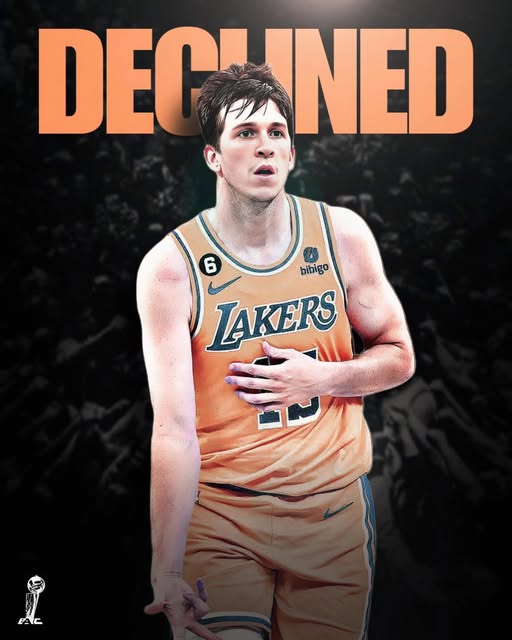
What’s objectively happening is this: Reaves is declining his $14.9 million player option for next season and electing to become an unrestricted free agent in the summer of 2026. Sources familiar with his plans told ESPN that he will opt out and enter free agency rather than simply take that $14.9 million option. (Yardbarker)
Declining a player option — especially one worth nearly $15 million — isn’t something most players do lightly. For many players at Reaves’ level, that kind of salary is solid money, even life‑changing for the vast majority of people on Earth. But in the context of the NBA — where elite wings and secondary stars command astronomical deals — $14.9 million suddenly looks modest for someone of his production. This isn’t just about money in a vacuum; it’s about market valuation, leverage, and finding a contract that better matches his role, production and ceiling in the league.
Reaves has developed into one of the most productive and efficient players on his team. In the 2025‑26 season, he posted standout numbers: averaging 23.5 points, 4.7 rebounds and 5.6 assists per game while shooting a high percentage from the field, even with shared usage alongside stars like LeBron James and Luka Dončić. (Last Word On Sports) That kind of production — especially from someone who came into the NBA undrafted — has dramatically increased his value across the league.
And it’s not just Lakers fans talking. Multiple NBA media outlets and executives have projected that Reaves isn’t just going to be a free agent this summer — he’s going to be a very expensive one. Several reports from credible NBA insiders have indicated that Reaves is expected to seek a contract in the neighborhood of $30 million per season in free agency, with some teams reportedly prepared to pay even more if the market gets competitive. (Basketball Insiders)
Declining the option and entering free agency also gives Reaves full control of his future rather than sticking with a team option that caps his earnings. If he had simply accepted the $14.9 million, he’d be locked into a salary that is dwarfed by what comparable players will make once the summer bidding begins. By opting out, he’s betting on himself — and so far, his on‑court production gives him a strong case to ask for big money.
This also has strategic implications for the teams around the league. When a guy with Reaves’ skill set — scoring punch, shooting ability, secondary playmaking — hits unrestricted free agency, multiple teams suddenly have a reason to scramble for cap space or roster flexibility. It’s not just about one team matching an offer; it’s about the whole league’s landscape shifting because Reaves’ next contract could be a benchmark for scoring wings in that next tier below superstars.
Now, because Reaves will be an unrestricted free agent, he isn’t limited to what the Lakers can offer. They can certainly try to re‑sign him and have expressed interest in keeping him if the price and term are right. (Last Word On Sports) But once he hits the open market in free agency, he and his representation are free to negotiate with any team that has cap space or interest — and plenty of teams will have room this summer due to projected league salary cap increases and roster construction. (Lakers Nation)
This decision also signals how confident Reaves and his camp are about his place in the league. Declining a guaranteed $14.9 million means he truly believes his value is well above that number — and that other teams will agree. It’s not just bravado; it’s a clear statement that he expects significantly more than his current contract would pay him. If he performs at a high level through the rest of this season and in the playoffs, his stock only rises, and that could translate into real money in negotiations.
This isn’t unique in the NBA — we’ve seen other players turn down good money because they believe their market value is higher, and often the market has agreed. A strong free agent summer can transform a player’s financial future with a deal that might be several hundred million dollars over multiple years. If the market for wings and secondary scorers stays strong, Reaves could join that group of players who landed life‑changing contracts after testing free agency.
It’s also worth noting that this decision doesn’t necessarily signal animosity with the Lakers. Reports suggest that the Lakers would like to re‑sign Reaves — and he clearly has a strong relationship with the organization and the fanbase. But the economics of NBA contracts and the rules governing extensions and player options can make it difficult for a team to retain a player at the figure he expects without going through free agency. In other words, it might be less about friction and more about process and opportunity.
What this means for the Lakers is that they’ll almost certainly enter a period of negotiation and perhaps strategy planning to figure out how they want to use their cap space this summer, especially as they balance their roster and pursue other potential targets or extensions. The Lakers are projected to have significant cap space — roughly $50 million — which gives them flexibility, but a big contract for Reaves would take a substantial portion of that. (ESPN.com)
In summary, Reaves’ decision to decline his player option and test free agency isn’t just a financial move — it’s a strategic positioning that reflects his confidence in his own value, his desire for a bigger payday, and the belief that the market will validate him. Whether he remains a Laker or signs elsewhere, he’s effectively put himself in a position to maximize his earnings potential, and that’s the core of what free agency is all about in the modern NBA.
If you want the raw figures, a player at Reaves’ level could realistically see starting offers around $30 million per season or higher depending on team needs, cap space and market competition. That’s why he’s rejecting $14.9 million — because he genuinely believes he’s worth much more. (Yardbarker)
No matter how the summer unfolds, declining that player option sets Reaves up for the biggest contract decision of his career — and all signs point to him securing a much larger payday than what he’s turning down now.