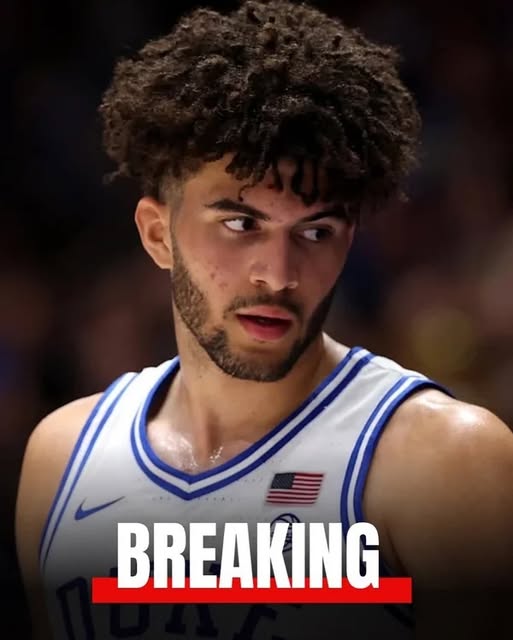
Cameron Boozer’s decision to withdraw from the 2026 NBA Draft and return to Duke has sent a jolt through the college basketball landscape, reshaping expectations for both the Blue Devils and the upcoming draft class. In an era where top prospects often spend just a single season at the collegiate level before making the leap to the NBA, Boozer’s choice stands out as both strategic and deeply personal. It reflects not only his confidence in his long-term trajectory, but also his belief that another year in college can elevate his game to an even higher level.
For much of the past year, Boozer had been widely projected as a potential top pick in the 2026 NBA Draft. His combination of size, skill, and basketball IQ made him one of the most intriguing young forwards in the country. At Duke, he showcased a polished offensive repertoire, demonstrating the ability to score from multiple areas on the floor while also contributing as a rebounder and playmaker. His presence alone altered defensive schemes, forcing opponents to collapse in the paint or stretch their coverage to account for his versatility.
Despite this, there were subtle indications that Boozer might not be fully satisfied with where his game stood. While his freshman campaign was impressive, it was not without its inconsistencies. There were stretches where he struggled with efficiency, particularly against more physical defenders who challenged him in the post and along the boards. Additionally, questions lingered about his defensive consistency and his ability to guard quicker players on the perimeter. These are not uncommon concerns for a young forward, but they are precisely the kinds of details that NBA teams scrutinize when evaluating lottery-level talent.
By choosing to return to Duke, Boozer is effectively betting on himself. He is signaling that he believes another year of development—both physically and mentally—will solidify his standing as a more complete and NBA-ready prospect. In many ways, this decision mirrors a broader trend among elite players who are beginning to recognize the value of refinement over immediacy. The modern NBA is increasingly demanding, and rookies are expected to contribute earlier than ever before. For Boozer, entering the league with fewer question marks could make the difference between being a promising prospect and an immediate impact player.
There is also the matter of legacy. Duke has long been a program associated with excellence, and players who choose to stay beyond their freshman year often have the opportunity to leave a more lasting imprint. Boozer now has the chance to lead the Blue Devils not just as a talented contributor, but as a centerpiece. With another offseason to improve his conditioning, expand his skill set, and build chemistry with returning teammates and incoming recruits, he could position himself as one of the most dominant players in college basketball.
From a team perspective, Boozer’s return instantly elevates Duke’s outlook for the upcoming season. Instead of rebuilding around new faces, the program now retains a proven star who understands the system and the expectations that come with wearing the Duke jersey. His presence will likely attract additional attention from recruits and transfers, further strengthening the roster. Moreover, his leadership—something that often develops more fully in a player’s second year—could prove invaluable in high-pressure situations.
For the 2026 NBA Draft, Boozer’s withdrawal creates a ripple effect. Teams that had been eyeing him as a potential cornerstone will now have to reassess their draft boards. This opens the door for other prospects to rise in the rankings and potentially secure higher selections. It also underscores the unpredictability of the draft process, where decisions made by individual players can significantly alter the landscape.
Critics of Boozer’s decision might argue that delaying entry into the NBA carries inherent risks. Injuries, changes in performance, or shifts in team needs can all impact a player’s draft stock. There is also the financial aspect to consider; entering the league earlier typically means starting the clock sooner on a professional career and the earnings that come with it. However, for Boozer, the potential rewards appear to outweigh these concerns. If he can address the weaknesses identified during his freshman season and build on his strengths, he could emerge as an even more compelling prospect in the 2027 draft.
Another important dimension of this decision is the evolving landscape of college athletics. With the advent of name, image, and likeness (NIL) opportunities, players like Boozer are no longer faced with the same financial pressures that once made early entry into the NBA almost inevitable. By staying at Duke, he can continue to develop his brand while also benefiting from endorsements and partnerships. This added flexibility allows players to make decisions based more on long-term development than immediate necessity.
Boozer’s return also speaks to a level of maturity that is sometimes overlooked in discussions about young athletes. It is not easy to turn down the prospect of becoming an NBA player, especially when that opportunity is within reach. Doing so requires a clear understanding of one’s goals and a willingness to take a less conventional path in pursuit of them. For Boozer, it suggests a focus on becoming the best version of himself as a player, rather than simply taking the next available step.
Looking ahead, expectations for Boozer will be significantly higher. Opponents will study his tendencies more closely, and he will likely face increased defensive attention on a nightly basis. How he responds to these challenges will be a key factor in determining the success of his sophomore season. If he can demonstrate improved efficiency, greater defensive consistency, and enhanced leadership, he will not only validate his decision to return but also position himself as a frontrunner for national accolades.
There is also the question of how this decision will influence other players facing similar choices. Boozer’s move could serve as a reminder that there is no single path to success in basketball. While the allure of the NBA is undeniable, there is value in patience and preparation. If his second season at Duke leads to a more polished game and a higher draft position, it could encourage others to consider the benefits of staying in school longer.
At the same time, Boozer’s situation is unique. Not every player has the combination of talent, support, and opportunity that allows for such a decision. For many, entering the NBA as soon as possible remains the best option. This makes Boozer’s choice all the more noteworthy, as it highlights the importance of individual circumstances in shaping career trajectories.
Ultimately, Cameron Boozer’s withdrawal from the 2026 NBA Draft is more than just a headline; it is a statement about priorities, development, and the evolving nature of basketball careers. It reflects a growing recognition that success at the highest level requires more than raw talent—it demands preparation, resilience, and a willingness to invest in one’s growth.
As the next college basketball season approaches, all eyes will be on Boozer. His performance will be scrutinized not only for what it reveals about his own potential, but also for what it suggests about the broader dynamics of player development. Whether he ultimately becomes a top pick in a future NBA Draft or takes an unexpected path, his decision to return to Duke ensures that his journey will remain one of the most compelling stories in the sport.
In the end, Boozer has chosen to embrace the challenge of unfinished business. Rather than stepping into the professional ranks at the earliest opportunity, he has opted to refine his craft, strengthen his foundation, and pursue excellence on his own terms. It is a decision that carries both risk and promise, but above all, it underscores a belief in the value of growth—a belief that could ultimately define not just his career, but also the way future players approach their own journeys.