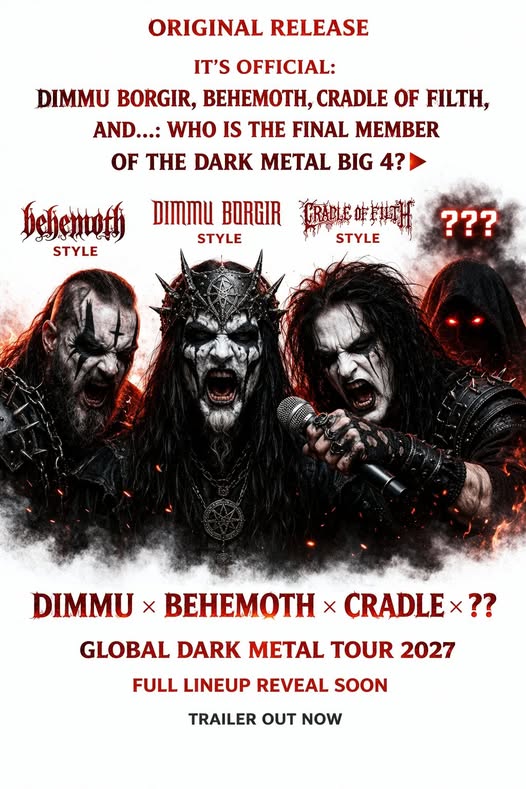
Dark metal, often characterized by its atmospheric, symphonic, and theatrical qualities, has carved a unique niche within the broader metal universe. It’s a genre that explores themes of darkness, mysticism, horror, and the occult, blending intricate compositions with haunting vocals and elaborate stage shows.
Among the most influential and prominent bands in this realm are Dimmu Borgir, Behemoth, and Cradle of Filth. These groups have pioneered the genre, pushing boundaries and inspiring countless artists worldwide. Fans and critics alike have long debated who constitutes the “Dark Metal Big 4”, a legendary lineup representing the best and most influential acts of this dark, atmospheric subgenre.
While the first three—Dimmu Borgir, Behemoth, and Cradle of Filth—are widely recognized as the core members, the question remains: Who is the final, essential band that completes this Dark Metal Big 4? Is it Emperor, Moonspell, Carach Angren, or another act entirely?
In this article, we will explore the roots and impact of these bands, analyze what makes a band a part of this elite group, and argue for the most fitting final member to complete the Dark Metal Big 4.
The Roots of Dark Metal: Defining the Genre
Before diving into the bands themselves, it’s essential to understand what defines dark metal. This genre is a fusion of black metal, gothic metal, symphonic metal, and atmospheric elements. It emphasizes mood, ambiance, and theatricality, often incorporating orchestral arrangements, symphonic elements, and a penchant for dark, poetic, and sometimes occult lyrics.
Dark metal is less about raw aggression and more about evoking emotion, creating immersive soundscapes, and exploring themes of death, darkness, mysticism, and the supernatural.
The Pioneers: Dimmu Borgir, Behemoth, and Cradle of Filth
Dimmu Borgir
Originating from Norway in 1993, Dimmu Borgir has become one of the most influential bands in symphonic black metal. Their music blends ferocious black metal riffs with orchestral arrangements, choirs, and atmospheric layers. Albums like Stormblåst (1996), Enthrone Darkness Triumphant (1997), and Puritanical Euphoric Misanthropia (2001) are considered masterpieces of dark, symphonic metal.
Led by Shagrath, Silenoz, and Galder, Dimmu Borgir’s theatricality and epic sound have set a benchmark for the genre. Their lyrics explore chaos, darkness, and mysticism, often steeped in Norse and occult symbolism.
Behemoth
Hailing from Poland, Behemoth was formed in 1991 and initially rooted in death metal before evolving into a more blackened, dark metal sound. Their albums The Satanist (2014) and The Apostasy (2007) showcase a blend of ferocity, occult themes, and philosophical depth.
Led by Nergal, Behemoth is renowned for their intense live performances, intricate musicianship, and lyrical focus on Satanism, anti-religion, and spiritual rebellion. Their evolution from raw death metal to a symphonic blackened style has influenced many bands in the dark metal scene.
Cradle of Filth
Founded in England in 1991, Cradle of Filth is perhaps the most theatrical and gothic of the dark metal bands. Their music combines black metal, gothic rock, and symphonic elements, often emphasizing dark romanticism, horror imagery, and elaborate stage shows.
Albums like Dusk… and Her Embrace (1996) and Cruelty and the Beast (1998) exemplify their dark, atmospheric sound, poetic lyrics, and gothic aesthetic. Led by Dani Filth’s distinctive vocal style, they have cultivated a dedicated global following.
The Debate for the Final Member of the Dark Metal Big 4
While Dimmu Borgir, Behemoth, and Cradle of Filth are widely accepted as the core members of the Dark Metal Big 3, the question remains: Who completes this elite lineup?
Several bands could be contenders based on influence, innovation, and thematic consistency:
Emperor: Norwegian black metal pioneers with atmospheric and symphonic elements.
Moonspell: Portuguese dark metal band with gothic and atmospheric influences.
Carach Angren: Dutch band known for horror-themed storytelling through symphonic black metal.
Satyricon: Influential Norwegian black metal act with atmospheric and dark themes.
However, after careful consideration, many fans and experts argue that Emperor is the most fitting choice to complete the Dark Metal Big 4.
Why Emperor?
Musical Innovation and Influence
Formed in 1991, Emperor is credited with shaping the symphonic and atmospheric black metal subgenre. Their groundbreaking albums In the Nightside Eclipse (1994) and Anthems to the Welkin at Dusk (1997) are considered classics, combining raw black metal intensity with majestic orchestral arrangements and complex songwriting.
Their use of symphonics, keyboards, and atmosphere set a new standard for dark metal. They introduced a sense of epic grandeur that aligns perfectly with the aesthetic of the Big 4.
Thematic Depth and Mythology
Emperor’s lyrics often explore Norse mythology, chaos, and cosmic themes, adding layers of depth that resonate with the dark, mystical themes of Dimmu Borgir, Behemoth, and Cradle of Filth.
Legacy and Impact
Emperor’s influence extends beyond black metal, inspiring countless bands across multiple subgenres. Their pioneering approach to symphonics and atmosphere makes them a natural candidate for the final spot in the Dark Metal Big 4.
The Alternative Contenders
While Emperor is a strong candidate, other bands also make compelling cases:
Moonspell: Their gothic, poetic style and atmospheric sound make them a quintessential dark metal band. Albums like Wolfheart (1995) and Irreligious (1996) are iconic, especially in the gothic metal scene.
Carach Angren: Their horror storytelling, combined with symphonic black metal, aligns with the dark themes of the Big 4. Their theatrical approach and narrative depth make them a notable contender.
Satyricon: Known for their pioneering black metal sound and atmospheric textures, Satyricon has been influential but perhaps less symphonic and gothic compared to the others.
Ultimately, Emperor’s pioneering edge and influence tip the scales in their favor.
The Significance of the Dark Metal Big 4
Having a “Big 4” in any genre signifies a recognition of the most influential, innovative, and enduring bands. For dark metal, these four bands collectively embody the genre’s spirit:
Dimmu Borgir: The epitome of symphonic black metal with a theatrical flair.
Behemoth: The dark, philosophical, and musical evolution into blackened death metal.
Cradle of Filth: Gothic elegance, horror aesthetics, and poetic dark themes.
Emperor: The masters of atmospheric, symphonic black metal, pushing the genre’s boundaries.
This lineup encapsulates the diversity and depth of dark metal—each band representing different facets: symphonic grandeur, philosophical darkness, gothic romanticism, and atmospheric innovation.
The Cultural and Musical Impact of the Dark Metal Big 4
Influence on the Scene
These bands have shaped countless artists, influenced entire subgenres, and defined dark metal aesthetics. Their pioneering use of symphonics, theatricality, and thematic storytelling has become standard in the genre.
Live Performances and Stagecraft
Their elaborate stage shows, costumes, and visual aesthetics have elevated live metal performances into immersive experiences. These bands demonstrate that dark metal is not just about music but about creating a complete atmospheric and theatrical universe.
Themes and Lyrics
Lyrically, these bands explore themes of darkness, death, mysticism, and rebellion, resonating deeply with fans seeking catharsis or reflection through music.
The Future of Dark Metal and the Big 4
While these bands have established their legacies, the genre continues to evolve. New bands draw inspiration from the Big 4, blending their influences with modern sounds, electronic elements, and innovative storytelling.
The Dark Metal Big 4 remains a benchmark, inspiring new generations to explore the depths of darkness and creativity.
Conclusion
The question of who completes the Dark Metal Big 4 has sparked debate for years. Based on influence, innovation, thematic depth, and legacy, the most fitting final member is Emperor. Their pioneering symphonic black metal, epic compositions, and mythological themes make them the ideal complement to Dimmu Borgir, Behemoth, and Cradle of Filth.
Together, these four bands embody the spirit of dark, atmospheric, and theatrical metal—an enduring testament to the genre’s creativity and power.
Whether you’re a die-hard fan or a newcomer exploring dark metal, these bands serve as the pillars of the genre, guiding listeners through worlds of darkness, mysticism, and raw emotion.