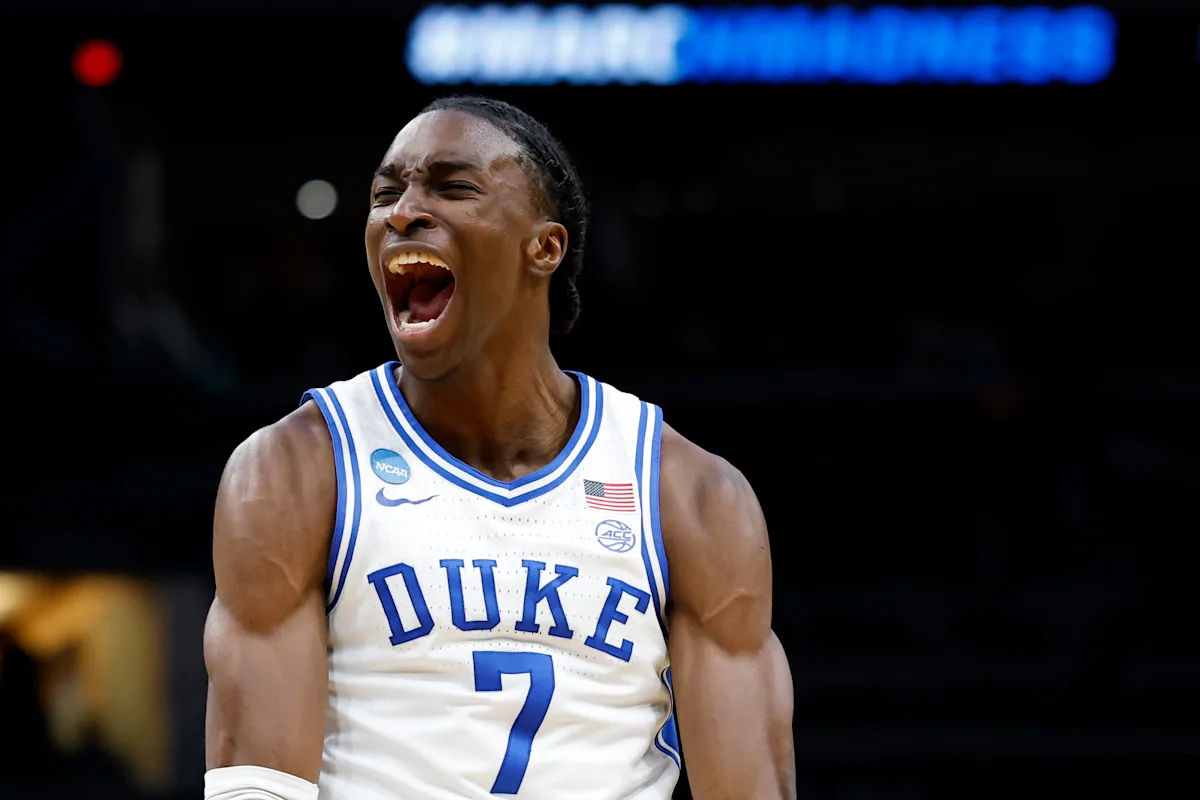
Basketball, much like any sport, is a game of highs and lows, triumphs and disappointments. It’s a spectacle that unites fans, coaches, and players in shared moments of joy and heartbreak. One such moment that has captured the attention of college basketball fans and analysts alike is Isaiah Evans’s heartfelt reaction following Duke’s recent loss to UConn in the NCAA Tournament’s Elite Eight. This moment has ignited widespread discussion, with some praising Evans’s display of loyalty and emotional investment in his team, while others scrutinize his performance in the final critical minutes of the game.
To understand the significance of Evans’s reaction, it’s essential to examine the context surrounding the game, the player’s journey, and the broader themes that embody college basketball’s emotional landscape.
Context of the Game and the Season
Duke’s journey through the NCAA Tournament this season has been a rollercoaster of emotions. After a somewhat tumultuous regular season, the Blue Devils entered the tournament with high hopes and a roster filled with talented freshmen and seasoned veterans. Their path to the Elite Eight was marked by thrilling victories and gritty performances, culminating in a high-stakes showdown against the powerhouse UConn Huskies.
The game itself was a nail-biter, with both teams playing at their peak. Duke came into the final moments trailing but fighting fiercely to stay alive in the tournament. The atmosphere was electric, the stakes unimaginably high, and every possession carried the weight of dreams and aspirations. Ultimately, UConn emerged victorious, securing their spot in the Final Four, but the loss left a profound impact on everyone involved—players, coaches, and fans alike.
Isaiah Evans’s Role and Journey
Isaiah Evans has been a pivotal figure for Duke this season. A talented guard with a reputation for clutch performances and leadership on the court, Evans’s journey has been marked by perseverance and emotional intensity. His return to Duke was driven by a desire to avenge previous tournament heartbreaks and to lead his team deep into March Madness.
Throughout the season, Evans demonstrated a fierce competitive spirit and a deep sense of loyalty to the program. His dedication was evident in his work ethic, leadership, and the emotional investment he poured into every game. The culmination of this commitment was his performance in the tournament, where he was often the go-to player in tight situations.
The Final Minutes and the Performance Critique
In the closing moments of the game against UConn, Evans faced immense pressure. The game was tight, and every decision carried enormous weight. While Evans displayed moments of brilliance, critics pointed out certain plays where he appeared to hesitate or make questionable choices. Some argued that in critical moments, his decision-making could have been sharper, perhaps impacting the outcome.
It’s important to note that performance analysis in high-pressure situations can be complex. Players are often caught in a whirlwind of emotion, fatigue, and strategic chaos. Evans’s final minutes, like those of many players, became a focal point for debate—was he the hero, or did he falter under pressure?
The Heartfelt Reaction: A Viral Moment
Following the game, Evans’s emotional reaction was captured on camera and quickly went viral. The image of a visibly distraught Evans, fighting back tears and visibly heartbroken, resonated deeply with fans and viewers. His raw display of emotion was seen by many as a testament to his loyalty and passion for Duke—a player who truly cared about representing his school and giving his all on the court.
For some, Evans’s reaction symbolized the purest form of athletic dedication—an athlete who wears his heart on his sleeve and is devastated by defeat. His emotional vulnerability broke through the often stoic veneer of college athletes, reminding fans of the human side of sports.
The Split in Public Opinion
This moment sparked a split among fans, analysts, and commentators. Supporters lauded Evans for his loyalty, emotional honesty, and the undeniable passion he showed for his team and school. They argued that his reaction exemplified the true spirit of college basketball—a sport rooted in tradition, camaraderie, and heartfelt competition.
On the other hand, critics questioned whether Evans’s performance in the final moments justified his emotional display. Some expressed that, as a key player, he bore responsibility for the loss and that his performance under pressure could have been better. They argued that while emotional reactions are natural, they should be accompanied by accountability and improvement.
This divide reflects larger debates within college athletics: the balance between emotional expression and performance accountability, the importance of loyalty versus results, and the expectations placed on young athletes under intense scrutiny.
The Broader Themes in College Basketball
Evans’s reaction touches on several broader themes that are central to college basketball’s identity:
1. Loyalty and Passion: College sports are defined by loyalty—players often commit to programs for years, forming deep bonds with schools, coaches, and teammates. Evans’s emotional display underscores this deep connection and the high stakes of representing a storied program like Duke.
2. Pressure and Performance: High-stakes games bring immense pressure. Players are expected to perform at their best, and failure can lead to intense scrutiny. Evans’s performance in the final minutes highlights the difficulty of maintaining composure under such circumstances.
3. Emotional Authenticity: In recent years, there has been a push for athletes to show their genuine emotions, breaking the mold of stoic professionalism. Evans’s heartfelt reaction is emblematic of this movement towards authenticity.
4. The Human Side of Athletes: Sports are as much about human stories as they are about scores. Evans’s reaction reminds us that behind every game is a young athlete experiencing profound disappointment and heartbreak.
The Impact on Duke and Future Implications
The aftermath of this viral moment has implications for Duke’s program and college basketball at large. For Duke, a school with a storied basketball history, the focus now shifts to how players like Evans will grow from this experience. Will he use this heartbreak as fuel for future success? Will his emotional display become a rallying point for team resilience?
For college basketball, Evans’s reaction has reignited conversations about mental health, emotional support, and how programs handle young athletes’ well-being. As players become more open about their feelings, coaches and institutions may need to adapt their approaches to support their athletes emotionally and psychologically.
Reflections on the Performance Debate
While many champion Evans’s loyalty and emotional honesty, the performance critique remains relevant. Basketball is a game of execution—players are judged on their ability to perform under pressure. Critics argue that in crucial moments, Evans’s decision-making and execution could have been better, possibly altering the game’s outcome.
This debate is not unique to Evans. It reflects a broader tension in sports—balancing empathy for athletes’ emotional struggles with the expectation of peak performance. Some argue that emotional reactions should not overshadow the importance of accountability, while others contend that understanding the human side of athletes enriches the sport.
A Moment of Humanity
Isaiah Evans’s emotional reaction after Duke’s loss to UConn will be remembered as a defining moment of this tournament. It encapsulates the raw emotion, high stakes, and intense loyalty that make college basketball so compelling. Whether viewed as a display of unwavering dedication or scrutinized for performance, it serves as a reminder that beneath the stats and highlights are young athletes pouring their hearts into their craft.
This moment also underscores the evolving narrative of athlete authenticity and mental health awareness in sports. As fans and analysts continue to debate the significance of Evans’s reaction, one thing remains clear: sports are ultimately about human stories, resilience, and the unbreakable spirit of competition.