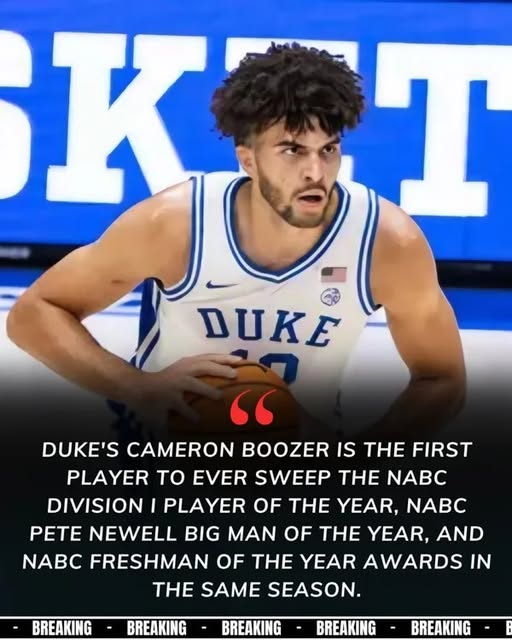
Cameron Boozer’s 2026 season with the Duke Blue Devils will be remembered as a transformative period not only in his personal career but in the broader landscape of college basketball. From the opening tip-off to the final buzzer of the season, Boozer emerged as a defining force for Duke, cementing his place among the elite players in NCAA history. His contributions were not limited to statistical dominance; they extended to leadership, resilience, and an ability to galvanize a team through unprecedented circumstances, creating a narrative that will be analyzed and celebrated for years to come. In assessing the impact of Boozer’s season, it is critical to examine the elements that contributed to his historic run, including his on-court performance, his growth as a leader, his influence on team dynamics, and the broader implications for his future in professional basketball.
From the first game, Boozer’s presence was unmistakable. He demonstrated a combination of athleticism, basketball IQ, and competitiveness that set him apart from his peers. His scoring ability was a highlight, as he seamlessly combined perimeter shooting with interior finishing. Opponents struggled to contain him, as he possessed a unique skill set that allowed him to exploit mismatches effectively. Across the season, Boozer maintained an impressive scoring average, consistently putting up double-digit points in nearly every game. His capacity to perform under pressure was evident in clutch moments, where his decision-making and composure allowed him to deliver critical baskets in high-stakes situations. Observers frequently noted that his scoring was not just prolific but also efficient, reflecting a refined understanding of shot selection and situational awareness that belied his age and experience.
However, Boozer’s impact extended far beyond scoring. His rebounding and defensive contributions were equally significant, reinforcing his status as a complete player. On the boards, he demonstrated excellent timing and anticipation, often positioning himself optimally to secure critical possessions. His ability to read the trajectory of the ball and anticipate opponents’ movements turned potential defensive vulnerabilities into opportunities for fast breaks and transition points. Defensively, Boozer showcased versatility, guarding multiple positions effectively and contributing to team schemes designed to neutralize top scorers from opposing teams. His defensive awareness and ability to communicate with teammates were pivotal in Duke’s overall defensive strategy, providing a foundation that allowed other players to thrive while minimizing defensive lapses. Analysts repeatedly highlighted that Boozer’s all-around contributions created a ripple effect, elevating the performance of the entire roster.
Leadership emerged as another defining aspect of Boozer’s season. In an era where college basketball rosters experience frequent turnover due to transfers and early departures to professional leagues, stability and consistency are rare commodities. Boozer’s approach to leadership combined quiet confidence with an unyielding work ethic, earning him the respect of teammates and coaching staff alike. He led by example, often being the first in practice and the last to leave the court, emphasizing preparation, focus, and resilience. Beyond the physical aspects of leadership, Boozer excelled in managing the psychological demands of a season filled with high expectations and media scrutiny. His ability to maintain composure under pressure and support teammates through adversity created a cohesive team environment, which proved invaluable in critical matchups and high-stakes tournaments. Observers noted that Boozer’s leadership style was inclusive, emphasizing collaboration and accountability rather than individual glory, a factor that contributed to the team’s overall success and cohesion.
The season was also marked by historic performances that underscored Boozer’s talent and versatility. In several key matchups, he produced career-high scoring outputs while simultaneously contributing across multiple statistical categories, demonstrating his capacity to dominate the game in a multidimensional manner. These performances drew national attention and solidified his reputation as one of the most exciting prospects in college basketball. Beyond individual accolades, these games often served as turning points for Duke, swinging momentum in the team’s favor during critical stretches of the season. The ability to deliver in such moments is a hallmark of elite athletes, and Boozer’s consistency in high-pressure scenarios reinforced his standing as a player capable of shaping the outcome of major contests. Analysts frequently highlighted the strategic adjustments made by opposing teams in response to Boozer, emphasizing his influence on game planning and the broader tactical landscape of the season.
Boozer’s season was not without adversity. Injuries, tough losses, and the intense pressure of expectation tested his resilience and mental fortitude. At times, he faced double- and triple-teams designed specifically to limit his impact, requiring him to adapt his game in real-time and leverage the strengths of his teammates. These challenges revealed his capacity for growth and problem-solving, as he consistently found ways to contribute meaningfully despite targeted defensive schemes. The ability to persevere and maintain a high level of performance amid adversity is an essential component of championship-caliber play, and Boozer’s season exemplified this quality. Moreover, the manner in which he addressed these challenges off the court, including maintaining focus during media scrutiny and public attention, further demonstrated his maturity and readiness for the next stage of his basketball career.
The ripple effects of Boozer’s season extended beyond the court. His presence elevated Duke’s profile nationally, attracting media attention, increased fan engagement, and broader recognition for the program. The excitement surrounding his performances translated into heightened interest in the team’s games, driving ticket sales, viewership ratings, and overall visibility. Boozer’s marketability also became a focal point in discussions about Name, Image, and Likeness (NIL) opportunities, reflecting the growing intersection of collegiate athletics and broader commercial interests. His ability to navigate this landscape effectively, balancing personal brand development with team priorities, exemplified a modern understanding of the responsibilities and opportunities afforded to elite athletes. This dimension of his season highlighted the evolving role of student-athletes as both competitors and public figures, emphasizing the multifaceted nature of success in contemporary college sports.
Statistically, Boozer’s season was remarkable. He consistently ranked among the top players nationally in multiple categories, including points, rebounds, and efficiency metrics. His advanced analytics reflected not only volume but also quality, with high shooting percentages, low turnover rates, and significant contributions in defensive metrics. Analysts frequently cited his combination of traditional statistics and advanced metrics as indicative of a truly elite player, capable of impacting the game in ways that transcend conventional box-score evaluations. Beyond the numbers, his ability to translate statistical dominance into tangible team success reinforced the importance of his contributions. Duke’s victories, many of which were closely contested, often hinged on Boozer’s ability to deliver in crucial moments, a testament to the practical significance of his performance.
Another notable aspect of the season was Boozer’s adaptability. College basketball is characterized by constant change, with coaching adjustments, opponent strategies, and roster shifts requiring players to remain flexible and responsive. Boozer’s versatility allowed him to thrive in various roles, whether as a primary scorer, a facilitator, or a defensive anchor. His basketball intelligence, combined with physical attributes, enabled him to read the game effectively, anticipate plays, and execute strategies with precision. This adaptability not only benefited Duke on a game-by-game basis but also enhanced his overall growth as a player, preparing him for the dynamic and competitive environment of professional basketball. Coaches and analysts consistently praised his ability to embrace new challenges and adjust his approach to maximize team success.
Boozer’s influence also extended to recruiting and the broader perception of Duke’s program. His performances served as a beacon for prospective players, demonstrating the program’s ability to develop elite talent and provide a platform for national recognition. The excitement generated by his season created momentum in recruiting cycles, attracting high-caliber prospects eager to join a team led by a player of Boozer’s caliber. His presence reinforced Duke’s reputation as a destination for elite talent, combining the promise of competitive success with opportunities for individual growth and exposure. In this way, Boozer’s season had implications beyond his personal achievements, contributing to the long-term strength and visibility of the program.
As the season progressed toward postseason play, Boozer’s contributions became even more pronounced. In high-pressure tournament settings, his ability to perform consistently under heightened scrutiny was invaluable. He produced defining moments, including critical baskets in overtime, game-saving defensive plays, and leadership in tense situations. These performances not only propelled Duke to victories but also reinforced Boozer’s status as a player capable of shaping outcomes when stakes are highest. Observers noted that his poise and execution in these moments reflected both natural talent and cultivated mental resilience, qualities essential for success at the professional level. The combination of skill, intelligence, and composure positioned Boozer as a leading candidate for national awards and recognition, further cementing the historic nature of his season.
Beyond accolades and statistics, the narrative of Boozer’s season was characterized by a sense of legacy. His impact extended to teammates, coaches, fans, and the broader basketball community, inspiring admiration, excitement, and a renewed sense of possibility for what college athletes can achieve. The season highlighted the importance of character, resilience, and leadership, demonstrating that greatness is not measured solely by points or trophies but also by the ability to influence and elevate those around you. Boozer’s approach embodied these principles, leaving an indelible mark on Duke basketball and setting a standard for future generations of players. This dimension of his season underscores the broader significance of his accomplishments, framing his achievements within a context that values both individual excellence and collective impact.
As the final games concluded and the season came to a close, the magnitude of Boozer’s achievements became fully apparent. His statistical dominance, leadership, adaptability, and influence on the program collectively defined a season that will be remembered as transformative in the annals of college basketball. Analysts and commentators consistently highlighted his performances as emblematic of a new standard of excellence, emphasizing both the tangible and intangible contributions he made to Duke’s success. His season serves as a case study in the confluence of talent, preparation, character, and opportunity, illustrating the elements that coalesce to produce historic athletic achievement. In reflecting on his journey, it is evident that Boozer’s impact transcends individual accolades, resonating across the program, the conference, and the national basketball landscape.
Looking forward, the implications of Boozer’s season extend to his professional prospects and ongoing influence in the sport. His combination of athleticism, skill, and leadership makes him a highly coveted prospect for NBA franchises, while his collegiate achievements have already secured a lasting place in Duke history. The experience gained, both in terms of on-court performance and navigating the complexities of public attention and team dynamics, positions him for sustained success at the next level. Scouts, analysts, and executives have all noted that his season reflects not only immediate talent but also long-term potential, indicating that his impact on basketball may continue to grow in professional arenas. Boozer’s trajectory exemplifies the potential for elite college athletes to translate collegiate success into professional opportunity while maintaining a legacy of leadership and excellence.
Cameron Boozer’s 2026 season with the Duke Blue Devils will be remembered as a defining period in college basketball history. His combination of scoring, defense, rebounding, leadership, adaptability, and resilience created a season that not only elevated Duke’s performance but also set new benchmarks for individual excellence. The impact of his performances was felt on multiple levels, from statistical dominance to team cohesion, from program visibility to national recognition. His ability to deliver in high-pressure situations, navigate adversity, and inspire those around him underscores the multifaceted nature of his contributions. The season solidified his place as one of the premier players of his generation and established a standard of excellence that will influence Duke basketball, NCAA competition, and the broader basketball community for years to come. In every measurable and intangible way, Cameron Boozer’s season represents a historic achievement, leaving a legacy that transcends individual games and resonates across the sport. It is a testament to talent, preparation, character, and opportunity converging to produce a season for the ages, one that will be studied, celebrated, and remembered in the annals of basketball history. His journey through the 2026 campaign illustrates the transformative power of elite athletic performance when combined with leadership, perseverance, and strategic intelligence. Future players, coaches, and analysts will reference this season as an exemplar of how a single player can profoundly influence the trajectory of a team, the culture of a program, and the narrative of a sport, making Cameron Boozer’s 2026 campaign a benchmark in collegiate basketball history.