In college football, the strength of a team’s defense often dictates its success, especially in high-stakes environments where turnovers, pressure, and disciplined coverage can turn the tide of games. For the Texas Longhorns, recent spring practices and offseason work have showcased considerable individual development across their defensive units. After analyzing the offensive side’s rising stars, it’s equally vital to recognize how the defense has progressed, with key players elevating their game at each level—front, linebacker, and secondary.
This detailed review will explore the notable progress of Texas’s defensive players, emphasizing their growth, the coaching influence behind their development, and how these improvements align with the Longhorns’ aspirations for the upcoming season.
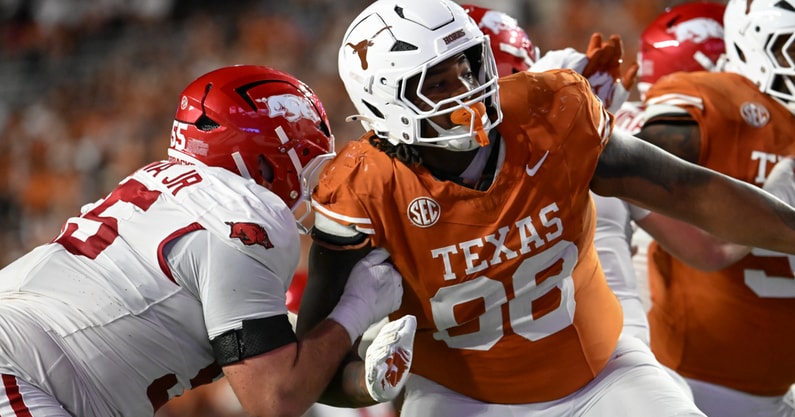
Defensive Line: Strengthening the Front
The defensive line is the cornerstone of any stout defense, providing the pressure that disrupts offensive rhythm and creating opportunities for teammates to make plays. Texas’s front has seen considerable individual development, with players stepping into more prominent roles and displaying tangible growth in skills, technique, and consistency.
Key Players and Their Progress
Moro Ojomo: From Consistent Contributor to Defensive Anchor
Ojomo has been a reliable presence on the interior defensive line, but this offseason, he has taken significant strides in his pass-rushing repertoire and run-stopping ability. His offseason training focused on refining his hand usage and explosiveness off the snap, leading to more disruptive plays during spring drills. Coaches have praised his improved motor and ability to leverage leverage in one-on-one situations.
His leadership qualities have also become more pronounced, serving as a vocal presence in meetings and motivating younger players to elevate their effort. Ojomo’s development is vital because his improved pass-rush skills could be a catalyst for Texas’s overall defensive pressure.
Tavondre Sweat: Developing Versatility and Playmaking Ability
Sweat’s growth has been notable, particularly in his ability to line up at multiple positions along the defensive line—nose tackle and defensive end—depending on the scheme. His physical conditioning has improved, allowing him to maintain high energy levels throughout games.
During spring practice, Sweat displayed increased quickness and a better understanding of gap responsibilities, which translated into more tackles behind the line of scrimmage and pressure on the quarterback. His ability to occupy blockers and free up others has made him a critical component of the defense’s success.
Gavin Holmes: Emerging Pass Rusher
Holmes has made significant strides in his pass-rushing skills, transitioning from a rotational player to a more consistent contributor. His bend around the edge, coupled with improved hand techniques, has resulted in more impactful pressures and even a few sacks during scrimmages.
His development has been driven by focused coaching on his footwork and leverage, which has allowed him to win battles against offensive tackles. Holmes’s rise provides Texas with much-needed rotational depth and a potential situational pass-rusher.
Young Players and Recruits Making an Impact
The spring also highlighted the potential of younger players like Omari Abor and Colton Vasek. Abor, a highly touted recruit, has shown flashes of his explosiveness and ability to bend around blockers. With continued development, he could become a consistent threat on passing downs.
Vasek’s technical refinement was evident, particularly in his ability to shed blocks and penetrate gaps. These young players’ growth signals a promising future for Texas’s front, especially as they develop further under the guidance of position coaches.
Overall Defensive Line Development
The collective progress on the defensive line is encouraging. Players are displaying better technique, higher motor, and increased consistency. Their development has not only improved the team’s ability to stop the run but has also generated more interior pressure, which is essential for creating turnovers and disrupting offenses.
Linebacker Corps: Evolving Versatility and Leadership
Linebackers are often considered the “quarterbacks” of the defense, responsible for calling plays, covering skill players, and stopping the run. Texas has seen significant individual progress among its linebackers, with players stepping into leadership roles and demonstrating technical improvements.
Key Players and Their Growth
Jaylan Ford: From Solid Starter to Defensive Leader
Ford has been a cornerstone of Texas’s linebacker unit since his arrival. This offseason, he has taken his game to a new level. His footwork has become crisper, allowing him to diagnose plays faster and take better angles in pursuit. His tackling technique has improved, leading to more consistent stops and fewer missed tackles.
What’s most impressive is Ford’s improved coverage ability. He’s been working closely with defensive coaches on zone and man coverage, and spring drills showcased his ability to stay tight with receivers and running backs. His leadership qualities have also shone brighter—organizing drills and motivating teammates.
Derek Harris: Rising as a Dynamic Playmaker
Harris’s development has been evident in his sideline-to-sideline range. Coaches have praised his instincts and football IQ, which have allowed him to anticipate plays better than ever. His confidence in coverage and blitzing packages has increased, making him a versatile weapon for the defense.
Harris’s offseason focus was on refining his pass-rush skills, and during spring, he demonstrated an improved burst and hand usage that allowed him to generate pressure from off-ball linebacker positions. His development suggests he could see more snaps in key situations.
Keenan Black and Other Young Linebackers
Black has shown flashes of being a dependable linebacker, particularly in coverage and in shedding blocks. His athleticism has improved, allowing him to cover tight ends and running backs effectively.
The spring also revealed emerging talent in freshmen like Aaron Bryant, who impressed with his physicality and instincts. While still raw, Bryant’s development indicates a promising future, and with continued coaching, he could be a rotational or starting option in the coming years.
Positional Adjustments and Developmental Focus
The linebacker corps has benefitted from coaching emphasis on versatility—players learning to excel in multiple roles. This has resulted in better situational awareness, quicker diagnosis, and more aggressive play.
The progress of these linebackers has significantly enhanced Texas’s run defense, pass coverage, and blitz packages. Their improved skills are expected to reduce explosive plays against them and improve overall team performance.
Secondary: Improving Coverage, Ball Skills, and Discipline
The secondary often faces the most scrutiny, as modern offenses rely heavily on explosive passing attacks. Texas’s defensive backs have made notable individual gains, with players showing improvement in coverage, ball skills, and tackling.
Cornerbacks: Lockdown Potential
Terrence Brooks: A Cornerstone of Progress
Brooks entered spring with high expectations, and he delivered. His footwork and hips have improved significantly, allowing him to stay tight with receivers and stay in phase. His ball skills have also become more refined, evidenced by multiple pass breakups and a few interceptions during spring drills.
Brooks’s confidence has grown, and he’s become a vocal leader in the secondary, organizing drills and motivating teammates. His development is a huge boost for Texas’s pass defense.
Gavin Holmes and Other Secondary Players
Holmes, who transitioned from a defensive end, has shown impressive athleticism and coverage skills. His ability to match speed and change direction makes him a versatile piece in Texas’s secondary.
Malik Muhammad and Derek Williams, incoming freshmen, have impressed coaches with their physicality and instincts. Their development during spring suggests they could challenge for starting roles in the near future.
Safeties: Ballhawks and Playmakers
Jalen Catalon: From Injury Comeback to Leading Force
Catalon’s return from injury has been one of the most encouraging stories. His instinctive play, combined with improved tackling technique, has made him a threat in both coverage and run support. He’s shown a knack for reading quarterbacks and forcing turnovers, which elevates the entire secondary.
Jerrin Thompson and Emerging Talents
Thompson has improved his coverage skills and tackling consistency. Spring practices revealed his ability to communicate effectively and anchor the safeties’ communication efforts.
Young safeties like Jadon Hett are developing rapidly, displaying good instincts and physicality. Continued growth from these players will be crucial for Texas to improve against high-powered offenses.
Overall Secondary Development
The secondary’s individual improvements have resulted in tighter coverage, more aggressive ball-hawking, and better communication. While still a work in progress, the players’ growth indicates that Texas’s pass defense could be a strength in 2024.
Coaching Influence: The Catalyst for Development
Texas’s coaching staff, led by defensive coordinator Pete Kwiatkowski, deserves credit for the visible individual progress. His emphasis on technique, situational awareness, and fitness has paid dividends across all levels of the defense.
Kwiatkowski’s ability to tailor schemes to personnel strengths has allowed players to develop in areas that suit their skills, leading to more confident and effective performances. The spring showcases a defense that is more cohesive, disciplined, and aggressive—hallmarks of a unit on the rise.
Outlook and Expectations
The individual development across Texas’s defense bodes well for the upcoming season. The players’ upward trajectory in skill, technique, and confidence suggests the Longhorns could field a formidable unit capable of competing at the highest level.
Strengths:
Strong interior linemen with improved pass-rush skills.
Versatile linebackers capable of covering multiple roles.
Secondary players who are more disciplined, athletic, and ball-aware.
Areas for Continued Improvement:
Consistency in pass rush from the front.
Discipline in coverage against explosive offenses.
Depth at linebacker and cornerback.
The spring football period has been a catalyst for individual growth across Texas’s defense. Players at all three levels—front, linebacker, and secondary—have shown tangible improvements that will be critical in 2024. With continued coaching, development, and leadership, Texas’s defense has the potential to be a game-changing unit, anchoring a team that aims to contend for Big 12 and national titles.
As the offseason progresses into fall camp, the focus will be on refining these individual strengths, fostering cohesion, and building a defense that can impose its will on opponents. The stock of these rising stars is up, and their development could be the key to Texas’s success this season.