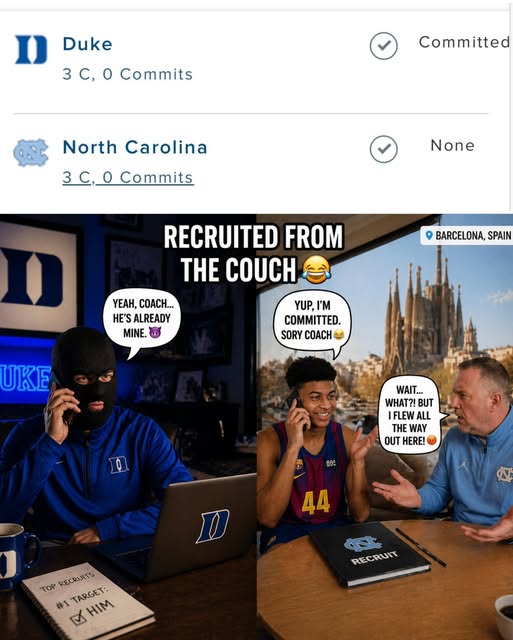
Mike Malone probably thought he had it locked up the moment the plane wheels touched down in Spain. You don’t fly that far, clear your schedule, and sit through transatlantic jet lag unless you’re convinced you’re about to pull off something big. In his mind, this wasn’t just another recruiting trip—it was a statement. A package deal, no less. The kind of move that makes front offices grin and fans start throwing around the word “dynasty” way too early. He could already picture it: handshake photos, a confident press conference, maybe even a quote about “building something special.”
Spain didn’t disappoint, either. The backdrop alone made the whole effort feel cinematic. Sunlight cutting across old stone buildings, the quiet buzz of cafés, the kind of scenery that makes negotiations feel more like a movie than a business deal. Malone leaned into that energy. He wasn’t just there as a coach—he was there as a closer. Conversations stretched long into the evening, filled with careful persuasion, subtle promises, and just enough charm to make everything feel inevitable. Every nod, every smile, every pause in the discussion seemed to point in the same direction: this was going to work.
And Joaquim? He was exactly what Malone expected—calm, thoughtful, a little hard to read. The kind of player who doesn’t get swept up in hype but understands his value perfectly. That made the whole thing more intense. You don’t rush someone like that. You build the moment slowly, layer by layer, until the decision feels like it was theirs all along. Malone played it well. He talked about fit, about development, about opportunity. He painted a picture that was hard to ignore.
The package deal was the real hook, though. That’s what made this trip feel worth it. It wasn’t just about landing one guy—it was about securing something bigger, something strategic. Two pieces that fit together, two talents that could elevate each other. Malone knew how rare that kind of alignment was, and he wasn’t about to let it slip away. He pressed just enough, eased off when needed, and kept the focus on the long game.
By the time the meetings wrapped up, everything felt… right. Not guaranteed, but close enough that you could almost celebrate. The kind of “we’ll be in touch” that usually means “start getting ready.” Malone left Spain feeling like he’d done everything he could—and more importantly, that it had been enough. The long flight back didn’t even feel that long. There’s a certain comfort in believing you’ve already won.
Meanwhile, thousands of miles away, Jon Scheyer was sitting on his couch.
No dramatic setting. No international travel. No carefully staged conversations under the Spanish sun. Just a laptop, a steady internet connection, and the quiet confidence of someone who knows exactly what he’s doing. Recruiting, for him, didn’t need to feel like a production. It was about connection, clarity, and timing.
The Zoom call probably didn’t look like much from the outside. No grand gestures, no sweeping speeches. Just a conversation. But that’s where the shift happened. Scheyer didn’t try to outdo Malone’s pitch—he didn’t need to. Instead, he focused on something simpler and, in a way, more powerful. He made it personal.
He talked about the program, sure. About development, exposure, and the path forward. But more than that, he talked about trust. About understanding what Joaquim wanted, not just as a player, but as a person. There’s a difference between selling a vision and making someone feel like they already belong in it. Scheyer leaned into that difference.
And timing? Timing is everything. Malone had the advantage of presence, of effort, of showing up in person. But Scheyer had the advantage of precision. He came in at the exact right moment, when the decision was close but not final, when one conversation could tip the scale. He didn’t need hours—he just needed the right words at the right time.
Somewhere in that call, something clicked.
Maybe it was the way Scheyer framed the opportunity. Maybe it was the familiarity, the sense of comfort that came through even over a screen. Or maybe it was just instinct—that quiet feeling players get when they know where they’re supposed to be. Whatever it was, it didn’t take long.
And just like that, the whole dynamic shifted.
Malone was still somewhere between flights, probably replaying conversations in his head, already thinking about next steps. Meanwhile, back on that couch, Scheyer had done what he needed to do. No jet lag, no elaborate setup—just a well-timed connection that changed everything.
The irony of it all is hard to ignore. One coach crosses an ocean, invests time, energy, and presence into sealing the deal. The other logs in, has a conversation, and walks away with the commitment. It’s the kind of story that makes recruiting feel unpredictable, almost absurd.
But it also says something deeper about how things work now.
Effort still matters. Showing up still matters. But it’s not always about who does the most—it’s about who connects the best. Malone did everything right in the traditional sense. He made the trip, built the relationship, and put himself in position to succeed. In another timeline, that’s probably enough.
This just wasn’t that timeline.
Because recruiting, like everything else, has changed. The setting doesn’t define the outcome anymore. A conversation in Spain can carry the same weight as a conversation on a couch—or sometimes even less. What matters is what’s said, how it’s said, and when it’s said.
For Joaquim, the decision likely came down to something simple, even if it didn’t feel that way in the moment. Where did he feel the most comfortable? Where did he see himself growing, not just as a player, but as a person? Those answers don’t always align with the biggest gesture or the longest trip.
Sometimes, they show up in the quietest moments.
You can imagine Malone finding out, too. Maybe it was a message, maybe a call, maybe just a notification that made everything sink in at once. That brief pause where you realize the outcome isn’t what you expected. Not because you didn’t try hard enough—but because someone else found a different way in.
Frustrating? Definitely. Surprising? Maybe not as much as it used to be.
Because this is how it goes now. The margins are thin, and the difference between winning and losing a recruitment can come down to something as small as a single conversation. A single impression. A single moment where everything lines up just right.
Scheyer didn’t need Spain. He didn’t need the spectacle. He just needed that moment.
And when it came, he didn’t miss.
That’s what makes the whole thing kind of hilarious, in a way. Not in a mocking sense, but in that “you couldn’t script this any better” kind of way. One coach goes all in on the journey, the other stays home—and the result flips expectations on their head.
It’s a reminder that there’s no single formula for this. No guaranteed path. You can do everything by the book and still come up short. Or you can take a simpler route and end up exactly where you wanted to be.
For fans, it turns into a story. Something to laugh about, to share, to turn into a quick joke about couches beating cross-continental flights. But for the people involved, it’s more than that. It’s a lesson, whether they wanted it or not.
Malone will adjust, because that’s what good coaches do. He’ll take this experience, break it down, and figure out what could’ve been different—even if the answer is “not much.” And next time, he’ll be ready again, maybe with a slightly different approach, maybe with the same one and a better outcome.
Scheyer, on the other hand, just adds this to the list. Another example of trusting his instincts, of understanding how to connect in a way that resonates. It’s not about where you are—it’s about how you show up, even if “showing up” just means clicking a link and starting a call.
And Joaquim? He moves forward with his decision, carrying all of this with him in a way that probably feels both significant and strangely normal. Because for him, it’s not about Spain versus a couch. It’s about where he felt the pull, where the future made the most sense.
Everything else is just part of the story people tell afterward.
Still, you can’t help but picture it. Malone walking through an airport, maybe glancing at his phone, the weight of the trip settling in differently than he expected. Scheyer leaning back on his couch, the call ended, knowing things went his way. Two completely different scenes, connected by one outcome.
And that outcome? It says everything.
Not about who worked harder, or who wanted it more—but about how unpredictable these moments can be. How something as simple as a conversation can outweigh something as big as a journey. How, in the end, it’s not about the miles you travel, but the connection you make.
Which is why this whole situation sticks with people. It’s not just funny—it’s revealing. A snapshot of how things are shifting, how the game behind the game keeps evolving.
And yeah, it’s also just kind of wild.
A coach flies all the way to Spain, lines up a package deal, and does everything he can to close it out. Another coach stays home, opens his laptop, and changes the entire outcome in one call.
You can’t make that up.
Well, unless you just did.