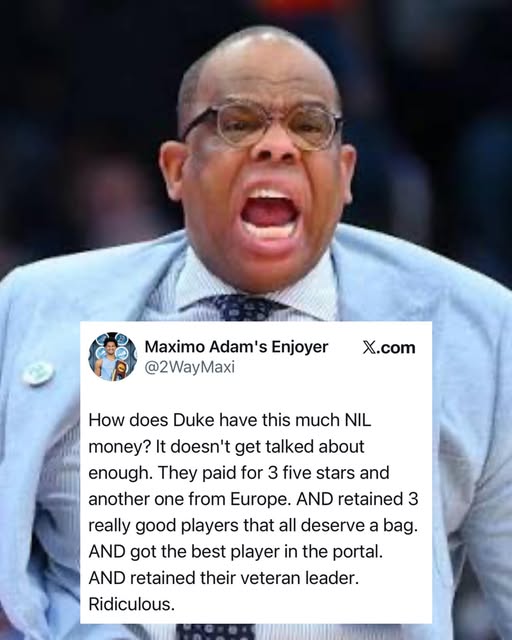
It’s almost like Duke is the biggest brand in basketball on all levels, but what do we know 🤷🏾♂️😂. That kind of statement sounds like exaggeration at first, the sort of thing fans throw around to spark debate, but when you actually sit with it and peel back the layers, it becomes a lot harder to dismiss. Duke has managed to position itself in a space that very few programs—college or otherwise—have ever reached. It’s not just about winning games, although they’ve done plenty of that. It’s about visibility, identity, influence, and the ability to stay relevant across generations of players and fans who constantly redefine what basketball culture looks like.
Part of what makes Duke feel so dominant as a brand is consistency. College basketball is notoriously cyclical. Programs rise and fall depending on coaching changes, recruiting luck, and institutional support. Yet Duke has remained a fixture at the top for decades. That kind of staying power builds something deeper than success—it builds expectation. When people talk about Duke, they’re not just discussing a team; they’re talking about a standard. Making the NCAA tournament isn’t the goal, it’s the baseline. Deep runs are expected. Championships are part of the conversation every few years. That level of consistency keeps them permanently in the spotlight, which is the lifeblood of any major brand.
Then there’s the visual identity. The blue and white, the Cameron Indoor atmosphere, the student section energy—these aren’t just details, they’re symbols. You can show someone a clip with no context, just the court, the jerseys, the crowd, and they’ll recognize Duke instantly. That’s branding at its purest form. It’s the same principle that makes globally recognized teams stand out: immediate recognition without explanation. Duke has that in college basketball, and arguably even beyond it.
But where things get especially interesting is how Duke bridges the gap between college basketball and the NBA. A lot of programs produce great players, but Duke produces stars who carry the brand with them. When players leave Duke, they don’t just become professionals; they become extensions of the Duke identity in the league. That pipeline reinforces the program’s relevance year-round. Even when college basketball is out of season, Duke is still part of the conversation because its alumni are impacting the highest level of the sport.
This connection creates a feedback loop. Young players grow up watching the NBA, see Duke players thriving, and start associating Duke with success at the next level. That makes Duke more attractive in recruiting. Better recruits lead to better teams. Better teams lead to more exposure and more NBA talent. The cycle keeps reinforcing itself. It’s not accidental—it’s a system that has been refined over time.
Another factor is how polarizing Duke is. People either love them or absolutely cannot stand them. And oddly enough, both sides strengthen the brand. Being widely disliked doesn’t hurt visibility; it amplifies it. Games against Duke feel bigger because fans want to see them win or lose. That emotional investment drives ratings, social media conversations, and overall attention. In branding terms, indifference is the enemy, not hate. Duke has never been ignored, and that’s a huge advantage.
Media presence also plays a role. Duke games are almost always featured prominently, discussed heavily, and analyzed in detail. Whether they’re ranked number one or going through a rough patch, they remain a focal point. That constant exposure reinforces the idea that Duke matters, even in seasons where they might not be the best team. Over time, that creates a perception that they’re always relevant, which is exactly what a strong brand needs.
It’s also worth considering how Duke adapted to the “one-and-done” era of college basketball. When top recruits started spending just a year in college before heading to the NBA, many programs struggled to adjust. Duke leaned into it. They embraced elite, short-term talent and built teams around players who were destined to leave quickly. That adaptability kept them competitive while also increasing their visibility, since those players often arrived with massive hype and left as lottery picks. Instead of resisting change, Duke turned it into another branding advantage.
At the same time, they’ve managed to maintain a sense of tradition. Even with roster turnover, the program’s identity hasn’t felt diluted. That balance—modern relevance combined with historical weight—is incredibly difficult to achieve. Too much focus on tradition can make a program feel outdated, while too much emphasis on change can erase its identity. Duke somehow walks that line effectively, which keeps both older fans and newer audiences engaged.
You can’t ignore the role of coaching stability either. Having a long-term figure associated with the program helps anchor the brand. It gives fans a central narrative to connect with, something that transcends individual players. Even as leadership transitions happen, the foundation that was built over decades doesn’t disappear overnight. That continuity reinforces trust in the program’s direction, which is crucial for sustaining long-term success.
Then there’s recruiting power. Duke doesn’t just attract good players; they attract players who already have a spotlight on them. High school stars come in with national attention, and Duke amplifies that attention even further. It becomes a stage where talent is showcased at the highest level of college basketball. For fans, that means Duke games are often must-watch events because you’re seeing future NBA players before they reach the league.
Social media has only magnified all of this. Highlights, debates, memes, and narratives spread instantly, and Duke is almost always part of the conversation. Whether it’s a buzzer-beater, a dominant performance, or a controversial moment, it circulates quickly. That constant digital presence keeps the brand active in a way that older eras of basketball couldn’t sustain.
Of course, calling Duke the biggest brand in basketball on all levels is still a bold claim. The NBA has global franchises with decades of international reach, and basketball itself is bigger than any single program. But the argument isn’t as ridiculous as it might sound at first. When you combine college dominance, NBA influence, media visibility, recruiting power, and cultural impact, Duke occupies a unique space. It’s not just a team—it’s a reference point.
What makes the conversation fun is that it challenges how people define “biggest brand.” Is it about championships? Global fanbase? Revenue? Cultural influence? Duke might not lead in every category, but it scores highly across all of them. That well-rounded strength is what makes the claim believable, even if it’s not universally accepted.
In the end, the idea that Duke is the biggest brand in basketball says as much about perception as it does about reality. Brands aren’t just built on facts; they’re built on stories, emotions, and repeated exposure. Duke has spent decades building all three. So when someone throws out that statement with a shrug and a laughing emoji, it lands differently. It feels less like a hot take and more like a conversation starter that actually has some weight behind it.
And maybe that’s the real point. The fact that people can even argue Duke belongs in that conversation shows how powerful the brand has become. Whether you agree or disagree, you’re engaging with it. You’re thinking about it. You’re reacting to it. And in the world of sports, that kind of attention is everything.