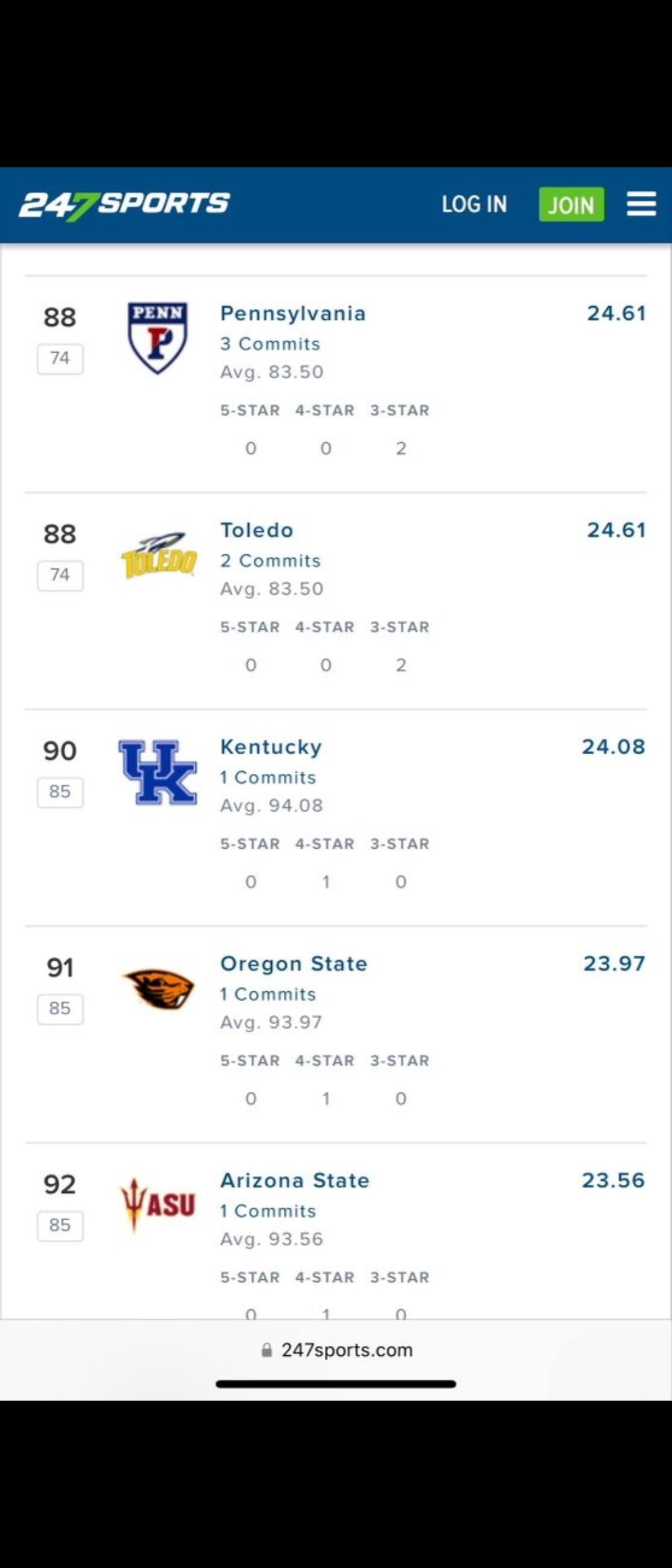
At some point, it becomes hard to ignore the pattern, and I think that’s where a lot of this frustration is coming from. The expectations around Kentucky basketball have always been sky-high, and not without reason. This is a program built on banners, not moral victories, and for decades the standard has been very clear: compete for Final Fours and national championships, not just respectable tournament runs. So when the recruiting momentum doesn’t feel elite and the roster construction doesn’t scream dominance, it’s natural for fans to start recalibrating their expectations, even if they don’t like doing it.
Right now, it does feel like Kentucky isn’t landing the kind of game-changing, program-defining players that once felt almost automatic. There was a time when you could look at a recruiting cycle and assume at least one or two future NBA stars would be walking into Lexington. That level of talent masked a lot of issues and raised the ceiling of the program every single year. When that pipeline slows down—even a little—it exposes everything else: coaching decisions, player development, roster balance, and in-game adjustments.
That’s where the skepticism about the future starts to creep in. If you’re not stacking elite talent, then you have to be nearly perfect in every other area to truly contend at the highest level. You need a system that maximizes what you have, a staff that develops players beyond expectations, and a culture that consistently produces cohesion by March. Good teams can absolutely be built that way, and they can make noise. Sweet Sixteen? Very realistic. Elite Eight? Definitely possible with the right matchups and momentum. But pushing beyond that into Final Four territory usually requires something more—either overwhelming talent, elite coaching, or ideally both.
The concern being expressed here is that Kentucky currently doesn’t have enough of either at that top tier level. Not bad coaching, not bad players—just not elite enough to consistently break through. And that’s a subtle but important distinction. There’s a big difference between a team that’s competitive and a team that’s feared. Kentucky fans are used to the latter, and anything short of that feels like a step down, even if it’s still objectively “good.”
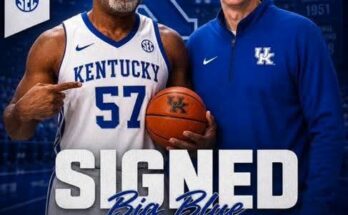
When it comes to recruiting, missing out on players like Stokes—or players in that caliber range—adds to the narrative. It’s not just about one recruit; it’s about what that miss represents. It suggests that Kentucky is no longer the default destination for top-tier talent, and that other programs are either catching up or surpassing them in areas like NIL, relationships, development pitch, or coaching stability. Once that perception starts to take hold, it becomes harder to shake, and it can snowball into future recruiting battles.
At the same time, writing off the roster entirely would be an overcorrection. Good players are still coming in. Solid contributors, high-level athletes, guys who can win games and compete in the SEC—those pieces still exist. And as mentioned, with a well-constructed roster and some chemistry, that can absolutely translate into a strong season. We’ve seen teams without overwhelming star power make deep runs because they were connected, disciplined, and playing their best basketball at the right time.
The comparison to a “year one” type of team is interesting because those teams often overachieve precisely because expectations are lower and roles are clearer. Players buy in faster, there’s less pressure to live up to hype, and the team identity forms more organically. That kind of environment can produce surprising results, and Kentucky could very well find itself in that position—dangerous, capable, but not necessarily dominant.
The real sticking point in your argument is the coaching ceiling. Saying that Mark Pope is likable but not a great head coach is a strong claim, and it’s one that deserves some nuance. Coaching at a place like Kentucky is fundamentally different from coaching almost anywhere else. The pressure, the scrutiny, the expectations—it’s a completely different ecosystem. Some coaches thrive in that environment, and some struggle to consistently meet the demands, even if they’re very good basketball minds.
The question isn’t just whether Pope is a good coach; it’s whether he can elevate a program with Kentucky’s expectations back into that elite tier. That involves more than X’s and O’s. It’s recruiting at the highest level, managing personalities, making adjustments in high-stakes games, and building a system that consistently translates to postseason success. If there’s doubt in any of those areas, fans are going to notice, especially when results don’t match historical standards.
Still, it’s probably too early to draw definitive conclusions. Coaching tenures aren’t judged in a vacuum, and they’re certainly not defined in a single season or recruiting cycle. There are examples across college basketball of coaches who needed time to fully implement their vision before breaking through. There are also examples of coaches who plateaued and never quite reached that championship level. The challenge is figuring out which path this situation is on, and that takes patience—something that’s often in short supply in a place like Kentucky.
There’s also the reality that the college basketball landscape has changed significantly. NIL, the transfer portal, and increased parity have made it harder for any single program to dominate year after year. Talent is more dispersed, and experienced teams often have an advantage over younger, more hyped rosters. That doesn’t mean Kentucky can’t get back to the top, but it does mean the path looks different than it did even five or ten years ago.
So when you say you’re not getting your hopes up for a Final Four or a national championship run, that’s understandable given the current trajectory. It’s a grounded, realistic perspective based on what you’re seeing. But it’s also worth leaving some room for unpredictability. College basketball, more than almost any other sport, has a way of defying expectations. Teams catch fire, players take unexpected leaps, and narratives shift quickly.
If Kentucky can find the right combination of player development, roster fit, and in-game execution, they could exceed those tempered expectations. Maybe not consistently—at least not yet—but in a given season, it’s absolutely within reach. The gap between an Elite Eight team and a Final Four team isn’t always as large as it seems; sometimes it’s just a matter of matchups, momentum, and a few key moments going your way.
Ultimately, the frustration comes from knowing what Kentucky basketball is supposed to be. The standard isn’t just competing—it’s contending. And until the program clearly looks like a national title threat again, there’s going to be skepticism. That doesn’t mean the foundation isn’t there, but it does mean there’s work to be done—on the recruiting trail, on the court, and maybe even in defining the long-term direction of the program.
For now, expecting solid teams with the potential for a Sweet Sixteen or Elite Eight run feels fair. Expecting more than that might require either a shift in recruiting success, a leap in coaching impact, or ideally both. Until then, cautious optimism might be the most realistic place to land—even if it’s not where Kentucky fans ultimately want to be.