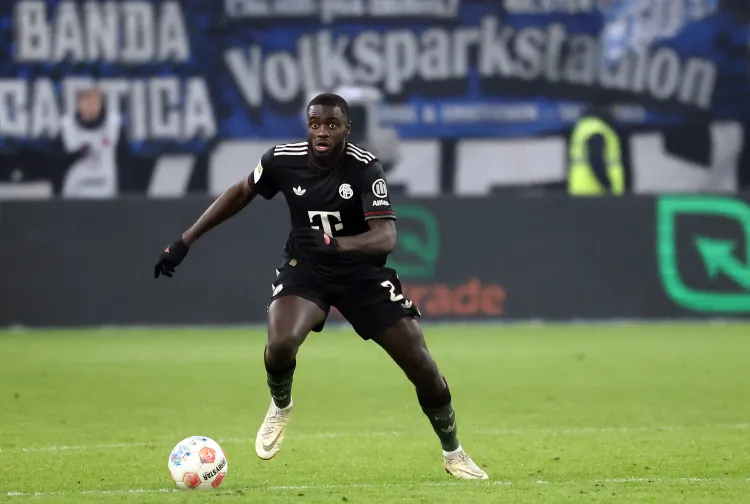
Sollte BFW die großen Geschütze auffahren, um Dayot Upamecano beim FC Bayern München zum Bleiben zu überzeugen?
In the high-stakes world of modern football, where contracts, agents, and club ambitions collide, few situations encapsulate the drama quite like the ongoing saga surrounding Dayot Upamecano’s future at Bayern Munich. As of early February 2026, the French defender finds himself at a crossroads, with his contract set to expire at the end of the 2025/2026 season. Bayern has tabled what they describe as a “massive” offer, including an annual gross salary of around €20 million, a double-digit million-euro signing bonus, and an exit clause of approximately €65 million effective from 2027, with the deal running until 2030 or 2031. Yet, despite months of negotiations, no agreement has been reached, leading to mounting frustration within the club’s hierarchy. Reports indicate that Bayern is now applying significant pressure, with the possibility of withdrawing the offer if Upamecano doesn’t commit soon, potentially allowing him to depart on a free transfer in the summer.
This impasse has sparked intense debate among fans, pundits, and insiders. Uli Hoeneß, Bayern’s honorary president and a legendary figure in the club’s history, has publicly expressed his dismay, accusing Upamecano’s agents of steering him away from Munich despite the player’s apparent comfort in the city. Hoeneß’s comments, made in an interview with Kicker magazine, highlight a deeper concern: the influence of advisors prioritizing financial gains over loyalty and stability. “I know that he and his family feel very comfortable in Munich. However, I fear that his advisors will do everything they can to steer him away from Munich. I am appalled by this behavior,” Hoeneß stated. Such strong words from a club icon underscore the emotional investment Bayern has in retaining Upamecano, but they also raise questions about whether fan-driven platforms like Bavarian Football Works (BFW) should escalate their efforts to sway the defender’s decision.
BFW, as one of the premier English-language fan sites dedicated to Bayern Munich, holds a unique position in the ecosystem of supporter influence. With a large following on social media, in-depth analysis, podcasts, and community forums, BFW isn’t just a news aggregator—it’s a voice for the global Bayern faithful. The question at hand is whether BFW should “break out the big guns,” meaning deploy their full arsenal of persuasive tools—op-eds, fan petitions, social media campaigns, player spotlights, and even direct appeals—to convince Upamecano to stay. To answer this, we must delve into Upamecano’s journey, his contributions, the risks of his departure, and the broader implications for Bayern’s future.
Dayot Upamecano’s rise to prominence began in his native France, where he honed his skills at Valenciennes before moving to RB Salzburg and then RB Leipzig. His €42.5 million transfer to Bayern in 2021 was seen as a coup, bringing a young, athletic center-back capable of thriving in Julian Nagelsmann’s high-pressing system. At 22, Upamecano was raw but brimming with potential: blistering pace, strong aerial presence, and exceptional ball-playing ability. Over the years, he has evolved into a cornerstone of Bayern’s defense, partnering effectively with players like Matthijs de Ligt and Kim Min-jae. His ability to read the game, combined with his physicality, has made him a nightmare for opposing forwards.
However, Upamecano’s tenure hasn’t been without turbulence. Early inconsistencies, including high-profile errors in crucial matches, led to criticism. Remember the 2022/2023 Champions League quarterfinal against Manchester City, where his mistakes contributed to Bayern’s elimination? Such moments tested fan patience, but Upamecano has shown resilience, bouncing back to deliver standout performances. In the 2024/2025 season, he was instrumental in Bayern’s Bundesliga title win, contributing to a defense that conceded the fewest goals in the league. This growth trajectory suggests that, at 27, Upamecano is entering his prime, making his potential departure all the more alarming.
Fast-forward to the 2025/2026 season, and Upamecano’s stats paint a picture of a reliable, if not always spectacular, performer. In the Bundesliga, he has featured in 15 to 17 matches (sources vary slightly due to recent fixtures), scoring 1 goal and providing 1 assist. His defensive contributions are solid: 41 interceptions (ranking him in the top 90th percentile league-wide), 16 blocks, 111 tackles won, and 26 aerial duels won. Bayern has kept 7 clean sheets in his 15 league appearances, with the team conceding just 10 goals during those games. Overall, across all competitions, Upamecano has made 25 to 29 appearances, accumulating around 1,919 to 2,000 minutes, with an average rating of 6.8 to 7.1 from outlets like FootballCritic and WhoScored. These numbers reflect a player who is integral to Vincent Kompany’s tactical setup, where Bayern sits atop the Bundesliga with 16 wins in 20 games, boasting an average of 3 goals scored per match and a stingy defense.
In the Champions League, Upamecano’s role is equally vital. Bayern’s expected goals against (xGA) stands at a low 0.94 per game in the group stage, with Upamecano playing 568 minutes across matches, contributing to a positive xG difference of 1.42. His passing accuracy hovers around 92%, with 11.7 progressive passes per 90 minutes, showcasing his comfort in building from the back. Yet, discipline remains an area for improvement; he has accumulated 3 to 8 yellow cards this season, depending on the competition, which could lead to suspensions at critical junctures.
The pros of retaining Upamecano are compelling. Bayern’s defense is built around continuity, and losing him on a free would be a financial and sporting disaster. His market value is estimated at €70 million, and replacing him with a player of similar caliber—say, from the likes of Antonio Silva or Jarrad Branthwaite—could cost upwards of €80 million, not to mention integration time. Upamecano’s familiarity with the Bundesliga, his bilingual skills (French and German), and his leadership qualities—he’s often vocal in organizing the backline—make him irreplaceable in the short term. Moreover, with aging stars like Manuel Neuer potentially retiring soon, Bayern needs experienced figures to mentor younger talents like Jonah Kusi-Asare or the academy prospects.
On the flip side, the cons cannot be ignored. Upamecano’s occasional lapses in concentration have persisted, albeit less frequently. His yellow card tally this season indicates a propensity for rash challenges, which could prove costly in high-pressure games. Financially, the offered €20 million salary would place him among Bayern’s top earners, potentially straining the wage bill amid FFP constraints. If his agents are indeed holding out for better offers from clubs like Real Madrid, Liverpool, or PSG, it raises questions about his long-term commitment. Real Madrid, in particular, has been linked, viewing him as a free-agent solution to their defensive needs post-Nacho and Alaba’s injury woes. Liverpool sees him as a successor to Virgil van Dijk, while PSG’s interest stems from his French roots.
Fan sentiment, as gleaned from recent X (formerly Twitter) discussions, is predominantly in favor of retention but laced with frustration. Posts from February 1-2, 2026, reveal a community urging clarity: one user noted Bayern’s demand for a decision, warning that patience is “wearing thin.” Another highlighted Hoeneß’s criticism of the agents, calling it “appalled behavior.” A fan account, @fcbayernxtra_, emphasized that the situation is about “control,” arguing Bayern must enforce deadlines to avoid squad planning chaos. Even rumors of a withdrawn offer surfaced, though unconfirmed, adding to the urgency. These sentiments reflect a fanbase that values Upamecano but is weary of protracted negotiations.
This brings us back to BFW’s role. As a fan-centric platform, BFW has historically influenced discourse—think their coverage of the Qatar sponsorship debate or the Nagelsmann sacking. To “break out the big guns,” BFW could launch a multifaceted campaign:
- In-Depth Articles and Analysis: Publish features highlighting Upamecano’s stats, his evolution, and comparisons to potential replacements. For instance, a piece titled “Why Upamecano Is Bayern’s Defensive Lynchpin” could use data visualizations to showcase his 83.53 defensive 1v1 rating (65th percentile).
- Fan Polls and Petitions: Run polls on their site and X, asking “Should Upamecano Stay?” and compile results to demonstrate overwhelming support. A Change.org petition directed at the club and player could garner thousands of signatures, amplifying the voice of the diaspora fans.
- Social Media Blitz: Leverage their X handle (@BavarianFBWorks) for daily threads on Upamecano’s highlights, fan testimonials, and memes emphasizing his importance. Collaborations with influencers or ex-players could add credibility.
- Podcasts and Videos: Episodes of the BFW podcast could feature debates with guests like former Bayern defenders, discussing the intangible benefits of loyalty in an era of free agency.
- Direct Appeals: While ethically tricky, editorials could subtly address Upamecano, reminding him of Munich’s quality of life, the Allianz Arena atmosphere, and the legacy he could build—echoing Hoeneß’s point about family comfort.
But is this wise? Proponents argue yes: In an age where players like Kylian Mbappé cite fan pressure in decisions, a unified front could tip the scales. BFW’s efforts might humanize the negotiation, countering agent influence by emphasizing emotional ties. Moreover, with rivals circling, a strong show of support could deter poachers.
Critics, however, caution restraint. Overzealous campaigning risks alienating Upamecano if he feels pressured, or worse, backfiring if he leaves anyway, leaving fans disheartened. BFW’s credibility as an independent voice could suffer if perceived as club propaganda. Additionally, focusing too much on one player diverts attention from broader issues, like Bayern’s youth development or transfer strategy.
Weighing these factors, I believe BFW should indeed break out the big guns—but strategically. Upamecano’s value to Bayern is undeniable: his stats, experience, and potential make him a pillar for future success. With the club already at a breaking point, fan intervention could provide the nudge needed. Yet, the campaign should be positive, data-driven, and respectful, avoiding ultimatums. By mobilizing the community, BFW can remind Upamecano that Bayern isn’t just a club—it’s a family, and families fight to stay together.
In conclusion, yes, BFW should escalate their efforts. The stakes are high: losing Upamecano for free would weaken Bayern’s defense and signal vulnerability in negotiations. Through thoughtful advocacy, BFW can play a pivotal role in securing his future, ensuring the Rekordmeister remains dominant. As Hoeneß implied, it’s time to counter external influences with internal passion. Mia san mia—let’s make it happen.