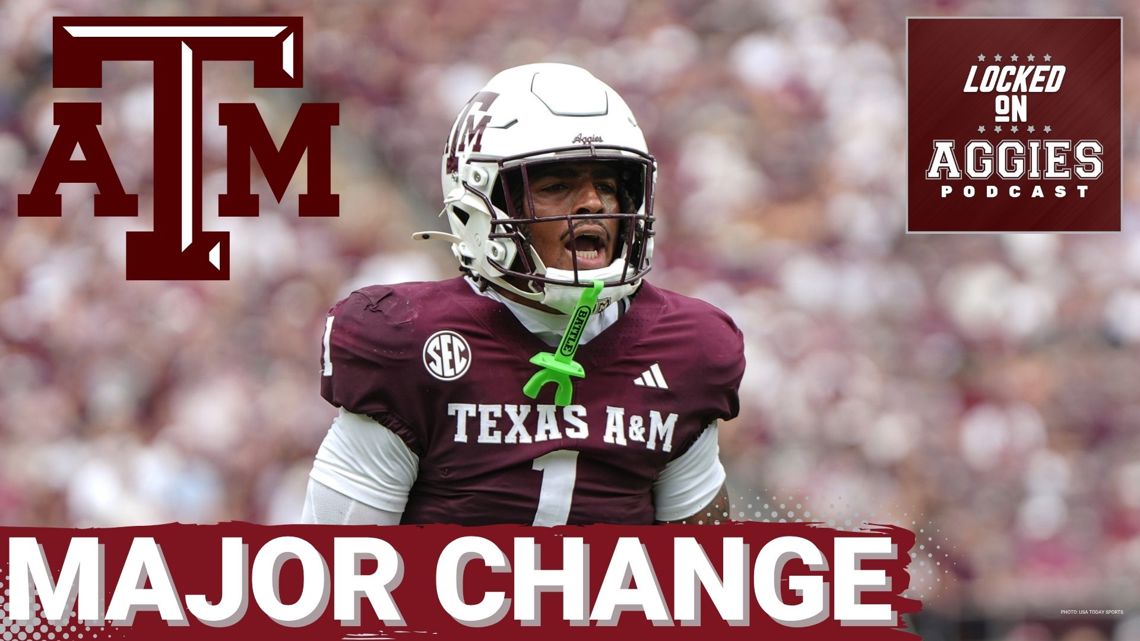
In the ever-evolving landscape of college football, strategic adjustments often define a team’s trajectory toward success. Texas A&M, a program known for its strategic prowess and competitive spirit, has recently announced a bold move in its defensive scheme: shifting star safety Bryce Anderson to the nickel position. This decision signals a significant shift in their secondary strategy, aiming to enhance versatility, improve matchups against high-powered offenses, and adapt to the changing offensive trends across the SEC.
This comprehensive analysis explores the rationale behind Anderson’s position change, its potential impact on the team’s defense, and how it fits into broader SEC quarterback rankings. Additionally, we’ll examine Marcel Reed’s turnover issues and how offensive coordinator Holman Wiggins is implementing strategic fixes to optimize the Aggies’ offensive performance.
The Context: Texas A&M’s Defensive Philosophy and the Evolving SEC Landscape
Texas A&M’s defense has historically been built on physicality, disciplined coverage, and versatile personnel. The secondary often comprises safeties and cornerbacks capable of playing both man and zone coverage, with safeties tasked with providing deep help and run support.
However, the SEC’s offensive landscape has shifted dramatically over recent years. Teams now frequently deploy spread offenses, dual-threat quarterbacks, and intricate passing schemes that challenge traditional defensive alignments. To counter these trends, defenses are increasingly adopting multi-faceted roles for their defensive backs.
In this context, moving Bryce Anderson—an athletic and versatile safety—to the nickel position is a strategic response. The nickel back is often considered the “third safety,” tasked with covering slot receivers, providing run support, and sometimes blitzing. This role requires exceptional agility, coverage skills, and football IQ.
Bryce Anderson: From Safety to Nickel – The Rationale
Bryce Anderson, a highly talented sophomore, has demonstrated exceptional athleticism, football intelligence, and leadership qualities. His skill set makes him well-suited for multiple roles, but the decision to shift him to nickel is rooted in several strategic considerations:
Versatility and Matchup Advantages: Anderson’s speed and coverage skills allow him to effectively neutralize quick slot receivers and mobile quarterbacks. By placing him in the nickel, Texas A&M gains a dynamic player capable of adapting to various offensive schemes.
Enhancing Pass Defense Against Spread Offenses: Many SEC teams now rely heavily on spread formations, requiring defenses to match the tempo and spacing. Anderson’s agility makes him an ideal candidate to cover quick, elusive slot receivers and tight ends operating across the middle.
Creating Defensive Flexibility: Moving Anderson inward allows the defense to shift personnel based on the offensive formation, creating mismatches and unpredictable looks. The defense can deploy more hybrid looks, confusing opposing quarterbacks.
Replacing or Complementing Other Personnel: The adjustment might also be tactical—either replacing a less effective player or supplementing the secondary to improve coverage depth.
Potential Benefits of the Position Change
The strategic shift to deploy Bryce Anderson as a nickel offers multiple potential benefits:
Improved Coverage Against Slot Receivers: Anderson’s quickness and coverage skills make him formidable against quick-outs, slants, and crossing routes.
Enhanced Run Support: As a safety, Anderson’s physicality and tackling ability can help seal off the perimeter against sweeps and options.
Increased Blitzing Opportunities: The nickel role often involves blitzing, providing additional pressure on quarterbacks and disrupting timing.
Greater Defensive Flexibility: The defense can adopt multiple looks, switching between nickel, dime, and other packages to keep offenses off balance.
Challenges and Risks
While the move offers strategic advantages, it also involves certain risks:
Learning Curve: Transitioning from a traditional safety role to nickel requires adjustments in coverage responsibilities and reading the offense.
Potential Mismatch: If Anderson is not as comfortable covering slot receivers or tight ends, mismatches could be exploited.
Depth Concerns: Moving Anderson inward might limit depth at safety or cornerback positions, especially if injury occurs.
Team Chemistry and Communication: Such a move requires seamless communication among defensive players and coaching staff to ensure cohesion.Broader SEC Defensive Trends and Comparisons
Texas A&M’s bold secondary move aligns with broader trends across the SEC, where defenses are increasingly employing hybrid roles and flexible personnel packages.
Use of Hybrid Defensive Backs: Teams like Georgia, Alabama, and LSU have integrated versatile players capable of playing multiple positions, creating confusion for offenses.
Adoption of Multiple Coverages: Mixing zone and man coverage, with safeties dropping down or moving inward, has become common to slow down high-powered passing offenses.
Emphasis on Speed and Athleticism: Recruiting efforts now prioritize athletic players who can cover multiple roles, exemplified by Anderson’s skill set.The Impact on A&M’s Defensive Performance
The success of this strategic move depends heavily on Anderson’s adaptability and the coaching staff’s ability to leverage his skills effectively. If successful, Texas A&M could see:
Stronger Pass Defense: Better coverage against SEC’s prolific passing attacks.
More Turnovers: Increased blitzing and pressure could lead to more sacks and turnovers.
Greater Disruption: Flexibility in coverage schemes can disrupt opposing quarterback timing, forcing mistakes.
However, the defense must also balance aggression with discipline to avoid giving up big plays.
SEC QB Rankings and Their Significance
While Texas A&M’s defensive adjustments are crucial, the success of the defense also hinges on the quality of the quarterbacks they face. The SEC continues to produce some of the most talented and dynamic quarterbacks in college football, making the conference’s QB rankings a critical factor in team strategies.
Top SEC Quarterbacks in 2023-2024
Jaden Daniels (LSU): Known for his dual-threat ability, Daniels combines arm strength with mobility, posing a constant threat.
Graham Mertz (Florida): A veteran with improved accuracy and decision-making, Mertz leads an evolving Gators offense.
KJ Jefferson (Arkansas): A powerful runner and capable passer, Jefferson challenges defenses with both arm and legs.
Will Levis (Kentucky): An NFL-caliber quarterback with a strong arm and leadership qualities.
Haynes King (Texas A&M): The Aggies’ own signal-caller, whose development is critical to offensive success.
How the SEC Quarterback Landscape Affects Defensive Strategy
Facing such talented passers necessitates adaptable defensive schemes. The shift of Bryce Anderson to nickel is a strategic response to this challenge—covering elusive slot receivers, blitzing quarterbacks, and providing flexible support.
Defenses must also prepare for dual-threat quarterbacks, who can extend plays and scramble, making coverage assignments more complex. Anderson’s agility and football IQ are assets in this environment.
Marcel Reed’s Turnover Issues and Offensive Adjustments
While defensive strategies are vital, offensive consistency also plays a pivotal role in overall team success. Marcel Reed, Texas A&M’s quarterback, has faced challenges with turnovers—critical mistakes that can swing momentum and limit scoring opportunities.
Analyzing Reed’s Turnover Problems
Turnovers—interceptions and fumbles—often stem from:
Decision-Making Under Pressure: Reed may struggle against complex defensive looks, leading to risky throws.
Poor Ball Security: Fumbling or mishandling the ball under pressure.
Lack of Experience: As a relatively new starter, Reed may still be adjusting to the speed and complexity of SEC defenses.
Wiggins’ Offensive Fixes
Holman Wiggins, the offensive coordinator, is implementing several strategic adjustments to address these issues:
Simplified Playcalling: Reducing complexity to help Reed focus and make quicker decisions.
Emphasis on Ball Security Drills: Training to improve holding and protecting the football.
Enhanced Offensive Line Play: Strengthening protection to give Reed more time and reduce forced throws.
Utilization of Check-Downs: Encouraging safer throws to open receivers rather than risky deep shots.
Increased Run-Game Integration: Establishing a balanced attack to keep defenses honest and reduce pressure on Reed.These measures aim to reduce turnovers, improve offensive consistency, and support Reed’s development as a reliable leader.
The Broader Impact on Texas A&M’s 2024 Season
The combined strategic shifts—defensive (Bryce Anderson’s position change) and offensive (Wiggins’ adjustments)—are designed to elevate Texas A&M’s competitiveness in a fiercely contested SEC.
Defensively, positioning Anderson as a nickel back aligns with modern trends, offering flexibility and improved coverage against spread offenses and dual-threat quarterbacks.
Offensively, addressing Reed’s turnover issues and simplifying schemes aims to create more consistent scoring opportunities.
Overall, these moves reflect a proactive approach to adapt to the evolving college football landscape, emphasizing versatility, speed, and strategic discipline.
Future Outlook: Challenges and Opportunities
The success of these strategic moves hinges on execution, player development, and in-game adjustments.
Player Development: Bryce Anderson must quickly adapt to his new role, mastering coverage responsibilities and communication.
Coaching Adjustments: Holman Wiggins needs to continue refining his offensive schemes to suit Reed’s strengths and mitigate his weaknesses.
Opponent Adaptation: Other SEC teams will analyze these changes, adjusting their offensive strategies accordingly.
Injury Management: Depth at safety, nickel, and quarterback positions will be crucial, especially if injuries occur.If Texas A&M can successfully implement these strategies, they could significantly improve their defensive resilience and offensive consistency, positioning themselves as a formidable contender in the SEC.
Texas A&M’s decision to move Bryce Anderson to the nickel position exemplifies a bold, strategic effort to modernize its defense and counter the dynamic offenses of the SEC. This move, coupled with Holman Wiggins’ offensive adjustments to address Marcel Reed’s turnover issues, underscores the Aggies’ commitment to adaptation and strategic innovation.
The SEC’s quarterback landscape remains highly competitive, demanding versatile defenses and efficient offenses. Anderson’s role change aims to bolster the defense’s ability to handle elite quarterbacks and high-octane offenses.
Ultimately, the success of these moves will depend on execution, player development, and in-game adjustments. If successful, Texas A&M could emerge as a more resilient, adaptable team capable of competing at the highest levels in 2024 and beyond. The bold secondary plans and offensive fixes signal a program that is willing to innovate—an essential approach in the relentless pursuit of SEC and national supremacy.