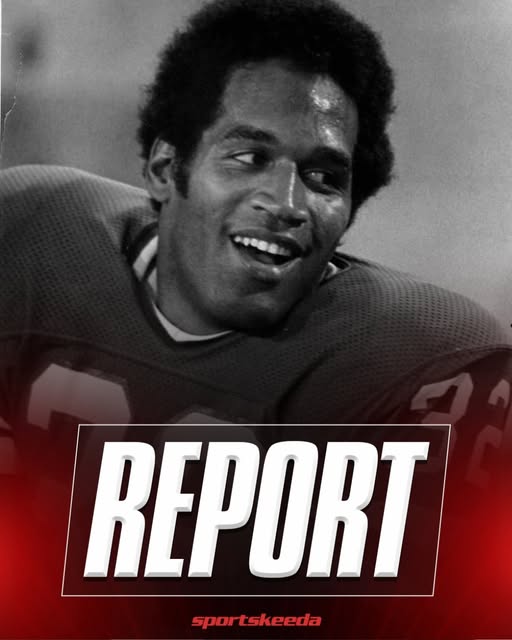
The Buffalo Bills are in a unique moment of transition, not only in moving into a brand‑new stadium but also in defining how they want to commemorate their history. As the team prepares to open the new Highmark Stadium later in 2026, one of the big questions swirling around the franchise — especially among fans, media, and Twitter debates — is whether one of the most iconic and controversial figures in Bills history, O.J. Simpson, will continue to be honored on the club’s Wall of Fame. The answer, as of now, is that no final decision has been made, and the team’s senior vice president of design, Frank Cravotta, has acknowledged publicly that the organization is still undecided on Simpson’s inclusion as part of the new stadium’s homage to its legends. (Yahoo Sports)
Cravotta, who is deeply involved in the design and planning of both the new stadium space and how historical elements are presented, said in an interview with ESPN that the design team is literally preparing for both scenarios — with Simpson included and with Simpson not included. The reason for this dual planning, he explained, is straightforward: the team doesn’t yet know which direction it will take, and construction and fabrication timelines for the new stadium’s Wall of Fame and “Family Circle” outside space won’t wait. So crews must be ready to install panels and dedications with or without Simpson’s name and likeness. (Yahoo Sports)
Within the Bills organization, this reflects a broader tension between honoring past achievements and reckoning with how history is perceived in the present day. O.J. Simpson’s story with the Bills is complicated: there is no question that his on‑field accomplishments stand among the greatest in franchise history. Simpson was a generational talent in the Buffalo Bills’ backfield, becoming arguably the most electrifying running back in NFL history during his prime, leading the league in rushing four times, earning MVP honors, and famously breaking the 2,000‑yard mark in a 14‑game season — an NFL first. (Wikipedia)
His performance on the field made Simpson a clear candidate for honors like the Wall of Fame when the team first inducted him in 1980. That honor recognized him as one of the architects of the franchise’s identity, a player whose rare blend of speed, vision, and durability made him a must‑see every Sunday and whose career stats placed him among the elite rushers of his era. His name adorned the Wall of Fame inside the old Highmark Stadium for decades, serving as a reminder of a foundational era for the franchise. (library.sfo2.cdn.digitaloceanspaces.com)
But Simpson’s life after his playing career was marked by controversy. In 1995, he was acquitted in criminal court of the murders of his former wife, Nicole Brown Simpson, and her friend Ronald Goldman — a trial that captivated the nation and remains one of the most highly publicized legal cases in American history. He was later found civilly liable for those deaths, and subsequently in 2008 he was convicted on unrelated armed robbery and kidnapping charges — charges that led to a long prison sentence. (Wikipedia) These episodes, especially the murder trial and civil liability finding, have forever complicated how casual fans, media, and even franchise loyalists talk about his legacy.
As the Bills prepare to leave behind the old stadium — a home where fans have experienced decades of football history — the question of who gets to be carried forward into the new facility has become a flashpoint. The new stadium’s design includes a prominent Family Circle area outside the main facility where statues, plaques, and other tributes to Bills history will be on display for fans. Inside the building, the Skyline Deck and other new spaces will include tributes to players and contributors who shaped the franchise. These elements are meant not just as decoration but as storytelling devices that connect generations of fans to the team’s past. (buffalobills.com)
Cravotta’s comment about preparing for “either including Simpson or excluding him” underscores just how much uncertainty there still is behind closed doors. From the design team’s perspective, the Wall of Fame is part of the narrative fabric of Highmark Stadium, and they must plan for how panels and spaces will look whether Simpson’s name is among them or not. This reflects an awareness within the organization that the choice could be contentious and that public reaction — whether from die‑hard fans, former players, or media — could influence the timing and manner of any announcement. (Yahoo Sports)
The public response to this potential change has been intense and varied. On social media platforms like Reddit and fan forums, Bills supporters are sharply divided. Some argue that Simpson’s on‑field legacy as a franchise great should secure his place on the Wall of Fame, noting that his rushing records and influence on the game were undeniable. Others maintain that continuing to honor someone whose name is inexorably tied to extremely violent and tragic events sends the wrong message, especially in 2026 when conversations around accountability and how sports honors are presented have evolved significantly. Some fans even suggest hybrid approaches — such as keeping his retired number displayed inside but excluding his face or name in the public Family Circle — while others think the franchise should move forward without him entirely. (Reddit)
This debate goes beyond just one player. It speaks to a broader cultural shift in sports and public memory. Teams across professional leagues are increasingly reassessing how they honor figures whose off‑field behavior or legal histories conflict with modern values. For the Bills, whose history stretches back to 1960 and includes periods of both mediocrity and greatness, the choice about Simpson represents a rare chance to reconcile two sides of its legacy: the “on‑field hero” and the “controversial figure” whose presence complicates how fans and the public engage with history. (buffalobills.com)
Inside the organization, it’s likely that discussions involve not only Cravotta and the design staff but also the front office, ownership, and legal advisers. They have to consider not only public sentiment but also how a decision might impact relationships with former players, season ticket holders, and corporate partners. The fact that Cravotta has been publicly discussing the issue indicates that the franchise is taking a cautious, transparent approach — not ducking the question, but also not rushing to a decision. Planning for both possibilities means the Bills can reveal final plans closer to the stadium’s opening without having to halt design and construction at the last minute. (Roundtable.io Network)
From a design standpoint, removing or including Simpson’s name is not a trivial matter. Wall of Fame displays often involve not just text plaques but also imagery, interactive elements, lighting, and physical space allocation that needs to be intentionally integrated with the surround architecture. The Family Circle outside the stadium is being designed as a fan destination in itself, featuring other symbolic art — including bison statues that celebrate Buffalo’s heritage and community — and spaces where fans can gather and connect with the team’s legacy. (buffalobills.com)
The historical significance of choices like this extends beyond aesthetics. The Bills have never won a Super Bowl in their history, despite a string of powerhouse teams in the late 1980s and early 1990s. Their history includes legendary names like Jim Kelly, Thurman Thomas, Bruce Smith, and others whose performances helped define the franchise. Simpson’s role in the earlier chapters of Bills football is undeniable from a purely statistical standpoint, but that is what makes the decision so fraught: can a franchise meaningfully separate athletic contribution from personal conduct when deciding who to enshrine on its most visible public monuments? That is the question the Bills are now openly wrestling with. (Wikipedia)
Critics of keeping Simpson on the Wall of Fame argue that continuing to honor him alongside other franchise legends could once again draw unwanted media attention and distract from what the team hopes will be a new era in a new stadium. With the franchise competing at a high level under current leadership and with star players commanding national attention, some see this as an opportunity to reset how the organization commemorates its history — prioritizing figures whose legacies are uncontroversial and universally respected. Proponents of removal argue that it aligns the team with social expectations that public honors should reflect not just athletic excellence but also a broader ethical standard. (Reddit)
Supporters of keeping Simpson’s place contend that the Wall of Fame is a historical record, not a moral judgment. They say that Simpson’s achievements on the field are part of Bills lore and that erasing him from displays could be seen as whitewashing history — stripping away complicated parts of the team’s past simply because they are uncomfortable. Some fans point out that sports history is filled with figures whose personal lives or post‑playing careers have been controversial, yet their achievements remain part of the fabric of the game. This viewpoint holds that Simpson’s presence should be contextualized rather than removed. (Reddit)
Ultimately, what the Bills decide will be a statement about how professional sports organizations choose to bridge the gap between legacy and morality, history and modern values. It’s not just a design issue; it’s a public conversation about who is celebrated and why. Cravotta’s remarks that the design team is preparing for both outcomes underscores the complexity of the issue and the importance of getting it right before the stadium opens its doors for fans later this year. (Yahoo Sports)
As fans debate online and in person, the Bills’ leadership continues its deliberations. The final decision, whatever it may be, will likely echo well beyond Orchard Park. It will become part of how the new stadium is remembered, and how the Bills — a franchise with a long and multifaceted history — choose to present that history to a new generation of supporters. (Roundtable.io Network)