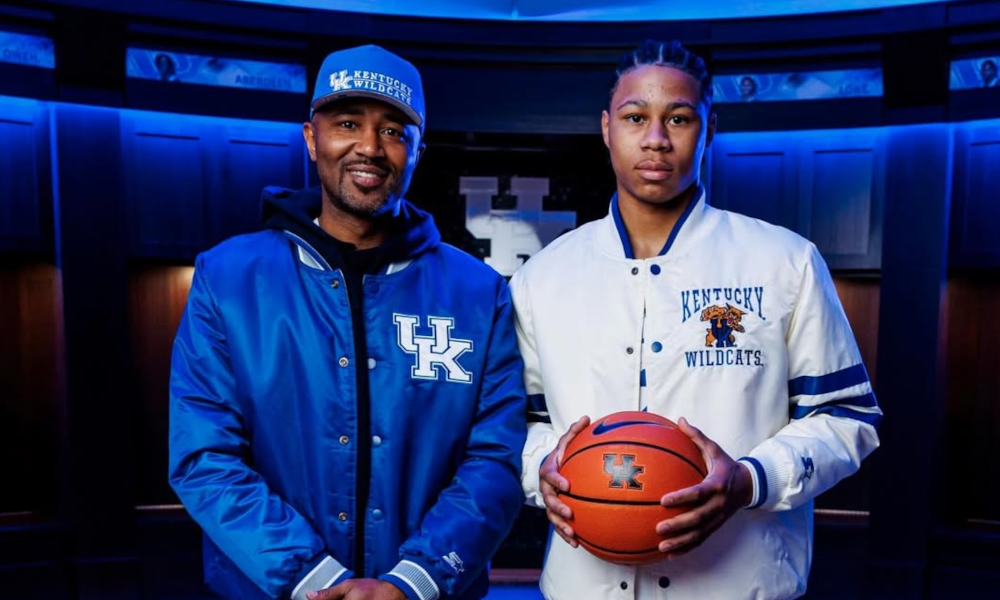
The Kentucky Wildcats, one of college basketball’s most storied programs, are in a period of transition. Known for their rich history of success, including numerous NCAA championships and a consistent pipeline of NBA talent, Kentucky is always seeking ways to maintain its competitive edge. Recently, reports have surfaced indicating that the Wildcats are actively looking to revamp their coaching staff to bolster recruiting, player development, and team performance.
Among the names being considered is Mo Williams, a former NBA All-Star guard, currently serving as the head coach at Jackson State. Williams’s playing career and emerging coaching resume have made him a compelling candidate for a role within Kentucky’s illustrious program. This move, if realized, could signify a strategic effort by Kentucky to leverage NBA experience and fresh perspectives to sustain their elite status.
This article delves into the significance of coaching staff changes at Kentucky, the profile of Mo Williams both as a player and coach, the potential benefits and challenges of hiring him, and what this development signals for college basketball’s coaching landscape.
Kentucky Wildcats: A Legacy of Excellence
Historical Success and Expectations
Kentucky’s basketball program, under the leadership of legendary coaches like Adolph Rupp, Joe B. Hall, Rick Pitino, and John Calipari, has established itself as a national powerhouse. With 8 NCAA championships and numerous Final Four appearances, Kentucky’s identity is rooted in excellence, recruiting top-tier talent, and developing NBA-ready players.
The Wildcats consistently rank among the top programs in recruiting rankings and have a passionate fan base that expects national titles year after year. Their success breeds high expectations, making coaching staff decisions highly scrutinized.
Recent Challenges and Opportunities
In recent years, Kentucky has experienced some fluctuations—occasional early exits in March Madness, roster turnover, and the challenge of maintaining dominance amid changing NCAA rules and the evolving NIL landscape. Nevertheless, the program remains a destination for elite recruits and coaches eager to compete at the highest level.
Revamping the coaching staff is a strategic move, aimed at revitalizing recruiting pipelines, player development, and team strategy. Bringing in innovative minds with NBA experience and fresh perspectives is viewed as a way to stay ahead in a competitive environment.
The Need for Coaching Staff Reinforcement
Strategic Importance of Assistant Coaches
Assistant coaches play a pivotal role in college basketball programs. Their responsibilities include recruiting, player development, scouting, game planning, and mentoring student-athletes. A strong coaching staff can significantly impact a program’s success, especially at a school like Kentucky, where expectations are sky-high.
Why Kentucky Is Looking to Reconfigure
Kentucky’s recent coaching changes, including the departure of assistants or shifts in roles, reflect a desire to adapt to the modern game. The NIL era has transformed recruiting and player retention, requiring coaches to be more innovative and connected.
Introducing someone like Mo Williams could bring a wealth of NBA insight, connections, and credibility that can bolster Kentucky’s recruiting efforts and player mentorship.
Mo Williams: From NBA All-Star to College Coach
Playing Career Highlights
Mo Williams, born in 1982 in Jackson, Ohio, had an impressive NBA career spanning over a decade. Known for his scoring ability, court vision, and leadership, Williams was a versatile guard who played for several teams, including the Cleveland Cavaliers, Milwaukee Bucks, and Los Angeles Clippers.
His career highlights include:
Being selected as an NBA All-Star in 2009.
Playing a crucial role in the Cavaliers’ 2007 playoff run.
Averaging over 13 points and 4 assists per game across his career.
Known for clutch performances and leadership qualities.
Williams’s playing style was characterized by his scoring ability, basketball IQ, and leadership — qualities that translate well into coaching.
Transition to Coaching
After retiring from the NBA, Williams transitioned into coaching, initially serving as an assistant coach at various levels, including the NBA’s Cleveland Cavaliers and the NBA G League. His coaching philosophy emphasizes player development, defensive intensity, and fostering team chemistry.
In 2021, Williams was hired as the head coach at Jackson State, an HBCU program led by Deion Sanders. His first season demonstrated his ability to adapt to college coaching, develop players, and build a competitive team, earning respect from players, fans, and analysts alike.
Coaching Philosophy and Style
Mo Williams’s coaching approach is believed to focus on:
Player development: leveraging NBA experience to improve individual skills.
Defensive intensity: emphasizing defense as a core team principle.
Team cohesion: fostering a culture of accountability and hard work.
Recruiting acumen: utilizing NBA connections to attract talented prospects.
His background as a former NBA star lends credibility and appeal to young recruits, especially those aspiring to reach the professional level.
Why Mo Williams Could Be a Game-Changer for Kentucky
NBA Experience as a Recruiting Tool
Kentucky’s ability to recruit top talent is well-established, but adding someone like Mo Williams could enhance their appeal to prospects who value NBA pathways and mentorship. Williams’s NBA pedigree and insider knowledge could be leveraged to attract elite recruits interested in NBA development.
Player Development and Mentorship
Williams’s firsthand experience in the NBA positions him uniquely to mentor college players aspiring to go pro. His understanding of what it takes to succeed at the highest level can be integrated into Kentucky’s player development programs.
Fresh Perspective and Modern Strategy
College basketball is evolving rapidly, with new trends in pace, spacing, and analytics. Williams, having recently transitioned from NBA to college coaching, can bring innovative ideas and a fresh perspective that aligns with modern basketball strategies.
Building a Competitive Edge
Adding a coach with NBA experience can create a competitive advantage in recruiting, game preparation, and player retention. Kentucky’s brand can be further reinforced by showcasing a coaching staff that combines traditional college coaching with NBA insights.
Potential Challenges and Considerations
Transition from NBA to College
While Williams’s NBA experience is a significant asset, coaching at the college level involves unique challenges—recruiting, NCAA compliance, academic oversight—that differ from professional coaching. His adaptability and understanding of college regulations will be critical.
Experience as a Head Coach
Although Williams has begun to build his coaching resume, he is still relatively early in his head coaching career. Kentucky’s high standards may demand immediate results, and there could be a learning curve.
Cultural Fit and Long-Term Planning
Kentucky’s program values stability, tradition, and a strong coaching culture. Integrating Williams into this environment requires alignment with the university’s values and long-term vision.
Recruitment and Relationships
While NBA connections are valuable, recruiting college players also depends on relationships with high school and AAU coaches. Williams’s ability to cultivate these relationships will influence his success.
Broader Implications for College Basketball
The Trend of NBA-Experienced Coaches in College Sports
Kentucky’s potential move to hire Mo Williams reflects a broader trend—colleges increasingly look to former NBA players and coaches to bridge the gap between college and professional basketball. This trend aims to:
Enhance recruiting appeal.
Improve player development.
Foster innovative strategies.
The Impact on Coaching Careers and the Recruiting Landscape
Williams’s move to Kentucky could inspire other programs to pursue former NBA players for coaching roles, elevating the coaching profile of former professional athletes. It also underscores the importance of NBA experience as a recruiting asset.
Navigating the NIL Era and Competitive Dynamics
In the NIL era, having a coach with NBA contacts and insights can be advantageous in attracting top talent. College programs are now competing not just on facilities and tradition but also on coaching staff credibility and professional pathways.
A Strategic Move for Kentucky’s Future
The Kentucky Wildcats’ interest in Mo Williams signifies a strategic and innovative approach to maintaining their elite status in college basketball. By potentially adding an NBA All-Star and promising young coach to their staff, Kentucky aims to:
Strengthen recruiting efforts.
Enhance player development.
Bring fresh, modern basketball strategies.
Reinforce their reputation as a program that combines tradition with innovation.
While challenges remain—such as ensuring a smooth transition, fitting into Kentucky’s culture, and building long-term success—the potential benefits are substantial. Williams’s NBA background, coaching philosophy, and recent success at Jackson State position him as a compelling candidate who could help Kentucky navigate the evolving landscape of college basketball.
This move, if executed successfully, could serve as a blueprint for other programs seeking to combine NBA expertise with college coaching excellence, ultimately shaping the future of college basketball coaching hires.