There are moments in basketball when numbers stop feeling like statistics and start feeling like statements, and what Cooper Flagg just delivered belongs firmly in that category. Fifty-one points, six rebounds, three assists, three steals, and an absurd 77.1% true shooting isn’t just a big night—it’s a line that forces the entire league to recalibrate what it thought was possible from a player his age. Becoming the youngest player in NBA history to reach the 50-point mark is the kind of milestone that echoes far beyond a single game. It doesn’t just announce arrival; it demands recognition.
What makes the performance even more staggering is the efficiency. High-scoring nights are often tied to volume—30 shots, constant isolation, a green light without hesitation. Flagg flipped that narrative. His 77.1% true shooting suggests a level of control, decision-making, and shot selection that veteran stars spend years refining. This wasn’t reckless scoring; it was surgical. Every possession felt intentional, every move calculated, and every bucket a reflection of a player who understands not just how to score, but when and why.
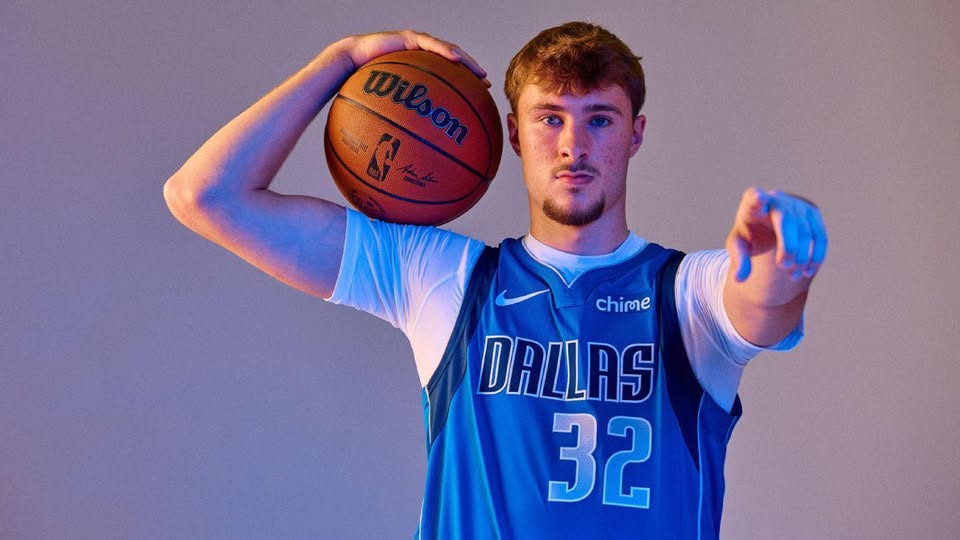
The visual of it all matters too. The composure stood out. There was no frantic energy, no sense of a young player trying to chase history. Instead, Flagg operated like someone who had already been here before, even though the record books say otherwise. He picked his spots, let the game come to him, and when the moment demanded aggression, he delivered without hesitation. That calm dominance is rare, especially for someone stepping into a league where the margin for error is razor thin.
For the Dallas Mavericks, this performance carries an entirely different weight. Franchises don’t often get a second chance at generational talent, let alone in rapid succession. Yet somehow, Dallas has managed to pivot from one era-defining player to another without losing its footing. That’s not luck; that’s organizational clarity paired with bold decision-making. It’s the kind of transition teams dream about but almost never execute.
Flagg’s game itself is uniquely suited for this kind of immediate impact. He doesn’t rely on one-dimensional scoring bursts or streaky shooting. His offensive arsenal is layered—pull-up jumpers, drives through contact, off-ball movement, and the ability to finish in traffic. But what elevates him is how seamlessly those elements blend together. Defenders can’t key in on a single tendency because he doesn’t have one. Every possession presents a different problem, and that unpredictability makes him nearly impossible to contain.
Beyond the scoring, the defensive activity hinted at something even more dangerous. Three steals might not jump off the page compared to 51 points, but they tell an important story. Flagg isn’t just a scorer; he’s a disruptor. His instincts on that end of the floor create transition opportunities, shift momentum, and add another layer of pressure on opposing teams. When a player can dominate offensively while simultaneously impacting the game defensively, it changes the entire equation.
There’s also a psychological element to a performance like this. Opponents now have to game-plan differently. Coaches will throw multiple defenders at him, adjust coverages, and try to force the ball out of his hands earlier. That’s the next stage of his evolution—how he responds when the league inevitably adapts. But if this game is any indication, he’s already ahead of that curve. His passing instincts and willingness to move the ball suggest he won’t be easily neutralized.
The historical context adds another layer. The NBA has seen young stars explode onto the scene before, but there’s always a difference between potential and realization. Flagg’s performance feels like a bridge between the two. It’s one thing to project greatness; it’s another to watch it materialize in real time against professional competition. Becoming the youngest to hit 50 isn’t just about age—it’s about readiness. It’s proof that his game translates at the highest level, under the brightest lights.
For fans, there’s an unmistakable sense of witnessing the beginning of something significant. Nights like this become reference points. Years from now, people will look back and say this was one of the first clear indicators of what Flagg would become. The numbers will still stand, but it’s the feeling of the game—the control, the confidence, the inevitability—that will linger even longer.
The Mavericks’ roster construction also deserves attention in this context. Integrating a young star into an existing system can be complicated, especially when expectations are already high. But Flagg’s versatility simplifies that process. He doesn’t need the offense to revolve entirely around him to be effective, yet he’s capable of taking over when necessary. That balance allows Dallas to remain flexible, adjusting strategies without sacrificing efficiency.
There’s a broader league-wide implication here as well. The NBA is constantly evolving, with new stars redefining what the game looks like. Flagg represents the next iteration of that evolution—a player who blends size, skill, and intelligence in a way that aligns perfectly with the modern game. Positionless basketball isn’t just a concept with him; it’s a reality. He can initiate offense, finish plays, defend multiple positions, and control tempo, all within the same game.
Critically, this performance wasn’t built on unsustainable factors. There were no fluky stretches or reliance on contested, low-percentage shots. Everything felt repeatable. That’s what should concern the rest of the league. When a 50-point game comes from a foundation of good decisions and high-quality looks, it suggests that similar performances aren’t outliers—they’re possibilities waiting to be realized again.
The conversation around “generational talent” is often overused, thrown around too casually in an era of constant hype. But occasionally, a performance cuts through that noise and forces a reevaluation. Flagg’s night fits that description. It wasn’t just about the scoring total; it was about how he got there and what it revealed about his ceiling. The term starts to feel less like exaggeration and more like an accurate assessment.
From a storytelling perspective, the symmetry is striking. The Mavericks, a franchise that has experienced both the highs of championship contention and the uncertainty of transition, now find themselves anchored by a player who seems capable of carrying them into the next era. It’s a narrative that writes itself—one star departs, another emerges, and the identity of the team remains intact.
There’s also an element of inevitability to how this unfolded. Flagg has been on the radar for years, his development closely followed, his potential widely discussed. But potential can only carry a player so far. At some point, it has to translate into production at the highest level. This game wasn’t just a milestone; it was a confirmation. The tools, the mindset, the adaptability—it’s all there.
What happens next will be just as important. The league will adjust, expectations will rise, and the spotlight will intensify. But if this performance is any indication, Flagg isn’t just prepared for that pressure—he thrives in it. There’s a confidence in his game that doesn’t come from arrogance, but from understanding. He knows what he can do, and more importantly, he knows how to do it consistently.
In the end, the numbers tell part of the story: 51 points, 6 rebounds, 3 assists, 3 steals, 77.1% true shooting. But the real significance lies in what those numbers represent. They mark the arrival of a player who isn’t just participating in the league, but actively shaping it. They signal a shift, a moment where the future becomes the present.
Cooper Flagg didn’t just have a historic night; he delivered a glimpse of what the next era of basketball might look like. And for the Mavericks, for the league, and for anyone watching closely, that glimpse was impossible to ignore.