A 7.5 win total for the Tennessee Volunteers is one of those lines that looks simple on the surface but gets complicated the more you sit with it. You’re essentially being asked whether this program is closer to “pretty good but inconsistent” or “quietly pushing into that 9-win tier.” And with a team like Tennessee, where offensive explosiveness can mask flaws one week and disappear the next, that’s not an easy call.
If I had to take a side, I lean toward the over—but not comfortably, and definitely not blindly.
The starting point is offensive identity. Under Josh Heupel, Tennessee has built one of the most aggressive, tempo-driven attacks in college football. Even when personnel changes, the system itself creates a relatively high floor. Defenses have to defend every inch horizontally and vertically, and that stress tends to translate into points even when execution isn’t perfect. That matters when you’re projecting win totals, because it gives Tennessee a puncher’s chance in games they might otherwise lose on talent alone.
That said, this isn’t the same offense that had Hendon Hooker running it at an elite level. Quarterback play is the swing factor here. If Tennessee gets above-average SEC quarterback play—nothing spectacular, just efficient, low-turnover, capable of hitting deep shots when they’re there—the offense should still be good enough to win eight or nine games. If quarterback play dips into inconsistency, suddenly this team becomes volatile, and volatility is dangerous when your number is sitting right on that 7–8 line.
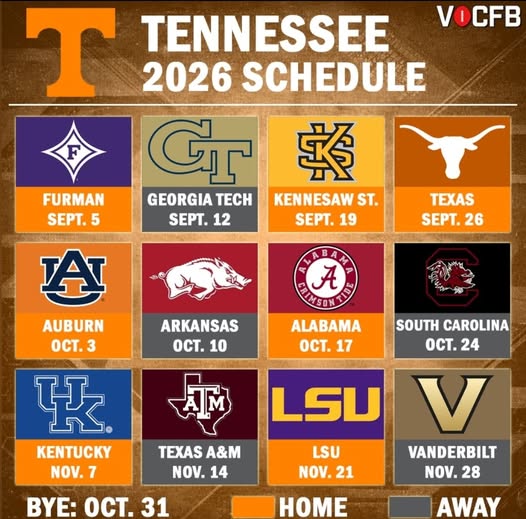
The schedule is where things get real. In the SEC, you don’t get many “free” wins, and Tennessee’s path typically includes a mix of manageable games, toss-ups, and a few uphill battles against elite teams. To clear 7.5, you’re essentially asking them to take care of business against inferior opponents and then win at least a couple of coin-flip games. That’s doable, but it leaves very little margin for error. One upset loss—something like dropping a game to a mid-tier SEC opponent or a tricky non-conference spot—suddenly puts the over in danger.
Defensively, Tennessee has been improving, but “improving” in the SEC isn’t the same as “dominant.” They don’t need to be elite; they just need to be competent enough to complement the offense. If the defense can consistently get stops on third down and avoid giving up explosive plays, that’s usually enough in Heupel’s system. The concern is depth and consistency. Against high-level offenses, Tennessee’s defense can get stretched, and that’s where games can slip away quickly.
One thing I factor in heavily with a number like 7.5 is game script variability. Tennessee is the kind of team that can win a game 41–38 or lose 31–17 depending on how things break early. That unpredictability actually pushes me slightly toward the over, because it increases their chances of stealing a game as an underdog. Teams with conservative identities tend to land exactly where projected. Teams like Tennessee tend to swing wider, and when the number is this low, that variance can work in your favor.
Another angle is program trajectory. Tennessee isn’t rebuilding from scratch; they’ve already shown they can compete at a high level in this system. Recruiting has improved, depth is better than it was a few years ago, and there’s a clearer identity. That usually translates into more consistency against lower-tier teams, which is crucial for hitting an over like this. You don’t need them to beat the top of the conference—you just need them to avoid slipping up where they shouldn’t.
But there are legitimate reasons to take the under. The biggest is that the SEC doesn’t forgive mediocrity at quarterback or along the offensive line. If either of those areas underperforms, the offense stalls just enough to turn likely wins into coin flips and coin flips into losses. And once you start stacking losses in a tough conference, it snowballs quickly. A team can look like an 8-win group on paper and still end up 6–6 just because of how unforgiving the schedule is.
There’s also the psychological factor of expectations. When a team is pegged right around 7 or 8 wins, it usually means oddsmakers see them as solid but flawed. Those teams often hover right around the number for a reason. They beat who they’re supposed to beat, lose to who they’re supposed to lose to, and split the toss-ups. That lands you exactly at 7 or 8, which makes betting either side feel like threading a needle.
If you’re betting the over, your argument is pretty clear: the offense is too explosive, the system is too established, and the baseline talent level is high enough to avoid a collapse. You’re banking on Tennessee going something like 8–4, maybe 9–3 if things break right. You’re also implicitly betting that they won’t have multiple “what just happened?” losses, which is always a risk but less so than it used to be.
If you’re betting the under, you’re essentially saying the volatility will hurt more than it helps. Maybe the quarterback play is inconsistent, maybe the defense gives up too many big plays, maybe they drop a game they shouldn’t. In that scenario, 6–6 or 7–5 becomes very realistic, and suddenly that hook at 7.5 is doing a lot of work.
For me, the deciding factor is that Tennessee’s style gives them more ways to win than to lose at this number. They don’t need everything to go perfectly to get to eight wins. They just need competence and a couple of breaks. The offense alone can carry them through a lot of situations, and in college football, having a clear, dangerous identity is often the difference between a middling season and a quietly strong one.
So I’d take the over, but I’d do it knowing it’s not a slam dunk. This feels like an 8–4 type of team if things go as expected, with upside for more if the quarterback play clicks. But it also wouldn’t be shocking if they land right on 7–5 and make that hook the difference. That’s the nature of betting a team like Tennessee—you’re buying into both the excitement and the risk that comes with it.