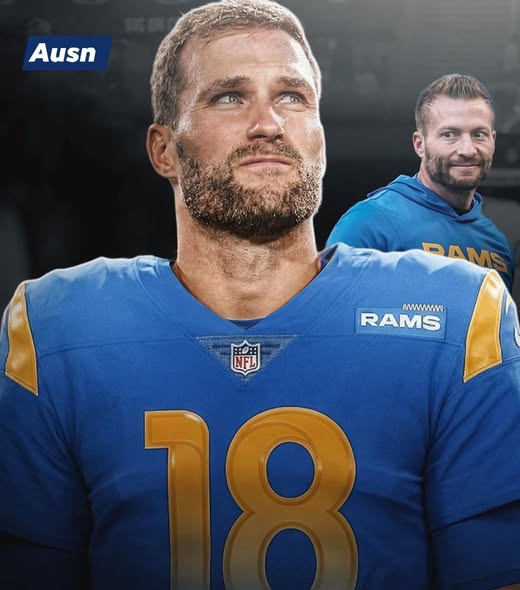
The Los Angeles Rams are reportedly exploring the possibility of bringing in veteran quarterback Kirk Cousins as a backup option, a development that has garnered significant attention across the NFL landscape. This potential move, first noted in discussions by head coach Sean McVay, highlights not only the Rams’ ongoing strategic considerations at the quarterback position but also the enduring respect and professional rapport that McVay and Cousins have maintained since their time together in Washington. The connection between the two dates back to when McVay was part of the Washington Football Team’s offensive coaching staff, serving as the offensive coordinator before departing to take over the Rams. During that period, Cousins was an established quarterback with a reputation for precision passing, durability, and consistency, qualities that McVay has repeatedly praised in interviews and public comments. The relationship they cultivated during their time in Washington is notable not only for the professional synergy it created but also for the mutual respect and understanding that has persisted even after McVay’s transition to Los Angeles. The potential for reuniting professionally offers both parties an intriguing opportunity to leverage familiarity, experience, and complementary skills in a way that could benefit the Rams’ roster depth and overall offensive flexibility.
Sean McVay’s comments regarding Cousins were measured, highlighting both the quarterback’s professional accomplishments and personal character. McVay emphasized Cousins’ high-level experience as a starting quarterback, noting that his time leading NFL offenses provides a wealth of knowledge that could be invaluable in a mentorship and supporting role. Beyond technical skill, McVay praised Cousins’ leadership, work ethic, and ability to navigate complex offensive schemes. Such attributes are particularly relevant for a team like the Rams, which has experienced roster changes, injuries, and the natural uncertainties that accompany the NFL season. The presence of a seasoned veteran like Cousins could provide stability in the quarterback room, offer guidance to younger players, and serve as a reliable backup capable of stepping in if needed, without sacrificing strategic consistency or offensive rhythm. McVay’s public endorsement signals that, should both parties be amenable, the Rams view Cousins not merely as a placeholder but as a strategic asset capable of contributing in meaningful ways both on and off the field.
The consideration of Cousins as a potential backup is further amplified by the broader context of NFL roster construction and the evolving role of the veteran quarterback. In today’s league, teams increasingly value experience, versatility, and leadership at the quarterback position, particularly when evaluating backup options. A reliable veteran can serve multiple functions: providing insurance against injury, mentoring emerging talent, enhancing team morale, and even contributing situationally in high-leverage moments. Cousins’ career has been characterized by durability, consistency, and high-level performance, including multiple seasons exceeding 4,000 passing yards and a reputation for maintaining efficiency under pressure. Such qualities make him an appealing candidate for a team like the Rams, who are balancing the pursuit of immediate success with long-term roster development. The potential addition of Cousins could reinforce the quarterback room, create healthy competition, and provide McVay with a seasoned option capable of executing his offensive schemes with minimal adjustment time.
Another aspect of the potential move involves the strategic fit between Cousins’ skill set and the Rams’ offensive philosophy. McVay’s offense is known for its creativity, pre-snap motion, and adaptability, emphasizing timing routes, RPO concepts, and quarterback decision-making. Cousins, who has operated under multiple coaching staffs throughout his career, has demonstrated an ability to adapt to complex playbooks and execute under varying offensive frameworks. His experience in Washington, including a period directly under McVay’s tutelage, means he is already familiar with certain concepts, terminology, and situational expectations. This familiarity reduces the learning curve, allowing him to potentially contribute more quickly and effectively than a quarterback entering an entirely new system. Moreover, the professional trust and mutual understanding between Cousins and McVay could facilitate communication, alignment in practice, and seamless integration into the team culture, which is critical when evaluating a veteran addition late in a roster-building cycle.
McVay’s discussion of the situation also underscores the importance of mutual interest and personal preference in any potential move. While the Rams are exploring the possibility of bringing in Cousins, McVay emphasized that the decision ultimately depends on Cousins’ own considerations, including his career objectives, desired role, and personal circumstances. At this stage of his career, Cousins has established himself as a successful NFL quarterback, and any decision to join another team, even in a backup capacity, involves weighing playing time, team culture, location, contract terms, and long-term aspirations. McVay’s comments reflect an understanding of these factors and a respect for Cousins’ autonomy, signaling that the potential signing is contingent upon a collaborative agreement rather than a unilateral organizational decision. This approach demonstrates professionalism and a recognition that veteran players bring both skill and agency to roster discussions, which can be crucial in fostering positive team dynamics and ensuring a productive partnership.
From a team perspective, adding a quarterback like Cousins could provide multiple tangible benefits. First, he offers insurance against injury to the starting quarterback, a consideration of paramount importance in a league where quarterback health can dramatically influence season outcomes. Second, his presence could create internal competition, motivating younger quarterbacks or backups to elevate their performance while learning from a seasoned professional. Third, Cousins’ experience in high-pressure situations, including playoff appearances, equips him with the ability to handle critical moments if called upon, reducing the risk associated with relying solely on inexperienced backups. Lastly, the leadership and mentorship component cannot be overstated: players often benefit from having a veteran in the locker room who can provide guidance on preparation, game-day adjustments, and professional development both on and off the field. In short, Cousins’ addition would be multifaceted, enhancing performance, stability, and team culture simultaneously.
It is also worth noting the historical context of McVay-Cousins collaborations. Their shared experience in Washington provides a foundation of trust and mutual understanding that few coaching-player relationships possess. This preexisting rapport could accelerate integration into the Rams’ system, ensuring that Cousins can contribute meaningfully even if his role is limited or situational. McVay has consistently highlighted the value of relationships built on respect, shared knowledge, and professional alignment, and the potential reuniting with Cousins exemplifies this philosophy. Such familiarity can streamline communication, reduce errors, and enhance overall offensive efficiency, particularly in practice sessions, game planning, and film study. For a team seeking both immediate success and strategic continuity, these relational factors carry substantial weight.
The broader NFL landscape also contextualizes the Rams’ exploration of Cousins. Across the league, veteran quarterbacks increasingly play roles beyond starting duties, serving as stabilizers, mentors, and even emergency starters capable of delivering competitive performances. Teams have recognized that experience and poise are valuable commodities in high-pressure environments, and roster construction has evolved to reflect this reality. The addition of a quarterback with Cousins’ resume aligns with contemporary trends, reinforcing a philosophy that prioritizes readiness, versatility, and professional leadership. For a team with championship aspirations, these qualities can make the difference between maintaining competitive momentum and facing strategic setbacks in critical games.
At the same time, the Rams’ public discussion of the potential addition demonstrates transparency in organizational communication. McVay’s acknowledgment of the situation provides insight into the decision-making process while managing expectations for fans and media. By emphasizing both the strategic appeal of Cousins and the importance of his personal preference, McVay presents the move as a considered and collaborative process rather than an impulsive roster adjustment. This approach aligns with contemporary leadership practices, emphasizing mutual respect, clear communication, and thoughtful evaluation of talent and fit. In a league where public perception and internal cohesion are critical, this transparency can foster trust among players, staff, and supporters alike.
Ultimately, the potential acquisition of Kirk Cousins as a backup quarterback represents a multifaceted consideration for the Rams. It involves evaluating strategic fit, professional experience, leadership potential, cultural alignment, and logistical factors, all balanced against the preferences and aspirations of the veteran quarterback. McVay’s comments underscore that the move is exploratory, reflective, and contingent, highlighting a methodical approach to roster management that prioritizes both team success and player agency. Should Cousins decide to join, the Rams would gain a versatile, experienced, and highly respected quarterback capable of contributing in multiple dimensions, from game-day execution to mentorship and leadership. Conversely, should the opportunity not materialize, the dialogue itself reinforces the Rams’ commitment to proactive and thoughtful decision-making in pursuit of competitive excellence.
In conclusion, the Los Angeles Rams’ exploration of Kirk Cousins as a potential backup quarterback reflects both the strategic ambitions of the organization and the unique professional relationship between Cousins and Sean McVay. Cousins’ experience, leadership, and familiarity with McVay’s system make him an attractive candidate for a role that could enhance the team’s performance, stability, and culture. McVay’s emphasis on mutual interest and respect demonstrates a professional and considered approach to roster management, acknowledging both organizational needs and the quarterback’s personal considerations. The broader implications of such a move, including enhanced depth, mentorship opportunities, and strategic flexibility, further underscore the potential value Cousins could bring to the Rams. While the situation remains exploratory, it highlights the complex and multifaceted considerations that define modern NFL roster construction, and the potential reunion between McVay and Cousins represents an intriguing development for fans, analysts, and league observers alike. Whether or not it comes to fruition, the discussion illustrates the Rams’ commitment to thoughtful leadership, strategic planning, and leveraging established professional relationships in pursuit of success at the highest level of professional football.