For decades, Duke University has been synonymous with excellence in college basketball. With a storied history that includes multiple national championships, legendary coaches, and a pipeline of NBA-bound stars, Duke has long been regarded as a powerhouse that routinely contends for the title. Yet, despite its consistent ability to land the nation’s top recruits, the Blue Devils have faced a perplexing and frustrating reality: success in recruiting does not always translate into a championship.
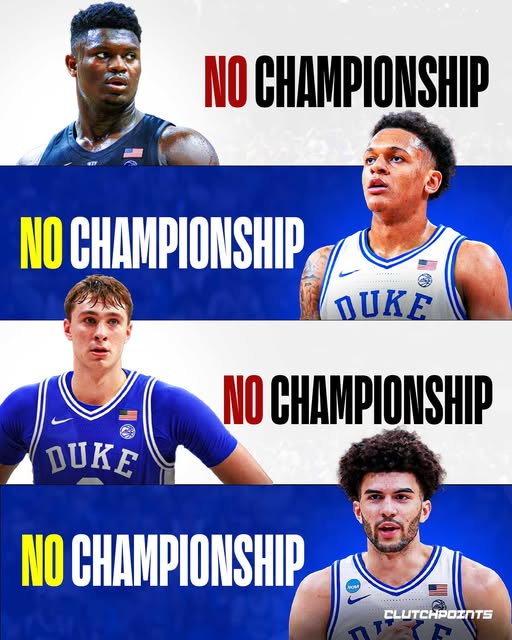
In the last seven years alone, Duke has secured the services of four of the nation’s top high school prospects, yet none of those talented individuals have been able to deliver a national title. From Zion Williamson to Paolo Banchero, Cooper Flagg, and Cam Boozer, each was heralded as a potential game-changer, yet each has fallen short of the ultimate goal—winning the NCAA Tournament. Even Jayson Tatum, who was a top recruit in 2017, exited in the second round, emphasizing that the journey from elite talent to championship glory is complex and challenging.
This paradox prompts an essential question: Why has Duke, a perennial powerhouse and recruiting juggernaut, struggled to convert top recruits into a title-winning team? What factors have contributed to this recurring pattern of near misses, and what does it reveal about the nature of college basketball success?
In this comprehensive analysis, we examine the historical context of Duke’s recent recruiting class, analyze the challenges faced by star players, explore the dynamics of tournament success, and consider the broader implications for the Blue Devils’ aspirations.
The Recruitment Machine: Duke’s Consistent Ability to Land Top Talent
The Blue Devils’ Recruiting Success
Duke’s reputation for recruiting elite prospects is unparalleled in college basketball. Under Coach Mike Krzyzewski, the Blue Devils became a magnet for top-tier high school players, often landing the No. 1 recruiting class year after year. In recent years, they have continued this tradition, securing players who are projected to be NBA stars.
Zion Williamson (2018): An athletic marvel and one of the most dominant college players in recent memory, Williamson’s one year at Duke culminated in a near-perfect season, but an NCAA Tournament upset prevented a championship.
Paolo Banchero (2021): A versatile forward with a polished game, Banchero led Duke deep into the NCAA Tournament, reaching the Final Four, but fell just short of the title.
Cooper Flagg (2023): Regarded as one of the top high school prospects, Flagg’s commitment signaled Duke’s continued dominance in recruiting, though his college journey is still unfolding.
Cam Boozer (2024): The son of NBA legend Alonzo Mourning, Boozer’s recruitment garnered attention, adding to Duke’s elite class.
The Historical Pattern of Elite Recruits
Duke’s ability to consistently land top recruits is rooted in its prestigious history, coaching pedigree, and the promise of high-level development and exposure. High school stars view Duke as a pathway to the NBA, a place where their talents will be nurtured and showcased on the national stage. However, recruiting top talent is only part of the equation; translating that talent into NCAA championships involves numerous other factors.
The Paradox: Success in Recruitment vs. Lack of Titles
The Last Championship: 2010
The last time Duke captured the national title was in 2010, led by a talented roster featuring Tyus Jones, Grayson Allen, Jahlil Okafor, Justise Winslow, and Quinn Cook. That team exemplified a perfect blend of skilled newcomers and experienced players, guided by Coach Krzyzewski’s leadership.
Since then, Duke has made multiple Final Four appearances and advanced deep into the tournament numerous times but has fallen short of securing another crown. The pattern is clear: talent alone does not guarantee championship success.
Recent Near Misses
2018 Zion Williamson’s Duke team: A team loaded with NBA-ready talent, but an unexpected upset in the NCAA Tournament ended their run prematurely.
2021 Paolo Banchero-led squad: Reached the Final Four but lost in the semifinals to North Carolina, missing out on a shot at the title.
2023 Cooper Flagg’s current team: Still developing, but expectations remain high.
This pattern of high expectations, deep tournament runs, but ultimate disappointment has become a recurring theme, raising questions about what additional factors are necessary for Duke to finally reclaim the NCAA crown.
The Challenges Faced by Elite Recruits
The Transition from College to the NBA
One of the central challenges for Duke’s top recruits is the transition from college stardom to professional readiness. While these players are dominant in high school and excel at Duke, the NCAA tournament’s high-pressure environment exposes weaknesses that may not be apparent in regular-season play.
Zion Williamson: Despite his dominance, Duke’s 2019 loss to Michigan State in the Sweet 16 highlighted how even the most talented teams are vulnerable.
Paolo Banchero: His team’s loss in the Final Four demonstrated that individual talent needs to be complemented by team cohesion, experience, and tactical execution.
Jayson Tatum: His 2017 season ended early in the second round, illustrating that even highly touted recruits can struggle with the intensity of NCAA competition.
Inexperience and Team Chemistry
Top recruits often arrive at Duke with high expectations but limited college experience. Developing chemistry, understanding team roles, and adapting to coaching strategies take time. In the high-stakes environment of March Madness, teams need cohesion, mental toughness, and strategic adaptability—elements that sometimes come with experience.
The Pressure of Expectations
Elite recruits are often scrutinized intensely—by media, fans, and themselves. The pressure to perform and deliver a championship can be overwhelming, especially when facing seasoned opponents who have played together longer.
The Broader Context: The Nature of NCAA Tournament Success
The Ups and Downs of March Madness
The NCAA Tournament is famously unpredictable. Even the most talented teams can be eliminated prematurely due to a single bad game, matchup issues, or simply the unpredictability of a knockout tournament. This volatility is part of what makes college basketball exciting but also frustrating for top programs like Duke.
The Role of Coaching and Experience
While recruiting talent is crucial, coaching strategy, in-game adjustments, and player experience are equally vital. Duke’s coaching staff, renowned for its tactical acumen, has still faced challenges in navigating the tournament’s pressures.
The Impact of Injuries and Bad Bounces
Injuries, foul trouble, or unfavorable calls can derail even the most talented teams. In recent years, Duke has not been immune to these factors, emphasizing that winning a title requires a combination of skill, luck, and resilience.
The Psychological and Cultural Factors
The Weight of Expectations
Playing for Duke carries immense pressure. The weight of a storied tradition, the expectation of winning every year, and the limelight on top recruits can be a mental burden.
The Challenge of Clutch Situations
Performing under pressure in March Madness requires mental toughness and poise. Some elite players excel individually but struggle to elevate their game in clutch moments, which can be the difference between a deep run and an early exit.
The Future Outlook: Can Duke Break Through?
Building a Cohesive Team
The pathway to a championship involves more than recruiting top talent; it requires developing a cohesive, disciplined team capable of executing under pressure. Duke’s coaching staff must focus on fostering chemistry, resilience, and strategic adaptability.
Learning from Past Failures
Analyzing previous tournament exits can offer valuable lessons. Building on those insights, Duke can better prepare its players for the mental and tactical demands of March Madness.
Emphasizing Player Development and Leadership
Developing leadership qualities among players and emphasizing mental toughness can help Duke’s stars perform at their best when it matters most.
The Role of Experience
Gaining tournament experience is vital. Players who have gone deep into March Madness are more likely to handle pressure in future years, increasing their chances of winning a title.
The Elusive Dream Continues
Despite its unparalleled ability to land top recruits year after year, Duke’s quest for a national championship remains unfulfilled in recent history. The last title was won over a decade ago, in 2010, with a roster that blended talent, experience, and chemistry. Since then, Duke has come tantalizingly close multiple times but has fallen short, often in heartbreaking fashion.
The recent crop of recruits—Zion Williamson, Paolo Banchero, Cooper Flagg, Cam Boozer—are among the most heralded in the country, yet none have yet translated their individual brilliance into a national crown. Jayson Tatum’s early exit in 2017 further exemplifies the unpredictable nature of March Madness and the multitude of factors beyond talent that determine success.
The pattern underscores a fundamental truth: in college basketball, success is multifaceted. Talent is essential but insufficient on its own. It requires the right mix of experience, chemistry, mental toughness, coaching, and sometimes luck to go all the way.
For Duke, the challenge remains to convert their recruiting dominance into championships. This will involve nurturing team cohesion, preparing players for the pressures of the NCAA Tournament, and perhaps most importantly, maintaining resilience in the face of inevitable setbacks.
The Blue Devils’ storied history and tradition of excellence suggest that their pursuit is far from over. With the right focus and development, Duke can still fulfill its championship aspirations. Until then, the recurring pattern of near misses serves as a reminder that greatness in college basketball demands more than just elite talent—it demands perseverance, unity, and a bit of luck.