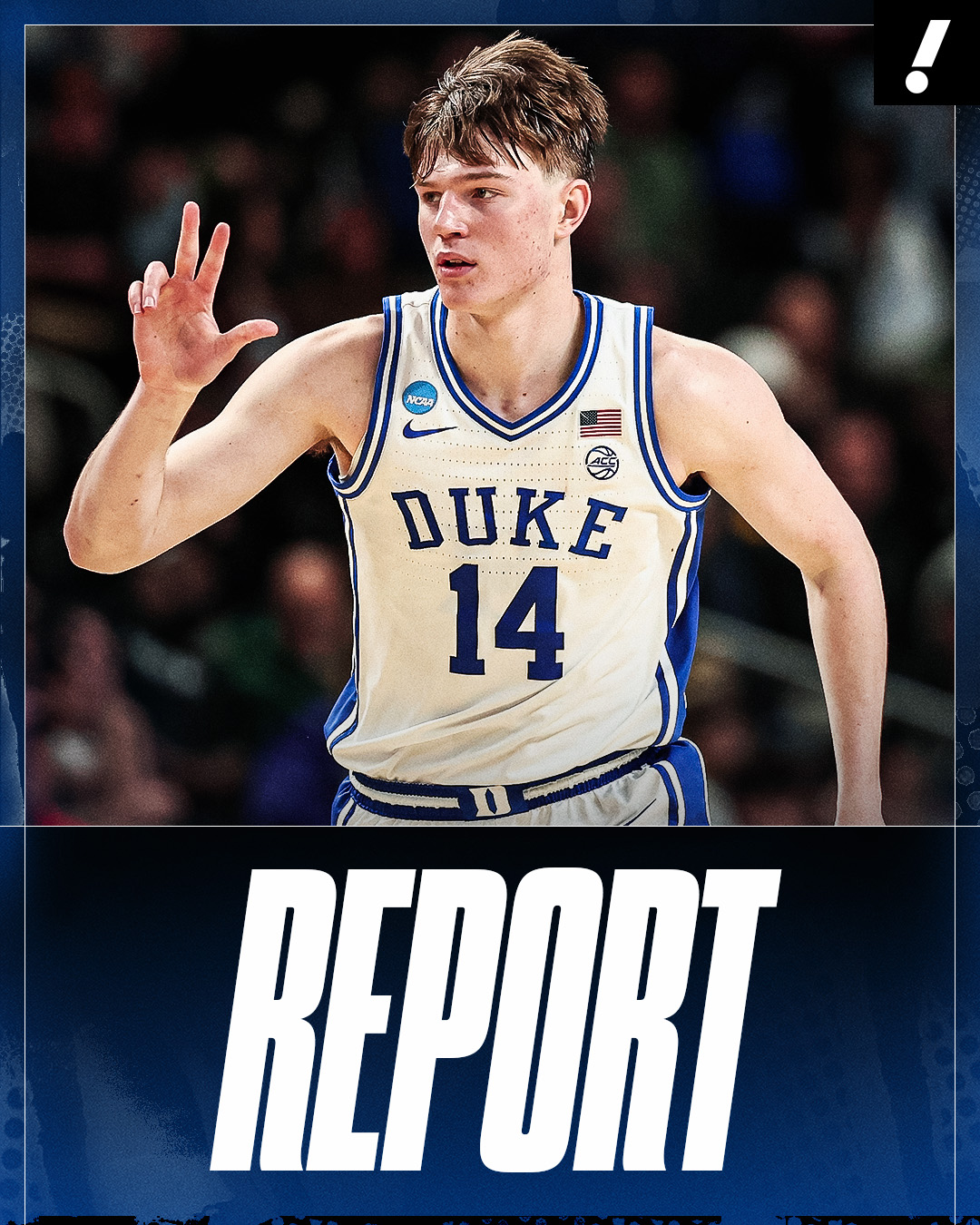
Nikolas Khamenia entering the transfer portal marks one of the more intriguing early offseason developments for Duke Blue Devils men’s basketball and the broader college basketball landscape. First reported by DraftExpress, the decision comes after a freshman campaign that, while modest statistically, still left plenty of room for projection given Khamenia’s pedigree as a top-15 recruit in the class of 2025.
Khamenia averaged 5.7 points per game during his lone season in Durham, a number that doesn’t immediately jump off the page but also doesn’t fully capture the complexity of his role, development curve, and long-term potential. As is often the case with highly touted freshmen at elite programs like Duke, playing time, role definition, and adaptation to the college game can significantly influence production. His entry into the portal raises questions not just about his future, but also about roster construction, player development, and the evolving dynamics of college basketball in the transfer portal era.
A Highly Touted Prospect
Coming out of high school, Khamenia was widely regarded as one of the most skilled guards in his class. Ranked among the top 15 recruits nationally, he brought with him a reputation for versatility, scoring ability, and a polished offensive game. Scouts praised his footwork, mid-range scoring, and ability to create shots both off the dribble and within structured offensive sets.
For a program like Duke, landing a player of Khamenia’s caliber is almost routine, yet each recruit arrives with unique expectations. In Khamenia’s case, there was optimism that he could develop into a multi-year contributor or even a one-and-done candidate if his game translated quickly to the collegiate level.
However, the transition from high school or international competition to ACC basketball is rarely seamless. Even elite prospects can find themselves adjusting to increased physicality, faster pace, and more complex defensive schemes. For Khamenia, those adjustments appeared to play a role in shaping his freshman season.
Freshman Season Context
Averaging 5.7 points per game suggests a limited offensive role, but context matters. Duke’s roster was likely loaded with talent, including upperclassmen and other high-profile recruits competing for minutes. In such environments, freshmen often have to earn their opportunities gradually, particularly on the defensive end where coaching staffs tend to demand consistency and discipline.
Khamenia’s playing time and usage may have fluctuated throughout the season, a common experience for first-year players at powerhouse programs. Some games likely showcased flashes of his scoring ability, while others may have highlighted areas still in development—such as defensive rotations, decision-making under pressure, or physical matchups against more experienced opponents.
It’s also worth noting that scoring averages don’t always reflect a player’s full contribution. Khamenia may have provided value in spacing, secondary playmaking, or defensive versatility that doesn’t show up prominently in box scores. Still, for a player with his recruiting profile, expectations are inevitably tied to visible production.
Why Enter the Transfer Portal?
The decision to enter the transfer portal can stem from a variety of factors, and without direct statements from Khamenia, any analysis remains speculative. However, several common themes across college basketball provide a framework for understanding such moves.
1. Playing Time and Role
One of the most frequent reasons players transfer is the pursuit of a larger role. At a program like Duke, competition is intense, and minutes are never guaranteed—even for highly ranked recruits. If Khamenia felt his path to a more prominent role was uncertain, the portal offers an opportunity to find a better fit.
2. System Fit
Basketball systems vary widely between programs. Some emphasize pace and spacing, others prioritize structured half-court offense or defensive intensity. A player’s skill set may align better with certain schemes, and transferring can provide a chance to maximize strengths.
3. Development Path
For players with professional aspirations, development is critical. Khamenia may believe that another program can offer a clearer path to showcasing his abilities, improving his draft stock, or preparing him for the next level.
4. Roster Turnover
College basketball rosters are increasingly fluid, especially with the transfer portal and early NBA departures. Incoming recruits or transfers at Duke could have influenced Khamenia’s outlook on his future role within the team.
The Transfer Portal Era
Khamenia’s move is emblematic of a broader shift in college basketball. The transfer portal has fundamentally changed how players navigate their careers. In previous eras, transferring often required sitting out a season, making the decision more consequential. Today, with immediate eligibility in many cases, players have greater freedom to seek better opportunities.
This shift has created a more dynamic and, at times, unpredictable environment. Programs must now balance recruiting high school prospects with adding experienced transfers, while players must evaluate not just where they can play, but where they can thrive.
For top recruits like Khamenia, the portal can serve as a reset—a chance to recalibrate expectations and find a situation that better aligns with their goals.
What Khamenia Brings to the Table
Despite modest freshman numbers, Khamenia’s upside remains significant. His high school pedigree suggests a player with advanced scoring instincts and a strong foundation of skills.
Scoring Ability
Khamenia’s ability to score at multiple levels—mid-range, beyond the arc, and at the rim—remains one of his defining traits. With increased usage and confidence, he could develop into a primary scoring option.
Size and Versatility
As a guard with good size, he likely has the tools to defend multiple positions and contribute in various roles. This versatility is highly valued in modern basketball.
Basketball IQ
Top recruits often arrive with a strong understanding of the game, even if execution takes time to catch up. Khamenia’s decision-making and feel for the game could improve significantly with experience.
Untapped Potential
Perhaps most importantly, his freshman season doesn’t define his ceiling. Many players make significant leaps between their first and second years, particularly when given more responsibility.
Potential Landing Spots
While it’s too early to predict exactly where Khamenia will land, several types of programs could be appealing:
- Mid-to-High Major Programs looking for a scoring guard to build around.
- Teams with Immediate Openings in the backcourt, offering a clear path to starting minutes.
- Systems Emphasizing Offensive Freedom, where his scoring instincts can flourish.
Programs in competitive conferences that can offer both visibility and opportunity may be particularly attractive, especially if Khamenia still harbors NBA aspirations.
Impact on Duke
For Duke, Khamenia’s departure is part of the ongoing cycle of roster turnover that defines elite college programs. While losing a former top-15 recruit is notable, it also opens opportunities for other players—whether incoming freshmen or returning contributors.
Duke’s coaching staff will likely continue to recruit at a high level and utilize the transfer portal themselves to address roster needs. In this sense, Khamenia’s exit is less a setback and more a reflection of the modern landscape, where roster fluidity is the norm.
Looking Ahead
Khamenia’s next step will be crucial in shaping his career trajectory. A strong sophomore season at a new program could quickly reestablish him as a high-level prospect and potential professional player. Conversely, finding the right fit—both on and off the court—will be essential to unlocking his potential.
For fans and analysts, his journey will be one to watch. Players with his recruiting background and skill set often find ways to break through, even if the path isn’t linear. The transfer portal, for all its complexities, offers a second chance—and sometimes that’s all a talented player needs.
Final Thoughts
Nikolas Khamenia entering the transfer portal underscores the evolving nature of college basketball, where talent, opportunity, and fit intersect in increasingly complex ways. While his freshman season at Duke may not have met initial expectations statistically, it’s far from the final chapter in his story.
Instead, this moment represents a transition—a pivot toward new possibilities. Whether he emerges as a star at his next destination or continues to develop more gradually, Khamenia’s journey reflects both the challenges and opportunities facing today’s student-athletes.
In the end, the transfer portal isn’t just about movement—it’s about finding the right environment to grow. For Khamenia, that search has just begun.