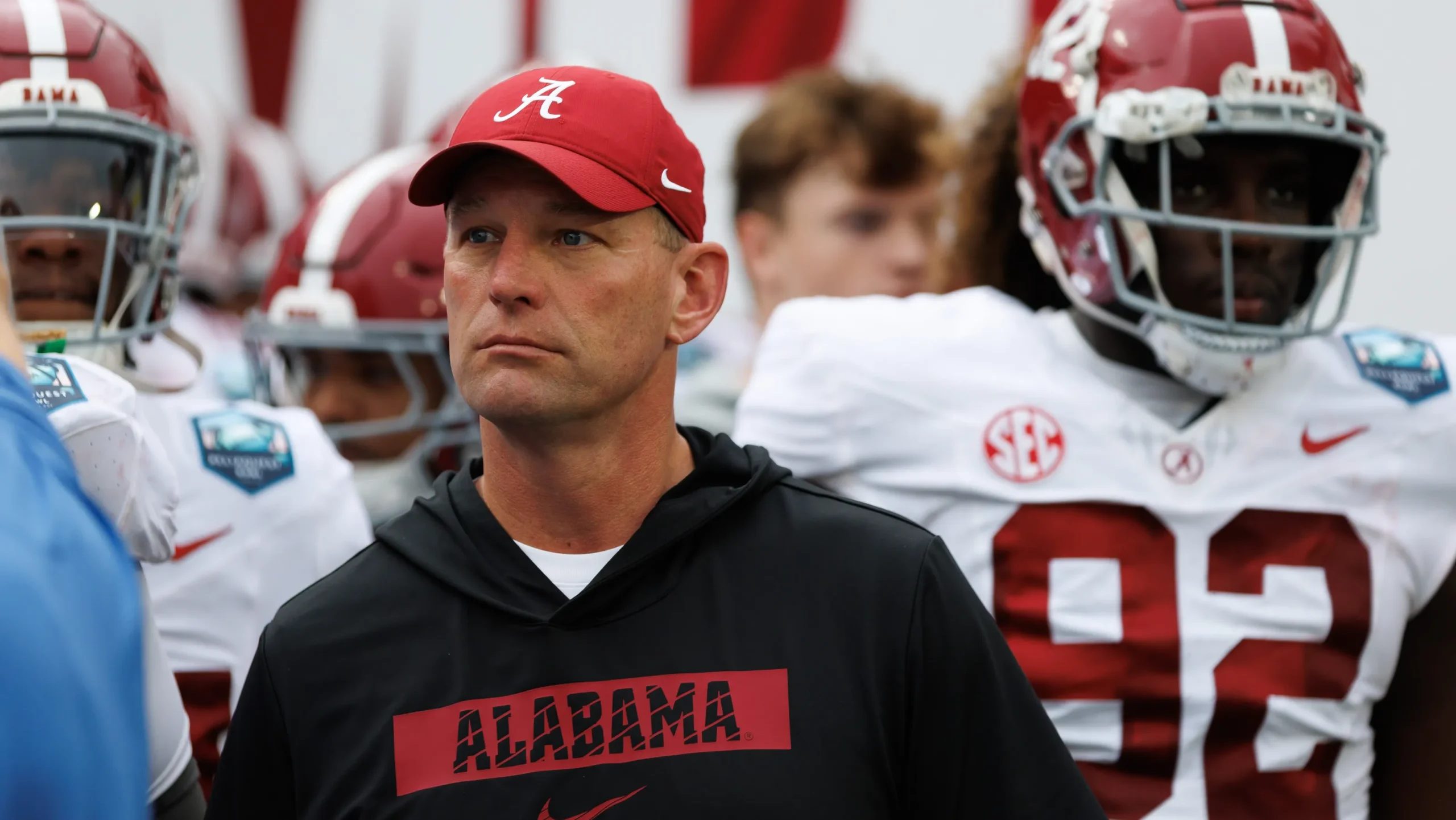
Spring football is always a pivotal time for college programs. It’s when new coaching staffs implement their systems, evaluate returning players, and set the stage for the upcoming season. For Alabama, a program renowned for its rich history of quarterback excellence, this spring marks a significant turning point. With the departure of former QB1 Ty Simpson and the transfer of Jalen Milroe, the quarterback race that has long been a focal point of Crimson Tide football is now wide open. Enter Kalen DeBoer, Alabama’s new head coach, whose first spring practice has already set the tone for a fierce competition under center.
The Context: Alabama’s Quarterback Tradition and Recent Changes
Alabama’s success over the past decade has been built on a foundation of elite quarterback play. From AJ McCarron and Blake Sims to Tua Tagovailoa and Mac Jones, the Crimson Tide has consistently produced NFL-caliber quarterbacks. These signal-callers not only led the team to national championships but also set high standards for excellence at the position.
In recent seasons, however, the QB race became less clear-cut. Jalen Milroe, a dynamic dual-threat, emerged as a leading candidate, but struggles at times with consistency and decision-making kept the competition open. Ty Simpson, a highly touted recruit, was also in the mix, but injuries and developmental hurdles slowed his progress. The departure of Milroe, who transferred out after the 2023 season, leaves Alabama searching for its next true starting quarterback.
Kalen DeBoer’s Arrival and His First Spring Practice
Kalen DeBoer, previously the head coach at Washington, was hired to revitalize Alabama’s offensive identity and develop a quarterback capable of competing at the highest level. His first spring practice as Crimson Tide head coach was a critical step in assessing the roster, installing his offensive philosophy, and identifying the QB1.
DeBoer is known for an innovative, high-powered offense that emphasizes tempo, ball distribution, and quarterback improvisation. His approach at Washington helped develop quarterbacks into prolific passers, and expectations are high that he can do the same at Alabama.
During the spring sessions, DeBoer emphasized competition, adaptability, and skill development. The practices featured a mix of install periods, situational drills, and live scrimmages designed to evaluate each quarterback’s decision-making, arm strength, mobility, and leadership.
The Quarterback Candidates
Several players entered spring practice with a shot at claiming the starting role, but the most prominent contenders included:
Tyler Buchner: The transfer from Notre Dame brought experience and a strong arm. His dual-threat ability makes him a versatile option.
Dylan Lonergan: A highly-touted freshman, Lonergan possesses impressive arm talent and mobility, representing the future of Alabama’s quarterback room.
Paul Tyson: The veteran backup with SEC experience, Tyson offers stability and leadership, though he may lack the athletic upside of younger contenders.
Others: Several redshirt freshmen and walk-ons were also in the mix, but the spotlight was primarily on Buchner and Lonergan.
Spring Practice Observations and Takeaways
While spring practice is inherently experimental, several key themes emerged from Alabama’s initial evaluations:
Open Competition: DeBoer made it clear from the outset that no player had secured the job. The practices showcased a level of intensity and competitiveness that underscored the race’s significance.
Quarterback Mobility and Athleticism: DeBoer’s offense demands a quarterback who can extend plays with his legs. Both Buchner and Lonergan displayed athletic ability, but the coaching staff looked for consistency in decision-making under pressure.
Arm Talent and Accuracy: Sharp passing drills revealed strengths and weaknesses. Buchner’s arm strength and ability to throw on the run impressed, but accuracy and timing were still being fine-tuned. Lonergan flashed moments of exceptional throws, hinting at his potential ceiling.
Decision-Making and Leadership: Leadership traits are vital for Alabama’s QB1. DeBoer emphasized mental toughness and football intelligence. Both main contenders showed flashes of leadership, but consistency remains the goal.
Depth and Development: The spring also served as a developmental period for younger players. The coaching staff emphasized growth, with hopes that one of the current contenders could emerge as the clear starter by fall.
The Impact of Milroe’s Departure
Jalen Milroe’s exit from Alabama—whether through transfer or graduation—marked a significant turning point. Milroe’s athleticism, improvisational ability, and experience made him a valuable asset. His departure leaves a void that the current competition must fill.
Without Milroe, the race becomes even more open. The coaching staff is less inclined to lean on a seasoned veteran and more likely to prioritize the player with the highest upside and potential to grow into a quarterback capable of leading Alabama’s offense.
Milroe’s departure also shifts the focus to recruiting and development. DeBoer’s offense thrives on a quarterback who can adapt, extend plays, and make quick decisions. The current contenders will be evaluated heavily on these traits throughout spring and into fall camp.
The Road Ahead: Summer and Fall Camp
Spring practice is just the beginning. The real battles happen in summer workouts and fall camp, where players compete for the starting role with full pads and game-like intensity. DeBoer’s staff will analyze progress, evaluate consistency, and determine which player best fits their offensive system.
The competition is expected to be fierce. Buchner’s experience and athleticism make him an early favorite, but Lonergan’s raw talent and potential keep him in the mix. The coaching staff will also consider intangibles like leadership, football IQ, and resilience.
What Does This Mean for Alabama’s 2024 Season?
The quarterback position is arguably the most critical on any team, especially at Alabama. The success of the 2024 season hinges heavily on who emerges as the starter. A confident, poised QB who can execute DeBoer’s offensive scheme will be vital to Alabama’s national championship aspirations.
The team’s talent on defense, skill positions, and coaching staff remain strengths, but the quarterback’s performance can elevate or hinder those units. An adaptable, dynamic quarterback can keep defenses honest and open up the playbook.
The Broader Implications
DeBoer’s first spring at Alabama has broader implications beyond just who will start. It signals a shift in offensive philosophy and a desire to modernize Alabama’s attack. The emphasis on tempo, spread concepts, and athleticism aligns with trends seen across college football.
Furthermore, the QB race’s intensity reflects Alabama’s commitment to excellence and the high standards expected within the program. The competition will push players to perform at their best, fostering a culture of accountability.
The Future of Alabama Football Under DeBoer
Kalen DeBoer’s initial spring practice has set a promising tone for Alabama’s future. While the QB1 race remains unsettled, the competition has energized the team and laid the groundwork for a potentially exciting season.
Without Milroe and with a new offensive identity, Alabama’s quest for national dominance continues. The quarterback battle will be one of the most closely watched storylines in college football this offseason. Fans and analysts alike will be eager to see which player emerges from the spring grind as the Crimson Tide’s next leader under center.
One thing is certain: Roll Tide! The journey toward a new era has begun, and Alabama is poised to compete at the highest level once again. The quarterback race is wide open, and the stakes couldn’t be higher. The coming months will reveal who has what it takes to lead Alabama back to the top.