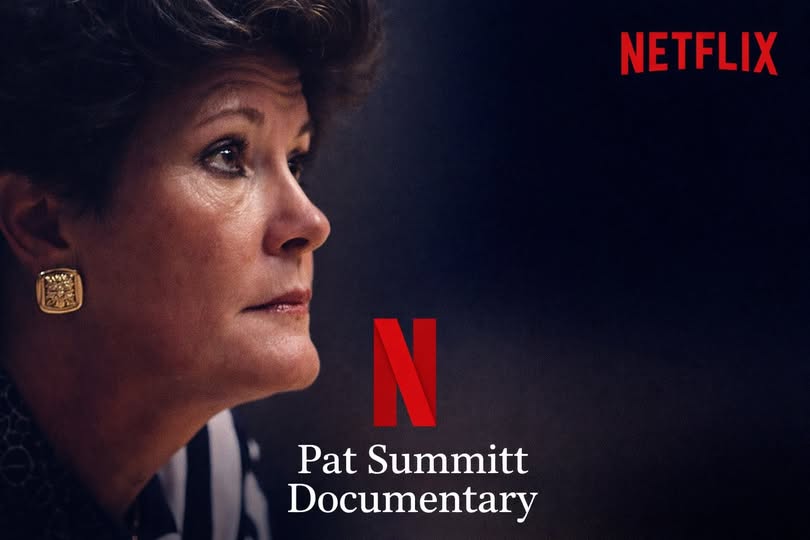
Watching the new Pat Summitt documentary on Netflix is a lot of fun, but it’s also something deeper than entertainment. It’s the kind of experience that sneaks up on you—what starts as a casual watch turns into a powerful emotional journey, the kind that lingers long after the credits roll. From the very first moments, there’s an energy to it, a sense that you’re about to witness not just a story about basketball, but a story about leadership, resilience, and legacy.
What makes the documentary so engaging is how it balances intensity with intimacy. You’re not just watching games or highlights; you’re stepping into the life of a coach who redefined what it meant to lead. There’s a rhythm to it, moving between the roar of packed arenas and the quiet, personal moments that reveal who Pat Summitt really was. It never feels rushed, and it never feels overly sentimental either. Instead, it builds naturally, allowing you to connect with her not just as a legendary figure, but as a human being.
One of the most striking aspects is how it captures her presence. Even through archival footage, you can feel her authority, her focus, and that unmistakable intensity she brought to every moment on the court. She had a way of commanding attention without needing theatrics. A look, a pause, a few carefully chosen words—that was often enough. The documentary does a great job of showing how that presence wasn’t just for show; it was rooted in discipline, preparation, and a deep belief in her players.
At the same time, it doesn’t shy away from showing her complexity. She wasn’t simply a tough coach or an inspirational figure; she was both, and more. There are moments where you see the pressure she carried, the expectations, and the emotional weight of leading at such a high level for so long. Those moments add depth, making her achievements feel even more impressive because you understand what it cost to reach them.
The storytelling also benefits from the voices of those who knew her best. Former players, colleagues, and people close to her share insights that feel genuine and unfiltered. Their stories bring warmth and texture to the narrative. You start to see patterns in the way they talk about her—how she pushed them harder than they thought possible, but also how she believed in them in a way that changed their lives. It becomes clear that her impact went far beyond wins and championships.
Another thing that stands out is how the documentary captures the evolution of women’s sports alongside her career. It subtly weaves in the broader context, showing how much the landscape changed over the years and how much of that change she influenced. Without turning into a history lesson, it gives you a sense of how significant her role was in elevating the visibility and respect of the game. It adds another layer to the story, reminding you that her legacy isn’t just personal—it’s cultural.
Visually, the documentary is compelling without being flashy. The game footage is thrilling, of course, but it’s the quieter visuals that often leave the biggest impression. Practice sessions, sideline interactions, moments of reflection—these glimpses behind the scenes help build a fuller picture. There’s a kind of authenticity to it, as if you’re being allowed into spaces that are usually hidden from view.
Emotionally, the film has a strong pull. There are moments that make you smile, moments that make you tense, and moments that hit surprisingly hard. It’s not manipulative; it earns those feelings by letting the story unfold honestly. You might find yourself getting caught up in the games, even if you already know the outcomes, simply because the storytelling makes them feel immediate and alive.
What really makes it fun to watch, though, is that sense of discovery. Even if you’re familiar with Pat Summitt’s legacy, there’s always something new to learn or a new perspective to consider. The documentary peels back layers, revealing details that make you appreciate her even more. It invites you to look beyond the headlines and statistics and see the person behind them.
There’s also something inspiring about the way it portrays leadership. It doesn’t present a one-size-fits-all model or try to turn her into a perfect example. Instead, it shows how her approach was shaped by her personality, her values, and her experiences. It’s a reminder that leadership can take many forms, and that authenticity plays a huge role in making it effective.
The pacing contributes a lot to the overall experience. It knows when to slow down and let a moment breathe, and when to pick up the energy. That balance keeps you engaged from start to finish. You’re never overwhelmed with information, but you’re also never left feeling like something important was glossed over.
Another layer that makes the documentary compelling is how it handles challenges and adversity. It doesn’t treat them as mere obstacles to overcome; it explores them as defining moments. You see how setbacks, both personal and professional, shaped her approach and strengthened her resolve. Those moments add a sense of realism and make her achievements feel even more meaningful.
There’s also a quiet sense of respect that runs throughout the film. It doesn’t feel like it’s trying to sensationalize or dramatize her story unnecessarily. Instead, it trusts the strength of the story itself. That restraint allows the most powerful moments to stand on their own, without needing to be amplified.
As you watch, you might find yourself reflecting on your own experiences with mentors, coaches, or leaders. The documentary has a way of sparking those connections, making it feel personal even if you’ve never been anywhere near a basketball court. It taps into universal themes—discipline, belief, perseverance—that resonate across different contexts.
The soundtrack and sound design also play a subtle but important role. They enhance the mood without drawing too much attention to themselves. Whether it’s the tension of a close game or the quiet of a reflective moment, the audio complements the visuals in a way that feels natural.
By the time you reach the end, there’s a sense of having gone on a journey. It’s not just about what you’ve learned, but about what you’ve felt along the way. There’s admiration, certainly, but also a deeper appreciation for the kind of impact one person can have through dedication and vision.
What makes it especially enjoyable is that it doesn’t require you to be a basketball fan to appreciate it. The sport is central, of course, but the themes extend far beyond it. It’s about striving for excellence, about pushing boundaries, and about leaving something meaningful behind. Those ideas make it accessible to a wide audience.
In a way, the documentary feels like a conversation—one that invites you to listen, to reflect, and to take something with you. It doesn’t try to dictate how you should feel or what you should think. Instead, it presents the story in a way that allows you to draw your own conclusions.
Watching it becomes more than just a way to pass the time. It’s an experience that engages both your mind and your emotions. It reminds you of the power of storytelling, especially when it’s rooted in real lives and real achievements.
By the end, it’s easy to see why watching the new Pat Summitt documentary on Netflix is so much fun. It’s engaging, inspiring, and deeply human all at once. It captures the essence of a remarkable life while also inviting you to think about your own path and the kind of impact you want to have. And that combination—entertainment with meaning—is what makes it truly memorable.