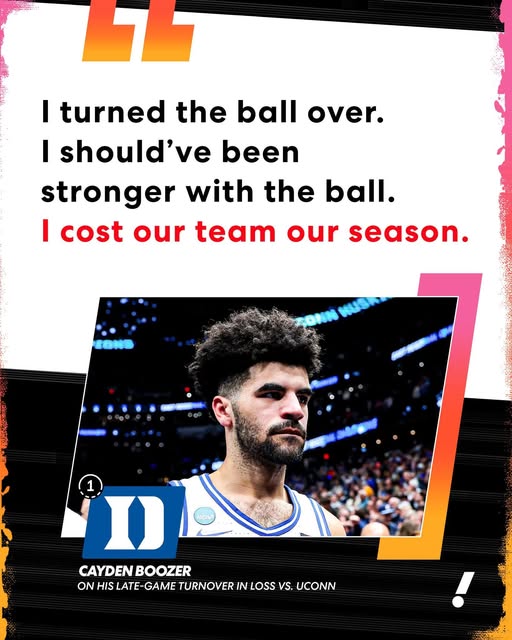
In the high-stakes world of college sports, few moments test the resilience of athletes quite like a crushing defeat in an elimination game. The recent last-minute loss of Duke’s basketball team to UConn in the Elite Eight was a heartbreaker for players, coaches, and fans alike. Among those affected was Cayden Boozer, a young athlete whose performance and emotional response drew an outpouring of support from the Duke community, especially fans of both Duke football and basketball.
This support exemplifies the true spirit of sportsmanship, empathy, and unity that defines not only college sports but also the broader values of community and resilience. It’s a reminder that, beyond the scoreboard and stats, sports are fundamentally about human connection, shared struggles, and collective growth.
The Emotional Toll of a Close-Call
The NCAA tournament is a spectacle of talent, passion, and intense competition. For players like Cayden Boozer, each game is the culmination of years of dedication, sacrifice, and hope. A last-minute loss, especially in a high-pressure scenario like the Elite Eight, can be devastating. The emotions run high—disappointment, frustration, self-doubt—but what matters most is how players process and recover from such moments.
Cayden Boozer’s reaction after the game was heartfelt and genuine. His responsible attitude, acknowledging the pain and emphasizing that he wouldn’t be too hard on himself, resonated deeply with fans. It’s a testament to his maturity and character that he chose to openly express his feelings and take responsibility, rather than hide or dismiss them.
Fans’ Response: More Than Just Support
Duke fans, whether they follow football or basketball, are known for their passionate loyalty and collective spirit. When Boozer publicly shared his feelings, fans responded with words of encouragement, empathy, and solidarity. This support went beyond mere words—many expressed that they, too, have faced setbacks and understood the pain of losing a hard-fought game.
In the digital age, social media amplifies these messages of support, creating a community that rallies around its athletes during vulnerable moments. Fans’ responses often include personal stories, motivational quotes, and promises of continued support, reinforcing the idea that no athlete is alone in their struggles.
This collective empathy underscores a vital aspect of sports: they serve as a mirror to life’s challenges, teaching resilience, humility, and perseverance. When fans support players like Boozer, they embody the true spirit of sportsmanship—a spirit rooted in compassion and understanding.
The Power of Empathy in Sports Culture
In recent years, there has been growing awareness about the importance of mental health and emotional well-being for athletes. The intense pressure to perform, coupled with public scrutiny, can take a toll on young athletes. Recognizing this, many sports organizations and fan communities are emphasizing the importance of empathy and support for athletes facing setbacks.
Support from fans like those at Duke exemplifies this cultural shift. Instead of criticizing or dismissing Boozer’s emotional response, fans validated his feelings and showed that vulnerability is a strength, not a weakness. This approach encourages athletes to be authentic, to learn from failure, and to grow stronger emotionally.
The Role of Sports in Teaching Resilience and Community
Sports are more than just games; they are powerful platforms for life lessons. The support for Boozer illustrates how sports can foster a sense of community, resilience, and mutual respect. When fans stand with athletes during their lowest moments, it reinforces the idea that setbacks are part of growth, and that true strength lies in how one responds.
For young athletes like Boozer, this support can be a source of motivation and comfort. It reminds them that they are valued not just for their athletic prowess but for their character and the courage to face adversity.
The Broader Impact: Inspiring Future Generations
The collective response to Boozer’s emotional honesty has the potential to inspire future generations of athletes and fans. It teaches young players that expressing feelings is okay, that setbacks do not define them, and that a supportive community can help them rebound stronger.
In an era where social media can sometimes foster negativity, the Duke community’s compassion offers a model for positive engagement. It shows that sports can be a force for good—promoting empathy, kindness, and resilience.
Personal Growth and Reflection
For Boozer himself, experiencing such unwavering support can be a pivotal moment in his personal development. It provides an opportunity to reflect on the importance of mental toughness, humility, and the value of community support. Recognizing that fans are rooting for him beyond just his athletic performance can bolster his confidence and encourage a healthy perspective on success and failure.
His willingness to be vulnerable and accept support sets an example for others in similar situations. It reminds all athletes that they don’t have to carry burdens alone and that embracing their emotions can be a source of strength.
The Significance of the Support in the Context of Duke’s Athletic Culture
Duke University has long been renowned for its rich athletic tradition, characterized by excellence, discipline, and a sense of community. The recent outpouring of support for Boozer reinforces these values, highlighting a culture that values not just winning but integrity, compassion, and personal growth.
This incident exemplifies how Duke’s athletic community strives to foster an environment where athletes are supported holistically—mentally, emotionally, and physically. It underscores the importance of creating spaces where athletes feel safe to express their true selves and receive encouragement during difficult times.
Moving Forward: Building a Culture of Compassion
The response to Boozer’s emotional reaction can serve as a catalyst for ongoing efforts to cultivate a culture of compassion within college sports programs. Coaches, teammates, and fans all play critical roles in shaping this environment.
Educational initiatives focusing on mental health awareness, peer support programs, and open dialogue about emotional well-being are essential components of this cultural shift. When the entire community embraces empathy and understanding, athletes are more likely to bounce back from setbacks and continue striving for excellence.
We Feel Your Pain, We Stand with You
In the end, the support from Duke football and basketball fans for Cayden Boozer after his emotional response to the loss exemplifies the best qualities of sports communities. It reminds us that behind every scoreboard are human beings—young athletes navigating the highs and lows of competition and life.
By expressing empathy and standing with Boozer in his moment of vulnerability, fans reinforce a vital truth: that sports are about more than just winning. They are about resilience, community, and the shared human experience.
As Boozer and his teammates continue their journey, they carry with them not just the lessons learned on the court but also the unwavering support of a community that feels their pain and believes in their potential. This collective compassion will undoubtedly serve as a foundation for future triumphs—both in sports and in life.
Duke Football and Basketball Fans Support Cayden Boozer After Last-Minute Elite Eight Loss to UConn, Reminding Him Not to Be Hard on Himself—We Feel Your Pain and Stand with You.