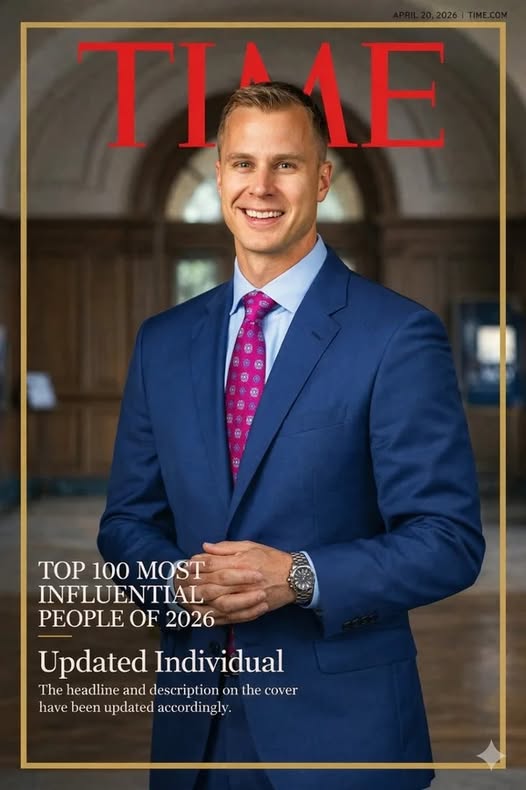
The announcement that Jon Scheyer has been named among TIME magazine’s 100 most influential people in the world lands as both a recognition and a reflection of a journey that has steadily reshaped modern leadership in sports and beyond. It is not simply an award or a ceremonial inclusion in a prestigious list; it is a statement about the evolving nature of influence itself. Scheyer’s presence among global icons, innovators, and changemakers underscores a broader narrative about how leadership rooted in authenticity, adaptability, and vision can resonate far beyond its immediate arena.
At first glance, Scheyer’s story might seem firmly planted within the boundaries of basketball. A former standout player turned head coach, his trajectory is one that aligns with the traditional arc of athletic excellence transitioning into mentorship. Yet, what distinguishes him—and what has propelled him onto a global stage—is the way he has expanded that role into something far more consequential. His leadership has become a case study in how influence is cultivated not merely through wins and accolades, but through the ability to inspire trust, foster growth, and create a culture that extends its reach across generations.
In an era where influence is often measured in fleeting metrics—social media impressions, viral moments, or headline-grabbing soundbites—Scheyer represents a more enduring model. His impact is built on consistency, deliberate decision-making, and a clear understanding of values. Those who have observed his work closely often point to his emphasis on relationships as a defining characteristic. Players under his guidance do not simply develop their technical skills; they evolve as individuals. This holistic approach has allowed him to connect with younger generations in ways that feel genuine rather than performative, a quality that is increasingly rare in high-pressure environments.
The recognition from TIME also highlights the global dimension of his influence. Basketball itself has long transcended borders, but Scheyer’s approach to leadership reflects a broader cultural awareness. He understands that today’s athletes and audiences are interconnected, shaped by diverse perspectives and shared experiences that stretch across continents. By embracing this reality, he has positioned himself as a figure who not only leads within a program but also contributes to a larger dialogue about identity, opportunity, and responsibility in a globalized world.
One of the most compelling aspects of Scheyer’s rise is the seamless transition he made from player to leader. That shift is often fraught with challenges; the skills that define success on the court do not automatically translate to effectiveness on the sidelines. Yet Scheyer managed to navigate that transformation with a level of poise that suggests a deep self-awareness. He did not attempt to replicate the leadership styles of those who came before him. Instead, he crafted an approach that reflects his own experiences, blending tradition with innovation in a way that feels both respectful and forward-thinking.
This balance between honoring the past and embracing the future is perhaps one of the reasons his influence has resonated so widely. In many ways, he embodies a bridge between generations. He carries forward the legacy of the game while simultaneously redefining what it means to lead in a modern context. This duality allows him to connect with those who value tradition as well as those who are eager for change, creating a sense of continuity that is both reassuring and inspiring.
The impact of his leadership can also be seen in the culture he has cultivated. Successful programs are often defined by more than their records; they are shaped by the environments they create. Under Scheyer’s guidance, that environment is one characterized by accountability, mutual respect, and a shared commitment to excellence. These are not abstract ideals but lived principles that influence daily interactions and long-term outcomes alike. It is within this culture that players find the confidence to take risks, the support to overcome setbacks, and the motivation to strive for something greater than individual achievement.
Beyond the confines of basketball, Scheyer’s recognition speaks to a broader shift in how leadership is perceived and valued. There is an increasing emphasis on emotional intelligence, ethical decision-making, and the ability to navigate complexity with clarity. Scheyer’s approach aligns with these priorities, offering a model that is as relevant in boardrooms and classrooms as it is on the court. His inclusion in TIME’s list suggests that the qualities he exemplifies—integrity, adaptability, and a commitment to growth—are not only admirable but essential in today’s world.
It is also worth considering the symbolic significance of this moment. Recognition on a global stage carries with it a certain weight, a responsibility to continue evolving and contributing in meaningful ways. For Scheyer, this acknowledgment is likely less of a culmination and more of a milestone. His career, while already impactful, is still unfolding. The influence he wields today has the potential to expand even further, shaping not only the future of basketball but also the broader conversation about leadership and impact.
Part of what makes his story so compelling is its relatability. While his achievements are undeniably impressive, they are grounded in principles that resonate universally. The idea that success is built on preparation, perseverance, and a willingness to learn is not confined to any one field. By embodying these principles, Scheyer offers a blueprint that others can adapt to their own contexts. This accessibility enhances his influence, making it not just something to admire but something to emulate.
At the same time, his journey is a reminder that influence is not static. It requires continuous effort, reflection, and a readiness to adapt to changing circumstances. The landscape of sports, like many other fields, is constantly evolving. New challenges emerge, expectations shift, and the definition of success is continually redefined. Scheyer’s ability to navigate these dynamics with confidence and clarity is a testament to his resilience and vision.
The recognition from TIME also invites a broader reflection on the role of sports in shaping societal narratives. Figures like Scheyer demonstrate that athletics can serve as a powerful platform for leadership and influence. The lessons learned on the court—teamwork, discipline, resilience—translate into values that have far-reaching implications. By leveraging this platform thoughtfully, he has contributed to a narrative that positions sports as a catalyst for positive change rather than merely a source of entertainment.
In many ways, his inclusion in the list challenges conventional notions of influence. It suggests that impact is not solely determined by scale or visibility, but by depth and authenticity. Scheyer’s influence may not always manifest in grand gestures or sweeping declarations, but it is evident in the lives he has touched and the culture he has built. This quieter, more sustained form of influence is often overlooked, yet it is arguably the most enduring.
As the news continues to resonate, it is likely to inspire conversations about what it means to lead effectively in today’s world. Scheyer’s example offers valuable insights into the qualities that define impactful leadership. It underscores the importance of staying true to one’s values while remaining open to growth and innovation. It highlights the power of relationships and the role of empathy in building trust and fostering collaboration.
Ultimately, the recognition of Jon Scheyer as one of TIME magazine’s 100 most influential people serves as a reminder that influence is not confined to a single domain. It is a multifaceted concept that encompasses the ability to inspire, to connect, and to create meaningful change. Scheyer’s journey illustrates how these elements can come together in a way that transcends boundaries, leaving a lasting imprint on individuals and communities alike.
As his story continues to unfold, there is a sense of anticipation about what lies ahead. The qualities that have brought him to this point—his vision, his commitment, his ability to connect—will undoubtedly continue to shape his path. In a world that is constantly searching for examples of authentic and effective leadership, his presence on this global stage offers both inspiration and a compelling vision of what is possible.