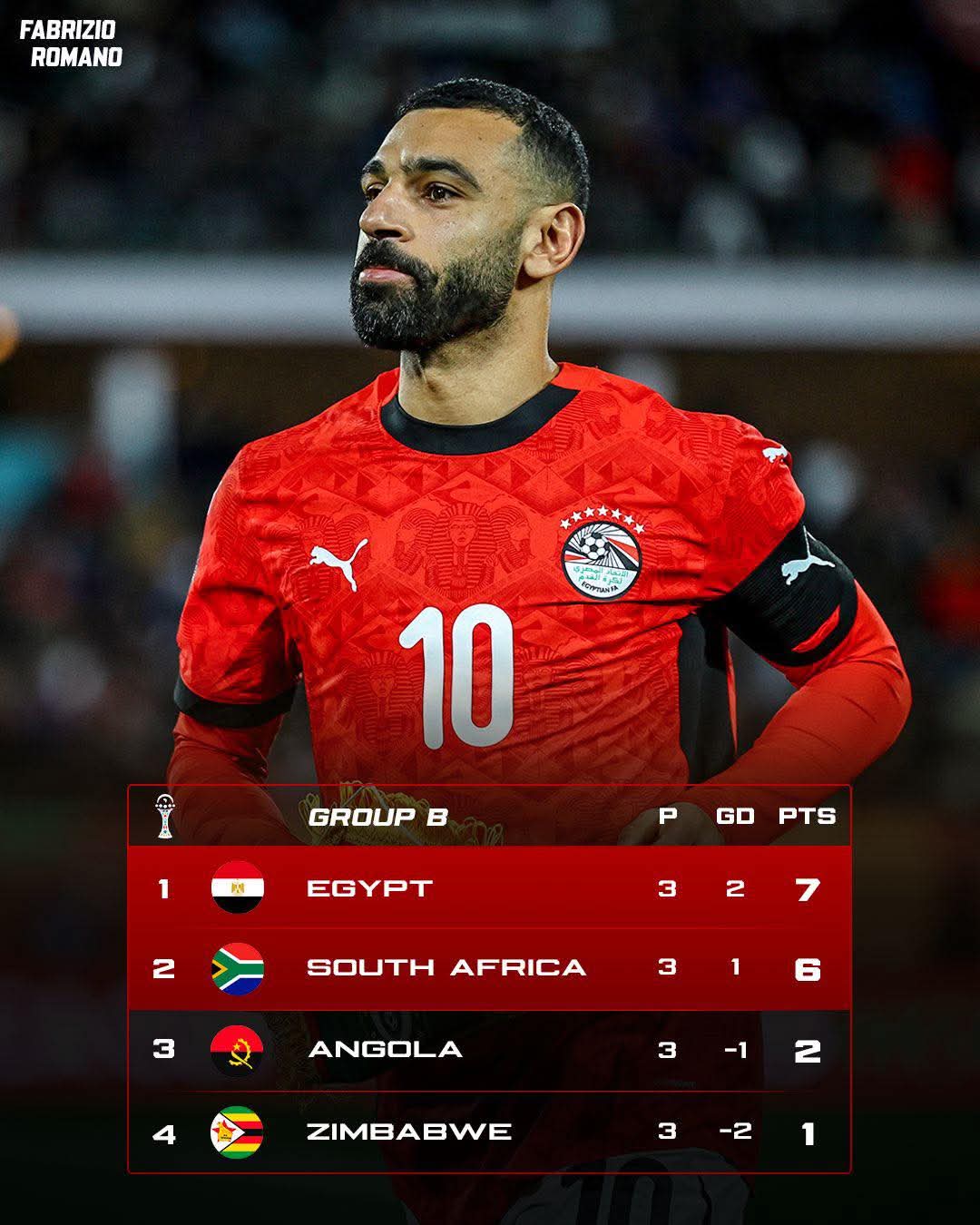
Egypt and South Africa booking their places in the AFCON Round of 16 is a moment that carries weight far beyond a simple qualification line on a fixture list. It is the convergence of history, expectation, identity, and renewed belief, wrapped into two very different journeys that have now reached the same destination. For Egypt, qualification feels like a confirmation of status, a reminder that Africa’s most decorated football nation still knows how to navigate the unforgiving terrain of continental tournaments. For South Africa, it represents something deeper and more emotional: proof of progress, resilience, and a quiet return to relevance after years of inconsistency and searching for a clear footballing identity.
Egypt arrived at the tournament with the familiar burden of expectation. Seven AFCON titles hang heavily over every Pharaohs squad, no matter the generation, no matter the coach, no matter the circumstances. To represent Egypt at AFCON is to inherit the standards set by legends of the past, players who turned the competition into something resembling personal property between 2006 and 2010. Qualification for the Round of 16 might be considered routine by some observers, but within the Egyptian camp it is treated as a necessary step in a much larger mission. Nothing short of a deep run is acceptable, and every performance is dissected with that reality in mind.
What has stood out most about Egypt’s journey so far is not just the result, but the manner in which they have adapted to the modern demands of AFCON football. The competition is no longer dominated solely by traditional heavyweights. Tactical sophistication, athleticism, and squad depth have become decisive factors, and Egypt have had to evolve accordingly. Their qualification reflects a team that understands how to manage games, how to absorb pressure, and how to strike with efficiency rather than flair alone. It is a version of Egypt that blends pragmatism with moments of individual brilliance, a balance that has often defined successful AFCON campaigns.
At the heart of Egypt’s qualification story is leadership. Whether it comes from the touchline or from senior figures on the pitch, there is a clear sense of structure and responsibility. The team rarely looks panicked, even when games become tense or scrappy, which is often the case in knockout-oriented tournaments like AFCON. That composure has allowed Egypt to navigate tricky moments and ensure that qualification was secured without descending into chaos or desperation. In a tournament where margins are thin and emotions run high, that calmness is a weapon.
South Africa’s qualification, by contrast, tells a story of renewal and rediscovery. Bafana Bafana entered the tournament with far less external pressure but plenty of internal motivation. For years, South African football has wrestled with the gap between its domestic potential and its international output. A strong league, passionate supporters, and a proud footballing history have not always translated into consistent AFCON success. Reaching the Round of 16 feels like a significant step toward bridging that gap, a sign that something is finally aligning.
The journey has not been glamorous, but it has been honest. South Africa’s performances have been built on discipline, work rate, and collective responsibility rather than individual stardom. This is a team that understands its strengths and limitations, and instead of trying to play beyond itself, it has leaned into organization and unity. Qualification has come as a reward for that approach, and it has resonated strongly with supporters who have long craved tangible progress rather than promises of potential.
One of the most encouraging aspects of South Africa’s qualification is the emergence of a clear identity. There is a sense that the players know what is expected of them in every phase of the game. Defensively, there is structure and commitment, with players willing to track back and protect each other. In possession, there is patience, an understanding that control does not always mean domination but sometimes simply means choosing the right moments to take risks. This maturity has been crucial in navigating group-stage challenges and securing a place in the knockout rounds.
The emotional significance of this achievement cannot be overstated. AFCON qualification stages and group games often test not just technical ability but mental strength. For South Africa, past disappointments could easily have weighed heavily, especially in tight matches where confidence can waver. Instead, this squad has shown a willingness to confront those ghosts, to play with freedom rather than fear. The result is a qualification that feels earned, meaningful, and potentially transformative for the future of the national team.
The broader significance of Egypt and South Africa qualifying together also speaks to the evolving balance of power within African football. While Egypt represents continuity and tradition, South Africa embodies the idea that progress is possible through patience and clear planning. Their presence in the Round of 16 adds layers of intrigue to the tournament, offering contrasting styles, narratives, and ambitions that enrich the competition as a whole.
For neutral fans, Egypt’s qualification reinforces their status as one of the teams to watch. Their experience in knockout football is unmatched, and that knowledge often becomes decisive when matches are decided by moments rather than dominance. Opponents know that facing Egypt in the Round of 16 is not just about ninety minutes of football, but about withstanding psychological pressure, crowd influence, and the weight of history. Egypt thrive in those environments, and their qualification ensures that those dynamics will once again shape the latter stages of the tournament.
South Africa’s qualification, meanwhile, injects an element of unpredictability. They are not burdened by the same historical expectations, which can make them dangerous opponents. Teams facing Bafana Bafana know that complacency could be punished, that underestimating their discipline and organization would be a mistake. In knockout football, where a single lapse can end a campaign, South Africa’s approach could prove highly effective.
There is also a deeper continental narrative at play. AFCON has increasingly become a platform for showcasing the depth and diversity of African football. Egypt and South Africa qualifying highlights how different pathways can lead to success. One relies on a long-established football culture and a legacy of winning, the other on rebuilding, introspection, and gradual improvement. Both are valid, both are compelling, and both add value to the tournament’s identity.
As the Round of 16 approaches, the focus naturally shifts from qualification to possibility. For Egypt, the question is not whether they can compete, but whether they can go all the way. Every match will be framed in terms of legacy and ambition, with supporters expecting nothing less than a serious title challenge. The pressure is immense, but so is the belief, rooted in decades of continental dominance and recent reminders that Egypt know how to navigate AFCON better than almost anyone else.
For South Africa, the Round of 16 represents an opportunity rather than an obligation. Qualification alone has already delivered a sense of achievement, but the squad is unlikely to see it as the end of the road. There is a growing belief that they can compete with anyone on their day, that their structure and unity give them a fighting chance against more fancied opponents. That mindset, free from fear and heavy expectation, could make them one of the most intriguing teams in the knockout phase.
Ultimately, Egypt and South Africa reaching the AFCON Round of 16 is a celebration of African football in its many forms. It is a reminder that history still matters, that experience still counts, but also that renewal and belief can reshape narratives. As the tournament moves into its most intense phase, both nations carry the hopes of their supporters and the weight of their unique journeys. One seeks to reaffirm its place at the summit, the other to announce that it belongs among the continent’s competitive core once again.
What unites them is the understanding that AFCON is never straightforward. Qualification is earned through grit, intelligence, and moments of quality, not reputation alone. Egypt and South Africa have both demonstrated those qualities in different ways, and their presence in the Round of 16 ensures that the tournament remains as compelling, unpredictable, and emotionally charged as ever.