The possibility of LeBron James not returning to the Los Angeles Lakers for the upcoming season is the kind of seismic news that immediately sends shockwaves through the NBA world. LeBron’s presence in Los Angeles has been both a symbol of the team’s aspirations and a critical linchpin of their competitive identity. Over his tenure with the Lakers, he has carried the franchise through championship pursuits, roster overhauls, and media scrutiny, establishing himself as both a leader on the court and a cultural icon off it. His decision regarding his future, therefore, is not just a question of personal preference or contract terms—it has implications for the league, the balance of power in the Western Conference, and even the economic and cultural landscape surrounding professional basketball.
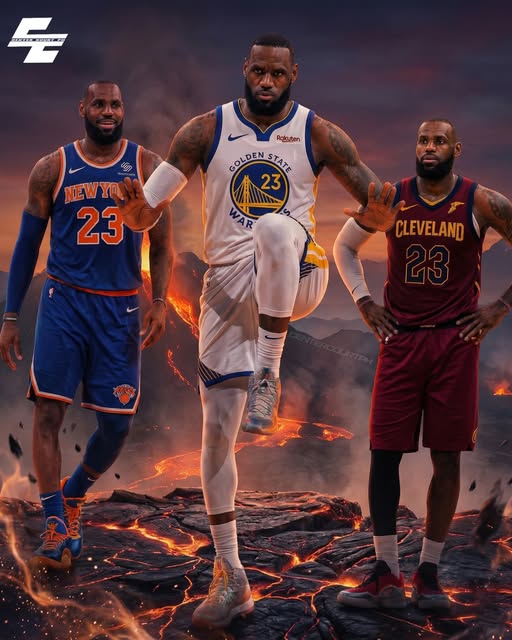
If LeBron were to leave the Lakers, speculation about his next destination would immediately ignite, as fans and analysts alike try to project where one of the greatest players of all time could continue his career. Among the potential suitors, three franchises emerge prominently: the Golden State Warriors, the Cleveland Cavaliers, and the New York Knicks. Each presents a unique combination of opportunity, challenges, and personal narrative threads that could influence LeBron’s decision. Understanding these potential destinations requires an analysis of team composition, championship prospects, market appeal, and historical connections.
The first and perhaps most intriguing potential destination is the Golden State Warriors. The Warriors, reigning in a period defined by three-point dominance and offensive fluidity, have established themselves as a model franchise of modern basketball excellence. Adding LeBron to their already potent lineup would create a union of unprecedented star power, combining LeBron’s versatility, court vision, and leadership with the sharpshooting and spacing of players like Stephen Curry, Klay Thompson, and Draymond Green. On a purely competitive level, such a team would be capable of challenging nearly any opponent, blending LeBron’s physicality and playmaking with the Warriors’ signature pace-and-space offense. For LeBron, joining the Warriors would not only represent a strategic move to remain a title contender but also an opportunity to adapt to a system that emphasizes collaboration and high basketball IQ, qualities that align with his own playing philosophy.
However, a move to Golden State would also carry challenges. The Warriors’ existing star hierarchy could necessitate adjustments in leadership roles and offensive usage, potentially altering the dynamics of a team that has thrived on defined roles and chemistry. LeBron is known for commanding both respect and responsibility in the locker room; integrating into an established championship culture could require compromises, both for him and for the team. Additionally, the media scrutiny and fan reaction to such a move would be enormous, as any perceived “superteam” formation tends to attract both fascination and criticism. Nevertheless, the Warriors remain a logical destination for a player with LeBron’s ambitions, offering the tantalizing prospect of immediate championship contention in a well-structured and successful organization.
The second potential destination, and one deeply rooted in personal history, is the Cleveland Cavaliers. LeBron’s connection to Cleveland is unparalleled; it is where he began his professional journey, rose to stardom, and famously delivered a championship to the city in 2016, ending a 52-year title drought. Returning to the Cavaliers would represent not only a homecoming but also a narrative of loyalty, unfinished business, and personal legacy. While the Cavaliers of today are not the same as the teams LeBron previously led, the symbolic power of a return cannot be overstated. For LeBron, such a move would allow him to continue shaping the narrative of his career in a city where he is revered, leveraging his experience and leadership to mentor younger players and potentially rebuild a contender from the ground up.
The challenges of returning to Cleveland, however, are equally significant. The Cavaliers are not currently considered among the top-tier title contenders in the league, meaning that LeBron’s championship aspirations could be more difficult to realize in the short term. Additionally, returning to a city where his legacy is already monumental could carry pressure—fans would have enormous expectations, and every performance would be scrutinized against the backdrop of past triumphs. Yet, the Cavaliers offer LeBron a unique combination of personal significance, fan loyalty, and the chance to craft a narrative that is as much about leadership and mentorship as it is about championship glory.
The third potential destination, the New York Knicks, presents a different set of considerations altogether. The Knicks, playing in the world’s largest media market, offer unmatched visibility, cultural relevance, and commercial opportunities. For LeBron, joining the Knicks could represent both a professional challenge and a platform to further expand his off-court influence. New York has a storied basketball history and a passionate fan base, providing the stage for LeBron to shape the future of a franchise that has long sought a return to prominence. From a basketball perspective, the Knicks have been investing in young talent and infrastructure, offering LeBron the opportunity to be the centerpiece around which a team is built.
However, the Knicks also carry risks. The team has struggled with consistency and organizational stability in recent decades, meaning that LeBron would face both on-court challenges and the responsibility of guiding a franchise through periods of transition. Media scrutiny in New York is famously intense, and the pressure to deliver results quickly would be relentless. Despite these challenges, the Knicks offer the allure of building a lasting legacy in one of the most prominent cities in the world, combining both competitive and cultural considerations that align with LeBron’s multifaceted ambitions.
Analyzing the potential fit with each team requires consideration of style of play, roster composition, and coaching philosophy. With the Warriors, LeBron would enter a system optimized for ball movement, spacing, and three-point shooting. With the Cavaliers, he would likely assume a role blending leadership, mentorship, and strategic game management while working with developing talent. With the Knicks, he would serve as the central figure in both offense and team identity, shaping a roster and culture around his leadership. Each scenario presents different challenges and opportunities, emphasizing the importance of personal fit, career goals, and the ability to influence both on-court performance and broader organizational culture.
Another factor influencing LeBron’s potential choice is his own career trajectory and priorities. At this stage, he is balancing competitiveness, longevity, legacy, and off-court ventures. Joining a team with immediate championship prospects could enhance his chances of adding to his title count, while returning to a personally significant franchise or entering a major market could maximize his broader influence and historical narrative. LeBron’s decision-making has consistently reflected a combination of strategic foresight and personal ambition, suggesting that any move would be carefully calibrated to align with both competitive and personal objectives.
In addition to basketball considerations, the economic and commercial implications of a move are substantial. Each potential destination offers unique opportunities for brand partnerships, media exposure, and business ventures. Los Angeles has been a major platform for LeBron’s off-court endeavors, but returning to Cleveland, joining the Warriors, or moving to New York would each provide distinct advantages in visibility, media market size, and business networking. These factors are intertwined with his legacy and influence, creating a multifaceted decision-making landscape that extends far beyond the basketball court.
Fan reaction is another critical element. LeBron commands unparalleled attention, and any move would provoke widespread discussion and debate. Supporters of the Lakers would weigh the implications of losing a generational talent, while fans of the Warriors, Cavaliers, and Knicks would react to the possibilities of acquiring a player capable of transforming their team’s prospects. Social media, sports networks, and commentary platforms would explode with speculation, adding to the pressure and intensity of the decision. LeBron has historically shown the ability to navigate such scrutiny with grace, emphasizing performance and personal priorities over public noise.
In assessing these possibilities, one must also consider historical precedent. LeBron has previously made career moves that combined personal narrative, competitive opportunity, and strategic foresight—from his departure from Cleveland to Miami, and then back to Cleveland, before ultimately joining the Lakers. Each decision reflected a balance of championship aspirations, personal connections, and career development. Given this history, his next move is likely to reflect similar principles: an alignment of personal goals, competitive viability, and broader narrative impact.
Ultimately, the question of where LeBron might go if he does not return to the Lakers is a complex interplay of competitive, personal, and cultural factors. The Warriors offer immediate championship potential and a high-powered system, though requiring adaptation to an established star hierarchy. The Cavaliers provide a personal and historical connection, with opportunities for leadership and legacy-building amid greater on-court challenges. The Knicks combine visibility, market size, and the chance to shape a franchise’s future, balanced against organizational volatility and intense media scrutiny. Each destination represents a compelling, yet challenging, scenario for one of the greatest athletes of all time.
In conclusion, the potential departure of LeBron James from the Los Angeles Lakers would not merely be a roster change—it would be a seismic shift in the NBA landscape. Speculation regarding his next destination—Golden State Warriors, Cleveland Cavaliers, or New York Knicks—invites an exploration of competitive fit, personal significance, market influence, and historical narrative. Each option carries unique opportunities and challenges, reflecting the multifaceted considerations that define a career of this magnitude. While no definitive answer exists, understanding the implications of each potential choice illuminates the strategic, personal, and cultural calculus that LeBron must navigate. In contemplating where he might go next, fans, analysts, and fellow players alike are reminded of the extraordinary complexity, influence, and legacy of one of basketball’s most iconic figures—a player whose decisions will continue to shape the sport for years to come.