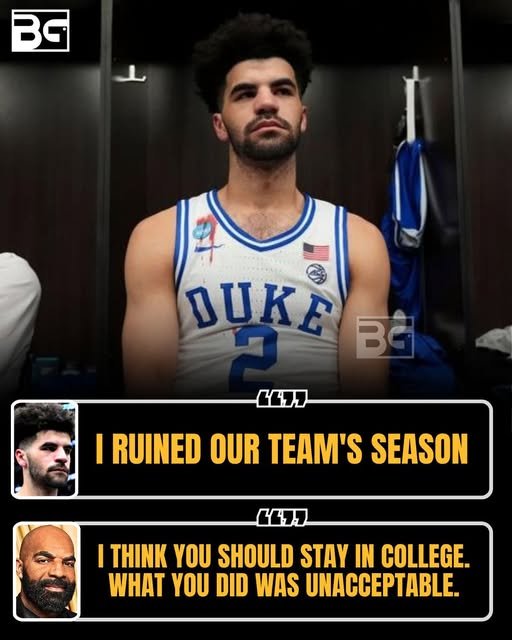
In the high-stakes world of college basketball, every possession counts. Players are often under immense pressure to perform, and even the most talented can falter in moments that define careers. For Cayden Boozer, a promising young talent at Duke University, a recent game against the UConn Huskies became a pivotal moment—not just in terms of the scoreline but for his personal development and understanding of the game.
Following a costly turnover that contributed to Duke’s defeat, Cayden publicly expressed a sense of responsibility for the loss. His candid admission sparked conversations about accountability, resilience, and the importance of growth. Moreover, his father, Carlos Boozer—a former NBA All-Star and seasoned professional—offered him honest, grounded advice: to remain in college for now and continue honing his skills before contemplating an NBA Draft entry.
This narrative is not just about one game or one mistake; it reflects the journey of a young athlete navigating expectations, self-awareness, and the pursuit of excellence. It also raises questions about the timing of entering the professional ranks, the significance of developmental years, and the mindset necessary to succeed at the highest levels.
In this article, we delve into Cayden Boozer’s recent experience, analyze the significance of his self-assessment, explore his father’s guidance, and consider his current draft projection. We will also reflect on the broader themes of growth, accountability, and the path to NBA readiness.
The Moment of Self-Reflection: A Costly Turn Against UConn
In college basketball, the margin for error is razor-thin. During a recent game between Duke and UConn, Cayden Boozer found himself at the center of a crucial moment. With Duke trailing and the clock winding down, Boozer made a turnover—losing possession in a critical situation, leading to a UConn fast break and ultimately, a decisive score.
The aftermath was telling. Boozer, a young player still finding his footing in the college game, publicly expressed regret and responsibility for the outcome. He told reporters afterward that he felt he had let his teammates and coaching staff down. His words reflected maturity beyond his years—acknowledging mistakes without deflecting blame and recognizing the importance of learning from adversity.
The Weight of Responsibility
Boozer’s admission resonates with many athletes who understand that mistakes are part of the game but also recognize their impact on team success. For a player of his age and experience, such honesty is commendable. It demonstrates a level of self-awareness and a willingness to grow—a mindset crucial for long-term success.
This moment also underscores the mental challenges faced by young athletes. The pressure to perform, coupled with the desire to meet expectations from coaches, teammates, fans, and themselves, can be overwhelming. The ability to accept responsibility and learn from setbacks differentiates those who develop resilience and those who falter.
The Significance of the Mistake
The turnover was not just an isolated incident; it symbolized the growing pains of a young player adjusting to the intensity of college basketball. For Cayden, it served as a wake-up call, emphasizing that every possession counts and that mental sharpness and composure are as vital as physical skills.
While mistakes are inevitable, how a player responds to them determines their trajectory. Boozer’s immediate acknowledgment of his error reflects a mature approach—one that will serve him well as he continues to develop.
Carlos Boozer’s Honest Advice: Patience and Development
Following the game, Cayden Boozer’s father, Carlos Boozer, known for his decorated NBA career and reputation as a skilled power forward, offered his son candid advice. Recognizing his son’s disappointment but also understanding the importance of strategic career planning, Carlos emphasized the value of patience.
The Wisdom of Staying in College
Carlos Boozer’s counsel was rooted in experience. Having played at the highest levels himself, he understands that the transition from college to the NBA is a complex journey. He advised Cayden to remain in college for now, focusing on further developing his game, honing his skills, and gaining invaluable experience.
The Developmental Role of College Basketball
While the NBA offers a platform to showcase talent, college basketball remains a critical environment for growth. It provides young players with opportunities to refine their skills, learn advanced tactics, and mature mentally and physically. For Cayden, staying in college would allow him to address areas such as decision-making, consistency, and basketball IQ—elements that are often the difference-makers at the pro level.
Protecting Long-Term Potential
Carlos’s advice also reflects a strategic approach to career longevity. Entering the NBA prematurely—without fully refining one’s game—can lead to setbacks or limited roles. By staying in college, Cayden has the chance to elevate his game, increase his draft stock, and position himself as a more impactful player in the league.
The Emotional Wisdom
Beyond basketball skills, Carlos’s guidance carries emotional wisdom. It reminds Cayden that setbacks are part of the journey and that patience and perseverance are virtues. His father’s words serve as a stabilizing influence, helping Cayden view the game and his career through a long-term lens rather than short-term frustration.
Cayden Boozer’s Draft Projection: A Second-Round Pick with Potential
Currently, Cayden Boozer is projected to be a second-round pick in this year’s NBA Draft. This projection reflects his potential, athletic ability, and the developmental stage he is in. While not a first-round lock, his position on the board indicates that NBA teams see considerable upside and believe he can grow into a valuable contributor.
Factors Influencing Draft Stock
Several factors influence Boozer’s draft prospects:
Physical Tools: His size, athleticism, and versatility make him an intriguing prospect for NBA teams seeking flexible forwards.
Skill Set: While he possesses promising offensive skills, including shooting and ball-handling, consistency and decision-making are areas for growth.
Defense and Rebounding: His defensive instincts, rebounding ability, and effort are already notable, aligning with the qualities that earned him recognition.
Age and Experience: As a young player still refining his game, Boozer is viewed as a developmental project with significant upside.
The Importance of Development
Being projected as a second-round pick does not diminish Boozer’s potential. Many NBA stars have entered the league as second-round selections or undrafted players before becoming key contributors. The crucial factor is his willingness to continue developing, embrace coaching, and refine his skills.
The Right Timing
His father’s advice to delay entering the draft aligns with strategic thinking. By staying in college, Cayden can further improve his game, increase his draft position, and enter the NBA with greater confidence and readiness. This approach can maximize his potential and reduce the risk of early setbacks.
The Broader Context: Growth, Accountability, and the Path to NBA Stardom
Cayden Boozer’s recent experience exemplifies the journey of many young athletes navigating the transition from promising college player to NBA contributor. It highlights several broader themes:
Growth Through Adversity
Mistakes are inevitable, but they serve as vital learning opportunities. Cayden’s candid self-assessment after the UConn game demonstrates maturity and a growth mindset. Embracing setbacks, analyzing errors, and working diligently to improve are essential steps toward reaching one’s potential.
The Power of Honest Guidance
Carlos Boozer’s honest advice underscores the importance of experienced mentorship. Young players often face conflicting messages about when to turn pro. Having mentors who understand the nuances of development and long-term success can help athletes make informed decisions.
Patience as a Virtue
The desire to enter the NBA early is natural, especially for talented players. However, patience allows them to develop the skills, experience, and confidence needed to succeed at the highest level. Cayden’s situation exemplifies the value of waiting for the right moment.
The Role of Mental Toughness
Handling mistakes with grace and resilience is crucial. Cayden’s willingness to accept responsibility and learn from it indicates emotional maturity—an essential trait for NBA stardom.
The Future Outlook
With continued development and a strategic approach, Cayden Boozer has the potential to elevate his draft stock and carve out a successful professional career. His journey is just beginning, and the lessons learned from setbacks and guidance will shape his growth.
Cayden Boozer’s honest reflection after his costly turnover against UConn, combined with his father Carlos Boozer’s wise advice, embodies the essence of a young athlete committed to growth. While he is currently projected as a second-round pick, his potential remains significant. His experience underscores that success in basketball—and in life—often depends on accountability, patience, and relentless self-improvement.
As Cayden continues to develop, he carries with him not only the hopes of fans and coaches but also the valuable lessons that setbacks can be stepping stones. With maturity, perseverance, and strategic patience, he can realize his full potential and make a lasting impact at the professional level.