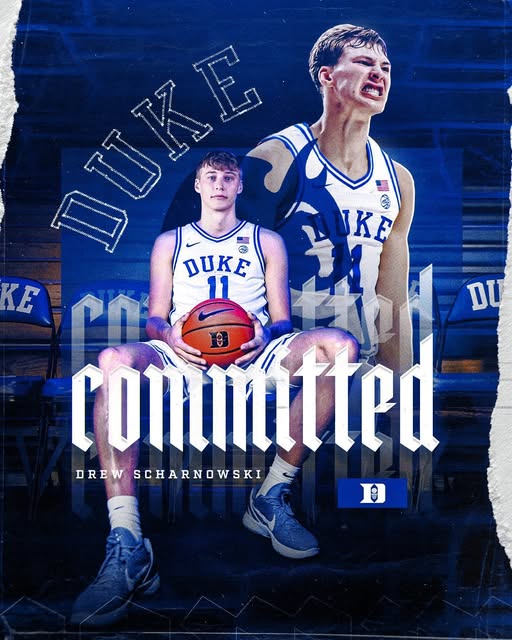
We got him, and it feels like one of those moments you circle without even realizing it at first. The kind that sneaks up on you, then settles in deeper the more you think about it. At first it’s just a name, maybe a clip or two, a stat line that looks promising but not definitive. Then you watch more film. Then more. And somewhere along the way, it stops being a possibility and starts feeling like an answer. That’s where this is now. The more film I watch, the more I like, and it’s not just surface-level excitement—it’s the kind that holds up under scrutiny, the kind that keeps revealing new details every time you go back.
Replacing someone like Maliq isn’t supposed to be simple. You don’t just swap out production, presence, and reliability like it’s a plug-and-play situation. There’s always that lingering question of whether what you’re seeing is real or just the optimism that comes with wanting it to work. But this feels different. It’s not built on hope alone—it’s built on evidence. The tape tells a story, and it’s a convincing one. There’s a natural rhythm to the way he plays, an understanding of timing and space that you can’t fake. You see it in how he anticipates instead of reacts, how he positions himself before the play fully develops, how he seems just a step ahead in moments where most players are still catching up.
What stands out immediately is the composure. That’s usually the last thing to arrive for younger players, especially ones stepping into a role with real expectations attached to it. But here, it’s already present. There’s no rush, no panic, no sense that the speed of the game is overwhelming him. Instead, there’s control. He processes quickly, makes decisions decisively, and lives with them. That alone raises the floor. You’re not dealing with someone who needs everything to be perfect around him to function. He can operate within structure, but he’s not dependent on it.
Then there’s the versatility. It shows up in subtle ways at first, but once you start focusing on it, it becomes hard to ignore. He’s not locked into one specific way of impacting the game. If you need him to stretch things, he can do that. If you need him to tighten up, operate in smaller windows, he adjusts. There’s a flexibility to his skill set that gives the coaching staff options, and that matters more than people sometimes realize. It’s not just about what a player can do—it’s about how many different ways they can be used effectively. That’s where this starts to feel like more than just a replacement. It starts to feel like an evolution.
The physical tools are there, but they’re not what defines him. That’s another encouraging sign. You see plenty of players who rely almost entirely on athleticism at this stage, dominating simply because they can outrun or outjump people. That works until it doesn’t. What you want is someone who uses those tools as an extension of their understanding, not a substitute for it. That’s what this looks like. The athleticism complements the instincts instead of covering for a lack of them. It’s controlled, purposeful, and consistent.
There’s also something to be said about how he handles moments that don’t go his way. You watch enough film, and you’ll find mistakes—everyone has them. But it’s the response that matters. Does it spiral? Does it linger? Or does it get corrected quickly, almost like it never happened? In this case, it’s the latter. There’s a short memory in the best sense. He resets, recalibrates, and gets back to doing what he does well. That resilience is going to matter over the course of a season, especially when the role expands and the expectations rise with it.
And they will rise. That’s inevitable. When you start putting together this kind of film, people notice. Teammates notice. Coaches notice. Opponents definitely notice. The challenge shifts from proving you belong to proving you can sustain it when the attention turns your way. That’s where the two years of eligibility become such a significant factor. This isn’t a one-year stopgap or a short-term fix. There’s time here—time to grow, to refine, to build something more complete. It allows for patience without sacrificing momentum.
You can already see the foundation of what he could become with that time. The flashes aren’t isolated—they’re connected. One strength feeds into another. The awareness enhances the positioning. The positioning enhances the execution. The execution builds confidence, and that confidence feeds right back into the awareness. It’s a cycle, and right now it’s trending in the right direction. That’s what makes this feel sustainable rather than fleeting.
There’s also an edge to his game that doesn’t always show up in stats but comes through clearly on film. It’s in the way he competes on plays that aren’t designed for him, the effort in situations where it would be easy to coast, the willingness to stay engaged even when he’s not the focal point. That kind of consistency in approach tends to translate well, especially as roles change and responsibilities increase. It suggests that what you’re seeing now isn’t dependent on specific circumstances—it’s part of who he is as a player.
Of course, there’s still projection involved. There always is. No amount of film completely removes the uncertainty. But the key is minimizing it, stacking as many indicators as possible in favor of success. That’s what this evaluation keeps coming back to. Every time you look for a reason to doubt, you find something that counters it. Every time you wonder if a strength will hold up, you see another example of it doing exactly that. It doesn’t eliminate risk, but it reduces it to a level that feels manageable.
What makes this especially compelling is how naturally he seems to fit into what’s needed. Sometimes you bring in talent and then have to figure out how to make it work within the existing structure. This doesn’t feel like that. It feels like a seamless transition, like the pieces already align in a way that makes sense. That doesn’t guarantee immediate success, but it certainly makes the path clearer.
There’s also the psychological aspect of replacing someone like Maliq. It’s not just about production—it’s about presence, about filling a role that teammates trusted and relied on. That’s where demeanor becomes as important as ability. From what the film shows, there’s a quiet confidence there. Not forced, not exaggerated, just steady. The kind that earns trust over time because it’s backed up by consistent performance. That’s how you step into a role without trying to imitate the person who held it before you.
And maybe that’s the most important part of all. This isn’t about finding another Maliq. It’s about finding the next version of the role, shaped by a different skill set, a different perspective, a different way of impacting the game. That’s what this looks like. It’s not a copy—it’s a continuation, with its own identity already starting to take form.
The more you watch, the clearer it becomes that this isn’t just optimism talking. It’s recognition. Recognition of traits that translate, habits that hold up, and a trajectory that points in the right direction. It’s early, yes, but it’s not empty. There’s substance here, and it shows up consistently enough to believe in.
So yeah, we got him. And the more film you put on, the more that statement carries weight. Not just because of what he’s already done, but because of what it suggests is coming next. Two years of eligibility means two years of development, two years of refinement, two years to turn flashes into fixtures. If this is the starting point, it’s a strong one. And if the trajectory continues the way it looks right now, the conversation is going to shift from whether he can replace Maliq to how much further he can push things beyond that.
That’s the kind of problem you want to have.