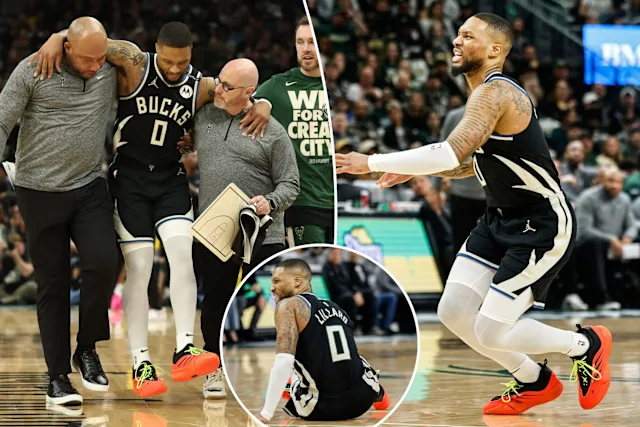
The Milwaukee Bucks, a team renowned for their resilience and championship ambitions, received devastating news during Game 4 of their first-round playoff series against the Indiana Pacers. Superstar guard Damian Lillard, who had been a pivotal figure in the Bucks’ offensive and leadership structure, suffered a torn left Achilles tendon, an injury that could have profound implications not only for the current postseason but also for the franchise’s future trajectory.
The Incident: A Moment of Heartbreak
The incident occurred late in the fourth quarter when Lillard, battling through screens and defenses, suddenly collapsed after attempting a drive to the basket. The immediate reaction from players, coaches, and fans was one of shock and concern. Lillard, who had joined the Bucks in the offseason in hopes of capturing his first NBA championship, was visibly in pain, clutching his leg before being helped off the court.
Medical evaluations confirmed the worst: a torn Achilles tendon. This injury is one of the most serious in professional sports, often requiring surgery and extended rehabilitation that can sideline players for up to a year. For Lillard, a player known for his scoring prowess, leadership, and clutch performances, this was a crushing blow.
The Impact on the Bucks’ 2025 Postseason
The Bucks entered the playoffs with high expectations, aiming for a deep run and ultimately contending for an NBA title. Lillard’s arrival in Milwaukee had been seen as a game-changer—adding scoring, veteran leadership, and playoff experience to a roster already boasting Giannis Antetokounmpo, Khris Middleton, and a solid supporting cast.
Lillard’s injury, however, throws a wrench into those plans. The immediate aftermath saw the Bucks’ offense struggling to find its rhythm, especially without their primary ball-handler and scorer. The team’s offensive flow, which heavily depended on Lillard’s ability to create shots and draw defenses, was disrupted. Defensively, opponents could now play more aggressively, knowing that the Bucks’ primary offensive initiator was sidelined.
The series, which was initially competitive, has now tilted heavily in favor of Indiana. The Pacers, led by their young core and bolstered by the Bucks’ misfortune, are now in a commanding position to advance to the next round. For the Bucks, their postseason aspirations are hanging by a thread, and the road ahead looks increasingly bleak without their star.
Analyzing the Injury: Achilles Tendon Tears in NBA Players
An Achilles tendon tear is notorious in the NBA for its severity and long recovery period. History offers numerous examples of players who suffered this injury and faced significant setbacks:
Kevin Durant (2019): Durant tore his Achilles during the NBA Finals, missing an entire season and struggling to regain his previous form upon return.
Clint Capela (2017): Capela tore his Achilles early in his career but managed to return to form, although with some limitations.
Klay Thompson (2019): Thomspon tore his Achilles during the NBA Finals, missing subsequent seasons and facing a long rehab process.
For Lillard, a player who relies heavily on explosive movements, quick cuts, and agility, the recovery process will be arduous. While advances in sports medicine have improved outcomes, the risk of re-injury or diminished performance remains significant.
The Psychological Toll
Beyond the physical implications, the psychological impact on Lillard cannot be underestimated. Athletes often describe Achilles injuries as not only physically taxing but also mentally challenging. The fear of re-injury, the frustration of missing critical games, and the uncertainty of returning to pre-injury performance levels can take a toll.
Lillard, known for his resilience and competitive spirit, will need to navigate this mental hurdle. The Bucks’ medical staff and team psychologists will play a crucial role in supporting him through this recovery phase.
The Broader Implications for the Milwaukee Bucks
Lillard’s injury is a blow not just for this postseason but for the Bucks’ future plans. The team’s roster construction was built around maximizing Lillard’s scoring ability and leadership. Losing him for the foreseeable future raises questions about the team’s strategy moving forward.
Impact on Team Dynamics and Strategy
Offensive Adjustments: Without Lillard, the Bucks will need to rely more heavily on Giannis Antetokounmpo, Khris Middleton, and emerging role players. Coach Mike Budenholzer may need to implement a more ball-dominant system around Giannis or develop new offensive sets that mitigate the loss.
Defensive Considerations: Lillard’s absence might allow opponents to double-team Giannis more aggressively, knowing the Bucks’ perimeter shooting and playmaking options are limited.
Leadership Vacuum: Lillard’s presence in the locker room and on the court was vital for team chemistry. His absence could affect team morale, especially if the Bucks fail to adapt quickly.
Future Contract and Roster Decisions
The injury also influences the franchise’s long-term roster planning. The Bucks must evaluate whether to pursue additional guard depth or consider trade options to fill the void left by Lillard’s prolonged absence.
The Fan and Media Reaction
The Bucks’ fanbase expressed a mix of disappointment, concern, and hope. Social media buzzed with messages of support for Lillard, along with debates about the team’s future without their star.
Media analysts have speculated on the Bucks’ postseason chances, with some considering the injury a potential turning point that could derail their championship ambitions. Conversely, others emphasize the importance of resilience and adapting to adversity—a trait the Bucks will need in the coming months.
The Road to Recovery: What’s Next for Damian Lillard?
Rehabilitation from an Achilles tear is a long, meticulous process. Typically, players undergo surgery followed by a period of immobilization and physical therapy. The timeline for return varies but generally spans 9 to 12 months, meaning Lillard could miss the entire 2025 season or return late in the playoffs if the Bucks advance far enough.
Lillard’s attitude towards recovery will be critical. Known for his work ethic and mental toughness, he is expected to dedicate himself fully to rehab. The Bucks’ medical team will closely monitor his progress, and his return will be carefully managed to prevent re-injury.
The Long-Term Outlook for the Milwaukee Bucks
While the immediate focus is on the current postseason, the injury raises questions about the Bucks’ long-term competitiveness:
Championship Window: With Giannis in his prime, this injury could delay or diminish the team’s championship window. The Bucks will need to adjust their roster and strategy to remain competitive.
Building Depth: The team may prioritize acquiring versatile role players and developing their young talent to withstand future injuries.
Ownership and Management Decisions: The injury might influence discussions about roster construction, coaching strategies, and future investments.
A Challenging Chapter for the Bucks
Damian Lillard’s torn Achilles is a significant setback for the Milwaukee Bucks, casting uncertainty over their immediate postseason prospects and future plans. His injury underscores the brutal realities of professional sports, where even the most prepared teams and players are vulnerable to the unpredictability of injuries.
As Lillard embarks on his recovery journey, the Bucks must rally around their remaining core and adapt their strategies to contend without their star. The road ahead will test their resilience, depth, and unity. Fans and analysts alike will watch closely to see how the Bucks respond to this adversity and whether they can overcome these hurdles to chase their championship dreams.