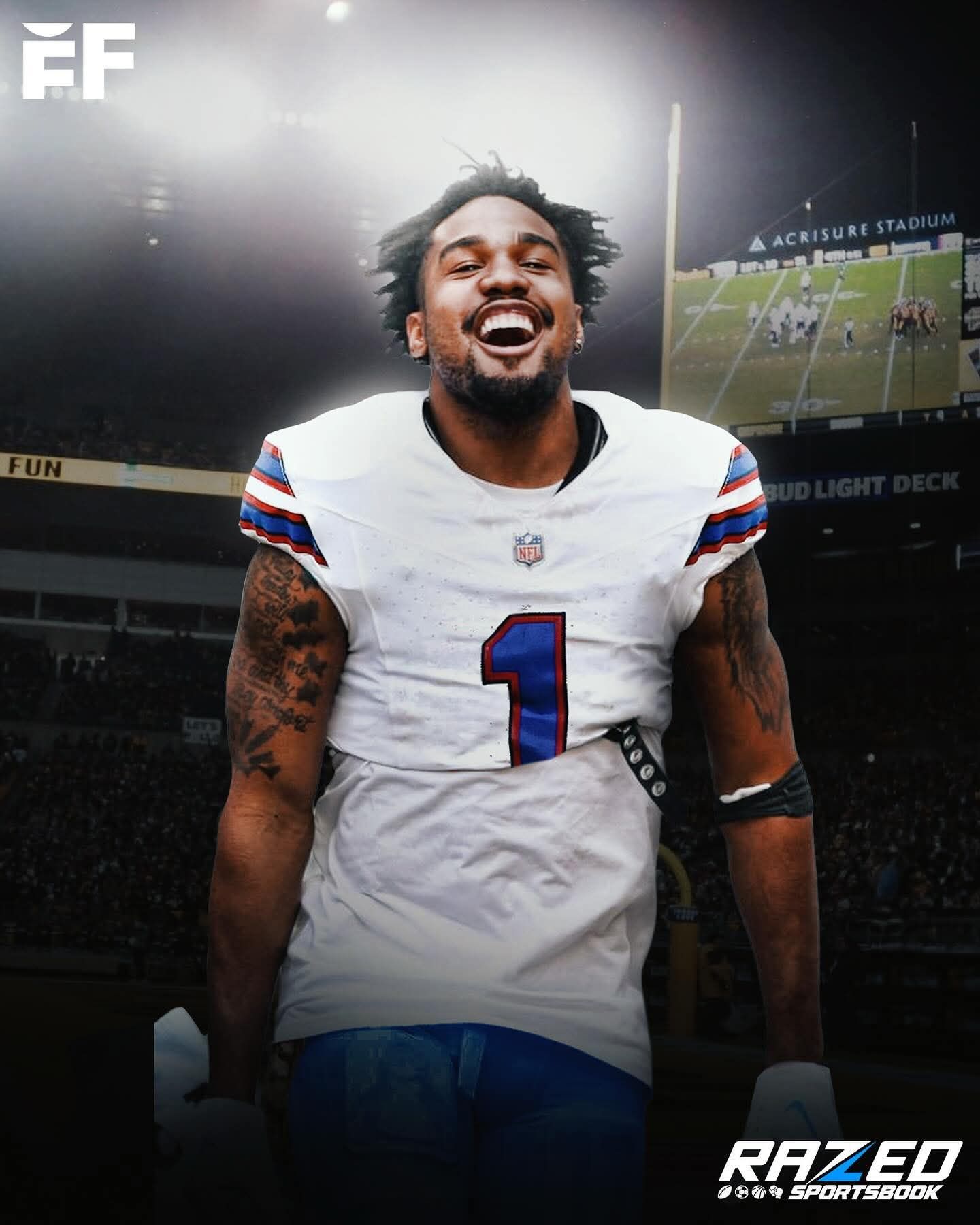
The story of the Bills’ trade deadline swing reads like an all‑or-nothing play — they went big, they swung for the fences, but in the end they came up empty. Buffalo, it turns out, was aggressively trying to upgrade two key areas: explosive offense and a dominant defensive front. Their targets? Dolphins wide receiver Jaylen Waddle, arguably one of the fastest and most dynamic pass‑catchers in the league, and Jets defensive tackle Quinnen Williams, a matchup nightmare against the run. According to multiple reports, Bills general manager Brandon Beane orchestrated serious efforts to land both players. (SI) But despite their eagerness and boldness, none of the deals materialized.
Let’s start with Waddle. Buffalo reportedly made what insiders are calling the highest offer on the market. As first disclosed by NFL insider Tom Pelissero, the Bills laid out a package that included a 2027 first-round pick plus a 2026 third-round pick. (SI) That kind of offer signals that the Bills weren’t messing around — they were willing to part with significant draft capital to get Waddle, a wideout who would have added game-breaking speed and a reliable target for Josh Allen.
But Miami stood firm on their value. The Dolphins reportedly said no, demanding a first-round pick in 2026 instead of the 2027 pick Buffalo offered. (Yahoo Sports) The discrepancy in years turned out to be too big. According to reports, despite including a third-rounder in the 2026 class, the Bills’ package didn’t satisfy the Dolphins, who held out for greater value on a tighter timeline. (Yahoo Sports) For Miami, keeping Waddle wasn’t just about the present — they saw him as a cornerstone for their offense and were unwilling to let him go for anything less than a first-round pick in the near future.
From Buffalo’s perspective, the rejection must’ve stung. To be labeled the “highest bidder,” and yet lose out, suggests a miscalculation in what Miami was willing to give up. (Pro Football Rumors) The fact that the Bills were chasing Waddle so hard reveals how much they feel his absence in their offense. While Buffalo has talent at receiver, they’ve long lacked a true elite WR1 who can consistently stretch defenses and deliver big-play ability. Waddle could have been that missing piece, the kind of weapon that forces defenses to account for him and opens things up for others. That’s exactly why Beane was willing to offer a premium in return.
At the same time, Buffalo was also looking to shore up their defensive line. With their run defense under siege and injuries piling up, the Bills reportedly tried to acquire Quinnen Williams from the Jets. (Yahoo Sports) Williams, a former All-Pro, would have been a transformative addition — a disruptive force in the interior who could collapse pockets, stuff the run, and anchor a physical defensive front. But that deal also fell apart.
The Jets ultimately traded Williams to the Cowboys instead. (Yahoo Sports) In that deal, Dallas sent a 2026 second-round pick, a 2027 first-round pick, and defensive tackle Mazi Smith to New York. (SI) That suggests that the Jets were demanding steep compensation, perhaps more than Buffalo was willing or able to provide — especially given the complexities of trading within the division. In-division trades, particularly for star players, are rare and fraught; teams often demand a premium when dealing with a rival, precisely because you don’t want to strengthen somebody who’s competing against you week in and week out. (Yahoo Sports)
Moreover, Buffalo’s salary cap situation might have hampered their ability to make a clean, game-changing deal. According to some reports, their available cap space was limited, which constrains how much financial risk they could take on. (Pro Football Rumors) Acquiring Williams would not only require draft picks but also a significant contract commitment, and perhaps complicated maneuvering just to make it work under the cap.
Looking at the bigger picture, these failed trade attempts underscore how far Beane and the Bills were willing to go to break through. They clearly saw this season as a window. Having won five straight AFC East titles, Buffalo is chasing a sixth, and they understood that without a true No. 1 receiver or a game-changing defensive tackle, they might fall short of contending for a Super Bowl. They weren’t being conservative; they weren’t playing not to lose. They were swinging for the fences.
Yet, in both cases, their division rivals simply said no. Miami held out on Waddle, valuing him highly enough to turn down what might have been the top offer. New York dealt Williams elsewhere, presumably for a package even more lucrative than anything Buffalo was prepared to offer, or at least structured differently. The Bills found themselves shut out.
There’s also irony in the timing. Reports of these trade efforts came out just as Buffalo was preparing to face Miami, the very team they tried to do business with. (BuffaLowDown) Imagine a world where Waddle had been wearing a Bills jersey, lining up across from the Dolphins — it would have transformed not just the narrative around the game, but potentially the outcome. Instead, Waddle stayed in South Beach, and the typical division tension will now be played out on the field, not in the front office.
For Bills fans, the aftermath is bittersweet. On one hand, you can admire the ambition. Beane didn’t sit back. He didn’t let the deadline pass without making a real move. He saw the holes, he tried to address them, and he laid it all on the table. That kind of aggressiveness should be praised — too many GMs are risk‑averse, too cautious. In that light, Beane’s willingness to offer future first-round capital shows that he believed in this roster and believed in their ability to win now.
On the other hand, coming up short is painful. The draft picks they dangled in pursuit of Waddle and Williams could’ve been used to build depth or take swings elsewhere. By not landing those players, Buffalo remains exposed — their offense still lacks a true game-breaking number-one receiver, and their defensive front is arguably just as thin as before. The question now becomes: Can the current roster step up? Will young guys emerge? Or will this be a missed opportunity in what might’ve been one of Buffalo’s best windows?
There’s also the optics: losing out to other teams can be interpreted as a sign of weakness, or at least of being outmaneuvered. For a franchise with high expectations, failing to close on two major targets is not nothing. It raises questions about whether Buffalo has the leverage, the resources, or the negotiating strategy to compete with other aggressive buyers.
But perhaps the most telling part is Beane’s reaction. He reportedly drove home from the deadline feeling “mad as any other fan.” That’s not bitterness — that’s passion. That’s a front office that cares deeply about this season, about this roster, about winning. It’s not enough to just make offers; you have to close, and closing big-blockbuster trades is never easy — especially within the division. Beane’s frustration is real, but it also signals that he’s not done trying.
Going forward, the Bills will likely reassess. The fact that they were rebuffed by Miami and New York doesn’t mean they won’t try again. The trade deadline may now be in the rearview, but the lessons are fresh. They know what they’re missing. They’ll have to decide whether to keep swinging aggressively or to lean into internal growth. Their next steps will tell us a lot about the direction of the franchise.
In the end, the Bills’ trade‑deadline story is one of ambition and risk: they bet hard, but they didn’t come away with the chips they wanted. Sometimes you have to go for it, even if you fall short — and that’s exactly what Buffalo did. They didn’t settle, but theirs is now a season that might hinge on what happens next: whether the pieces they already have can rise up, or whether they’ll once again look outside to fill the voids.