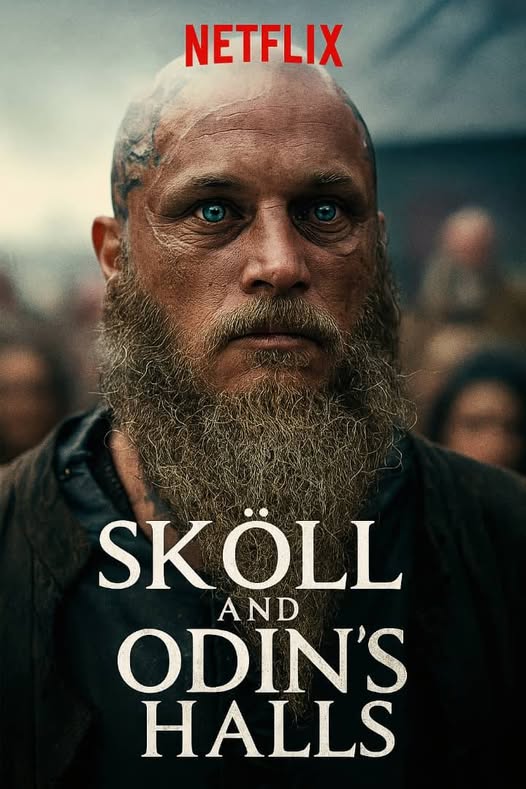
Netflix has once again opened the gates to epic storytelling with “Odin’s Kingdom,” a sweeping mythological drama that plunges viewers into a world where gods are fallible, power is a curse as much as a gift, and war is not an event but a state of existence. From its opening moments, the series makes clear that this is not a sanitized retelling of Norse legend meant to inspire awe alone. Instead, it is a brooding, blood-soaked exploration of ambition, betrayal, and the terrible cost of immortality. “Odin’s Kingdom” feels less like a fantasy spectacle designed for escapism and more like a dark mirror held up to humanity, reflecting our endless hunger for control and meaning.
The story centers on Odin, the All-Father, ruler of Asgard and guardian of the Nine Realms, portrayed not as a distant, all-knowing deity but as a weary, calculating monarch burdened by prophecy and paranoia. This Odin is brilliant and ruthless, capable of great sacrifice yet constantly haunted by the knowledge that his reign, no matter how absolute it seems, is destined to end in fire and blood. The series leans heavily into the idea that foresight is both Odin’s greatest weapon and his most devastating weakness. His relentless pursuit of knowledge, whether through runes, sacrifices, or manipulation of allies and enemies alike, drives much of the narrative tension. Every decision he makes is informed by what he fears is coming, and every attempt to prevent the future only seems to tighten its grip.
Asgard itself is depicted as a kingdom on the edge of collapse, glittering with golden halls and towering spires, yet riddled with rot beneath the surface. The gods feast, boast, and wage war, but their unity is fragile, maintained through fear, obligation, and ancient oaths rather than genuine loyalty. Netflix’s production design spares no expense in bringing this realm to life, balancing raw natural landscapes with imposing architecture that feels both divine and oppressive. The visual language of the show constantly reinforces the idea that power isolates. Odin’s throne room is vast and echoing, emphasizing his authority while also underscoring his loneliness.
At the heart of the series is betrayal, not as a single shocking act, but as a slow, corrosive force. Trust is a rare currency in “Odin’s Kingdom,” and nearly every relationship is transactional. Thor, Odin’s son and the gods’ greatest warrior, is portrayed as more than a hammer-wielding symbol of strength. He is a man desperate for his father’s approval, torn between loyalty and resentment. His battles are spectacular, but his most compelling struggles are internal, as he begins to question whether Odin’s endless wars truly protect the realms or simply feed the All-Father’s obsession with defying fate. Their father-son dynamic is one of the emotional anchors of the series, layered with love, disappointment, and unspoken fear.
Loki’s presence casts a long shadow over the narrative, even in moments when he is not on screen. This Loki is not merely a trickster for comic relief, but a deeply wounded figure whose intelligence rivals Odin’s and whose bitterness is rooted in centuries of neglect and deception. The series takes its time unraveling Loki’s motivations, showing how every slight, every lie, and every dismissal pushes him closer to choices that will reshape the realms forever. His schemes are not driven by chaos for its own sake, but by a desire to expose the hypocrisy of the gods and reclaim agency in a world that has always treated him as an afterthought.
Beyond Asgard, the other realms are rendered with striking individuality. Midgard is grim and grounded, a land of mortals caught between forces they barely comprehend, paying the price for divine conflicts they did not choose. Jotunheim is brutal and beautiful, its frost giants depicted not as mindless monsters but as a proud, ancient people fighting extinction at the hands of the Aesir. This moral complexity is one of the show’s greatest strengths. “Odin’s Kingdom” refuses to draw clean lines between heroes and villains. Every faction believes itself justified, and every war is fueled by competing versions of truth.
The theme of eternal war runs through the series like a curse. Battles are frequent and ferocious, but they are never portrayed as glorious. The aftermath is always lingering: broken bodies, shattered alliances, and the quiet grief that follows even the most decisive victories. The show lingers on the faces of survivors, gods and mortals alike, forcing the audience to sit with the consequences of violence. This approach gives weight to the action and prevents it from becoming empty spectacle. Each clash feels like another step toward an inevitable reckoning.
One of the most compelling aspects of “Odin’s Kingdom” is its treatment of fate. Rather than presenting destiny as a fixed, unquestionable force, the series explores it as a living idea that can be resisted, misunderstood, or even manipulated, but never truly escaped. The Norns, weavers of fate, are portrayed as unsettling, almost alien beings whose prophecies are cryptic and cruel. Their appearances are rare but impactful, reminding both the characters and the audience that every choice is already entangled in a larger design. Odin’s obsession with outsmarting fate becomes tragic as it becomes clear that his actions may be the very thing ensuring its fulfillment.
The writing balances intimate character moments with grand, mythic stakes. Quiet scenes of conversation, confession, and doubt are given as much importance as massive battles and political maneuvering. These moments of stillness allow the characters to breathe and deepen the emotional impact of the story. A single exchange between Odin and Frigg, his queen, can be as devastating as any battlefield loss. Frigg herself is portrayed as a formidable presence, a seer and strategist in her own right, whose love for her family is matched only by her fear of what Odin’s ambitions will cost them all.
Visually, the series is dark and textured, favoring moody lighting and a muted color palette that reinforces its somber tone. Firelight, torchlit halls, and storm-filled skies dominate the screen, creating an atmosphere that feels heavy with foreboding. The use of practical effects alongside carefully crafted visual effects grounds the fantasy elements, making the world feel tangible and lived-in. The sound design and score further enhance the immersion, blending deep, resonant chants with subtle, haunting melodies that linger long after scenes end.
As the season progresses, “Odin’s Kingdom” builds toward a sense of unavoidable catastrophe. Alliances fracture, secrets are exposed, and characters are forced to confront the limits of their power. What makes this journey compelling is not the question of whether war will come, but how each character will face it when it does. Will they cling to old grudges and prophecies, or will they find the courage to change, even if change comes too late?
In the end, “Odin’s Kingdom” is not just a story about gods and monsters, but about the human impulses that persist even in beings who live forever. It is about fear of loss, the desire to be remembered, and the illusion that control can shield us from suffering. Netflix has delivered a series that respects its mythological roots while daring to interrogate them, offering a brutal, emotionally rich saga that lingers in the mind. This is a world where power demands sacrifice, betrayal is inevitable, and war has no end, only echoes. For viewers willing to embrace its darkness, “Odin’s Kingdom” offers a mythic journey that feels both ancient and unsettlingly modern.